
In modern healthcare facilities, patient safety depends heavily on effective infection prevention and control measures. One of the most critical departments responsible for maintaining sterility and preventing healthcare-associated infections (HAIs) is the Central Sterile Supply Department (CSSD).
The CSSD serves as the backbone of hospital sterilization operations by ensuring that surgical instruments, medical devices, and reusable healthcare equipment are properly cleaned, disinfected, sterilized, stored, and distributed.
A well-designed CSSD workflow not only improves operational efficiency but also ensures compliance with NABH, JCI, WHO, and international healthcare standards.
This guide explains the complete CSSD workflow step-by-step and highlights the importance of each stage in maintaining a safe healthcare environment.
What is CSSD?
The Central Sterile Supply Department (CSSD) is a dedicated hospital unit responsible for processing reusable medical devices and instruments.
The department performs critical functions such as:
- Collection of used instruments
- Cleaning and decontamination
- Inspection and assembly
- Packaging
- Sterilization
- Storage
- Distribution
The primary goal of CSSD is to provide sterile instruments whenever and wherever they are needed within the hospital.
Why is a Proper CSSD Workflow Important?
A properly designed workflow helps:
- Reduce infection risks
- Improve instrument lifespan
- Ensure regulatory compliance
- Increase operational efficiency
- Minimize cross-contamination
- Enhance patient safety
Without a structured workflow, contamination risks increase significantly and can directly impact healthcare outcomes.
Understanding the CSSD Workflow
A standard CSSD workflow follows a one-way movement principle.
Instruments move from dirty areas to clean areas and finally to sterile areas without any backward movement.
This unidirectional workflow is essential for preventing cross-contamination.
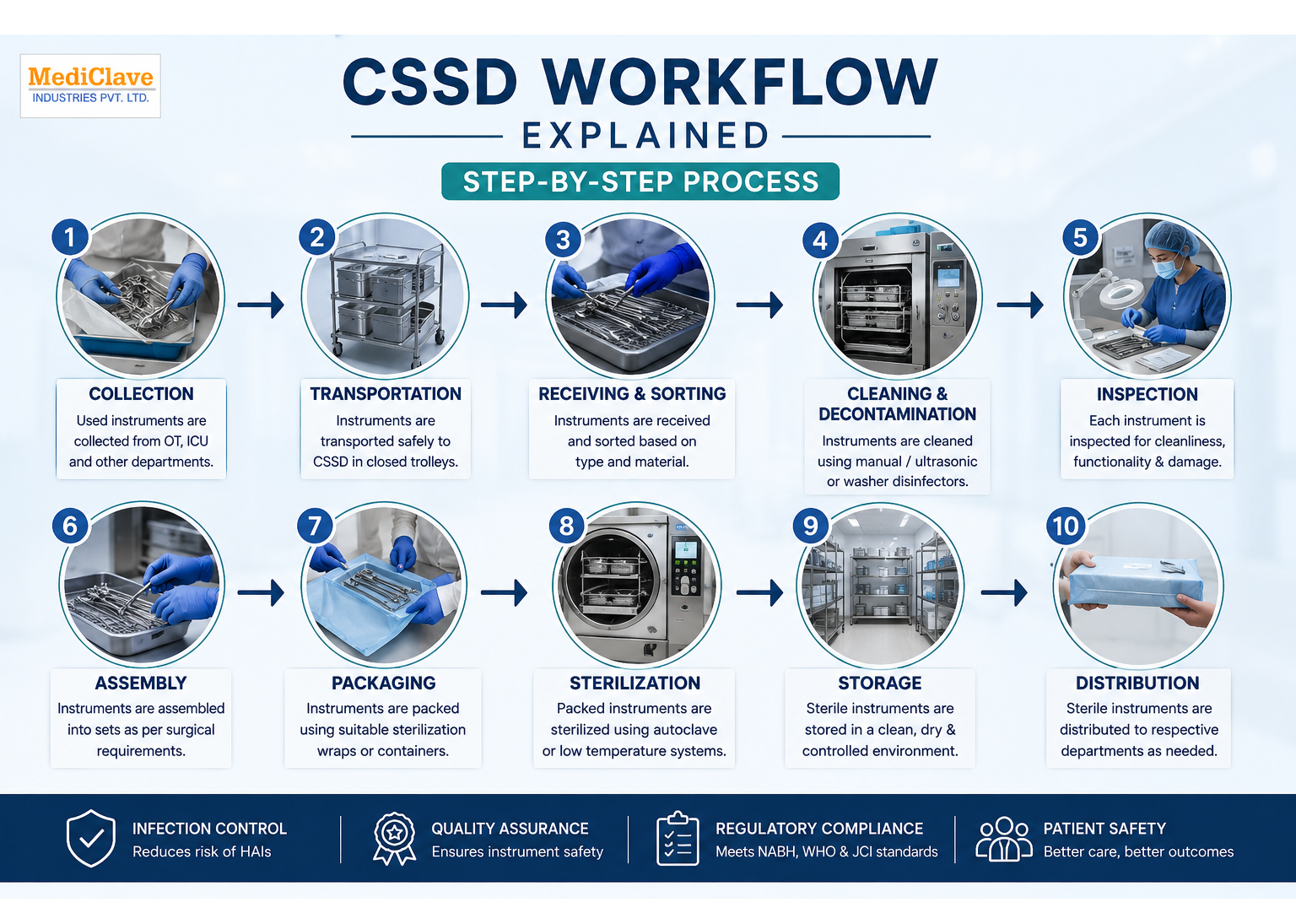
The workflow generally consists of the following stages:
- Collection and Transportation
- Receiving and Sorting
- Cleaning and Decontamination
- Inspection and Assembly
- Packaging
- Sterilization
- Sterile Storage
- Distribution
Let's understand each step in detail.
Step 1: Collection of Used Instruments
The CSSD process begins immediately after medical instruments are used in:
- Operation Theatres
- ICUs
- Emergency Departments
- Wards
- Laboratories
- Outpatient Departments
After use, contaminated instruments are collected in dedicated containers or trolleys.
Proper segregation at the point of use is essential to prevent injuries and contamination during transport.
Step 2: Transportation to CSSD
Collected instruments are transported safely to the decontamination area of the CSSD.
Hospitals typically use:
- Closed trolleys
- Covered containers
- Dedicated transportation routes
The purpose is to prevent environmental contamination during movement.
Large hospitals often maintain separate pathways for contaminated and sterile materials.
Step 3: Receiving and Sorting
Upon arrival in the CSSD, instruments are received and categorized.
Sorting is performed based on:
- Instrument type
- Material compatibility
- Cleaning requirements
- Sterilization method
At this stage, damaged instruments may also be identified for repair or replacement.
Step 4: Cleaning and Decontamination
Cleaning is one of the most critical stages of the CSSD workflow.
Sterilization cannot be effective if instruments are not properly cleaned.
The cleaning process removes:
- Blood
- Tissue residues
- Organic matter
- Microorganisms
- Chemical contaminants
Common cleaning methods include:
Manual Cleaning
Used for delicate instruments requiring special handling.
Ultrasonic Cleaning
Removes contaminants from hard-to-reach areas using high-frequency sound waves.
Automatic Washer Disinfectors
Provide standardized and validated cleaning processes.
Modern hospitals increasingly rely on automated washer disinfectors for improved consistency and efficiency.
Step 5: Inspection and Functional Testing
After cleaning, every instrument undergoes detailed inspection.
Technicians check for:
- Residual contamination
- Corrosion
- Damage
- Proper functionality
Inspection ensures that only safe and functional instruments proceed to the next stage.
Magnification systems and illuminated workstations are often used for accurate inspection.
Step 6: Assembly and Set Preparation
Many surgical procedures require instrument sets.
After inspection, instruments are assembled according to predefined surgical trays or procedure kits.
Examples include:
- Orthopedic sets
- General surgery sets
- Laparoscopic sets
- Cardiac surgery sets
Proper assembly helps operation theatres function efficiently.
Step 7: Packaging
Before sterilization, instruments must be packaged appropriately.
Packaging materials may include:
- Sterilization wraps
- Peel pouches
- Rigid sterilization containers
The packaging must:
- Allow sterilant penetration
- Maintain sterility after processing
- Protect instruments during storage and transport
Packaging integrity is critical for successful sterilization.
Step 8: Sterilization Process
This is the core function of the CSSD.
Depending on the instrument type, different sterilization methods are used.
Steam Sterilization (Autoclave)
Most widely used method for surgical instruments.
Low Temperature Sterilization
Used for heat-sensitive devices.
Examples include:
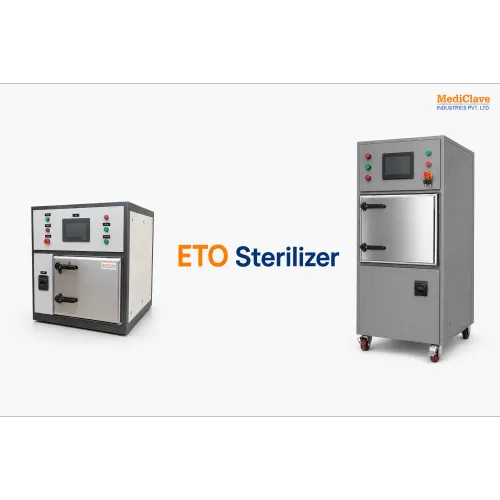
- ETO Sterilization
- Hydrogen Peroxide Plasma Sterilization
Dry Heat Sterilization
Used for specific heat-resistant items.
The selected sterilization method depends on material compatibility and healthcare requirements.
Step 9: Sterile Storage
After sterilization, instruments are transferred to the sterile storage area.
This area must maintain:
- Controlled temperature
- Controlled humidity
- Dust-free environment
- Proper shelving systems
Sterility can be compromised if storage conditions are not maintained.
Step 10: Distribution to User Departments
Sterile supplies are distributed to:
- Operation Theatres
- ICUs
- Emergency Departments
- Wards
- Clinics
Inventory management systems help ensure the right instruments are available when needed.
Efficient distribution minimizes delays in patient care.
CSSD Zoning and Workflow Design
A properly designed CSSD is divided into three major zones:
Dirty Zone
Activities include:
- Receiving
- Sorting
- Cleaning
- Decontamination
Clean Zone
Activities include:
- Inspection
- Assembly
- Packaging
Sterile Zone
Activities include:
- Sterilization
- Storage
- Distribution
This separation prevents contamination and supports regulatory compliance.
Essential Equipment Used in CSSD Workflow
A modern CSSD typically includes:
- Pass Boxes
- Washer Disinfectors
- Ultrasonic Cleaners
- Packing Stations
- Steam Sterilizers
- ETO Sterilizers
- Low Temperature Sterilizers
- Instrument Workstations
- Storage Systems
- Transport Trolleys
The right equipment significantly improves workflow efficiency.
Common Challenges in CSSD Workflow
Hospitals often face challenges such as:
- Poor instrument tracking
- Inadequate staff training
- Workflow bottlenecks
- Space limitations
- Equipment downtime
- Documentation issues
Regular audits and process optimization help address these challenges.
Benefits of an Optimized CSSD Workflow
An efficient CSSD workflow provides:
- Reduced infection rates
- Improved patient safety
- Better compliance with NABH and JCI standards
- Increased operational efficiency
- Enhanced instrument lifespan
- Lower operating costs
- Improved staff productivity
Why Choose Mediclave Industries for CSSD Solutions?
Mediclave Industries Private Limited provides complete CSSD solutions for hospitals, medical colleges, specialty healthcare centers, and healthcare institutions.
Our offerings include:
- CSSD Planning & Design
- CSSD Turnkey Projects
- Steam Sterilizers
- Washer Disinfectors
- Pass Boxes
- Sterile Storage Systems
- Customized Hospital Sterilization Solutions
With a focus on infection control, workflow optimization, and regulatory compliance, we help hospitals build efficient and future-ready CSSD facilities.
Conclusion
The CSSD workflow is a carefully structured process designed to ensure that every reusable medical instrument is safe, sterile, and ready for patient use. From collection and decontamination to sterilization and distribution, every step plays a crucial role in infection prevention and patient safety.
Hospitals that invest in proper CSSD design, workflow planning, and advanced sterilization equipment achieve better operational efficiency, regulatory compliance, and healthcare outcomes.
FAQs
What is the main purpose of CSSD?
The main purpose of CSSD is to clean, disinfect, sterilize, store, and distribute reusable medical instruments safely.
Why is unidirectional workflow important in CSSD?
It prevents cross-contamination by ensuring instruments move only from dirty areas to clean and sterile areas.
Which equipment is commonly used in CSSD?
Steam sterilizers, washer disinfectors, ultrasonic cleaners, pass boxes, packing stations, and storage systems.
What are the three zones of CSSD?
Dirty Zone, Clean Zone, and Sterile Zone.
How does CSSD improve patient safety?
By ensuring all reusable medical instruments are properly sterilized before use, reducing infection risks.