Thank you for writing to us. One of our executive will reach back to you through your submitted medium. In case there’s an urgency, feel free to connect over WhatsApp for faster response.
Prefer calling? Dial +917041232204 (International callers) or +917041232204 (Indian callers).
Dry Heat Sterilization: How It Works, Uses & Key Advantages Hyderabad
Dry Heat Sterilization: How It Works, Uses, Benefits & Applications in Pharmaceutical Industry | Hyderabad
Dry Heat Sterilization: How It Works, Uses & Key Advantages
Sterilization is one of the most critical processes in pharmaceutical manufacturing, healthcare facilities, research laboratories, and biotechnology industries. The effectiveness of any sterilization method directly impacts product quality, patient safety, and regulatory compliance. Among the various sterilization techniques available today, Dry Heat Sterilization remains one of the most reliable methods for sterilizing heat-resistant materials, glassware, metal instruments, and pharmaceutical components.
Unlike steam sterilization, which relies on moisture, dry heat sterilization uses high temperatures and hot air circulation to destroy microorganisms, bacterial spores, endotoxins, and contaminants. This makes it particularly suitable for materials that may be damaged by moisture or pressure.
In pharmaceutical manufacturing, dry heat sterilization is widely used for depyrogenation of glass containers, sterilization of metal equipment, and preparation of sterile components used in injectable drug production. As global regulatory agencies continue to emphasize contamination control and sterile manufacturing practices, dry heat sterilization remains an essential part of modern pharmaceutical operations.
This guide explains how dry heat sterilization works, where it is used, its advantages, limitations, temperature requirements, and why it remains a preferred sterilization method in many industries.
What Is Dry Heat Sterilization?
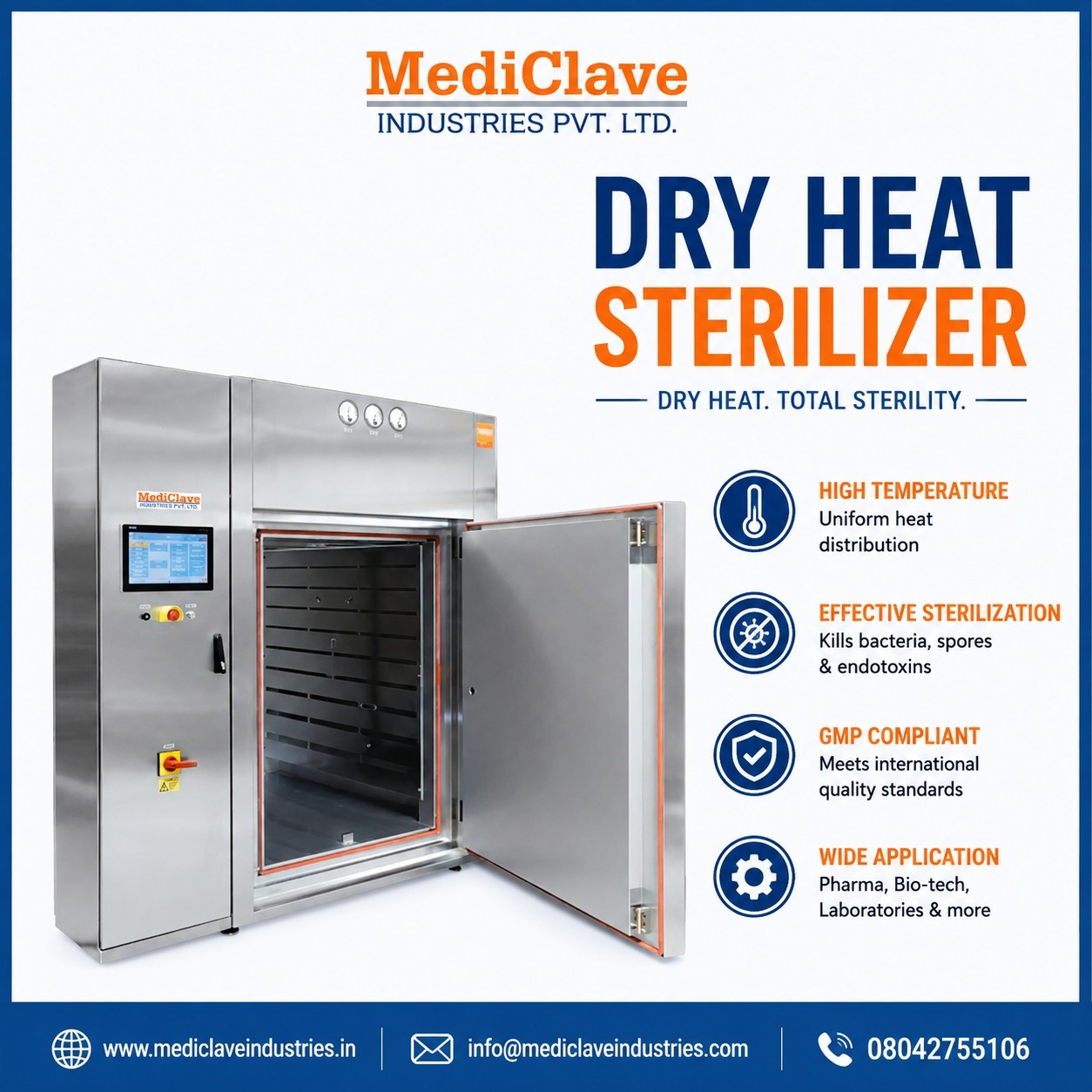
Dry Heat Sterilization is a sterilization process that eliminates microorganisms through the application of high temperatures without the use of moisture or steam.
The process destroys microorganisms primarily through oxidation and protein denaturation. Continuous exposure to high temperatures damages microbial cells and spores, ultimately rendering them nonviable.
Dry heat sterilization is especially effective for:
Glassware
Metal instruments
Stainless steel equipment
Powders
Oils
Pharmaceutical containers
Heat-resistant materials
Because moisture is not involved, dry heat sterilization is ideal for products that cannot tolerate steam sterilization.
Why Dry Heat Sterilization Is Important
Sterility is a mandatory requirement in pharmaceutical and healthcare environments.
Contamination can lead to:
Product recalls
Batch rejection
Regulatory violations
Patient safety risks
Financial losses
Dry heat sterilization provides an effective solution for sterilizing materials that require high-temperature treatment without moisture exposure.
In pharmaceutical manufacturing, it plays a vital role in ensuring product integrity and compliance with GMP standards.
How Dry Heat Sterilization Works
The principle behind dry heat sterilization is straightforward yet highly effective.
Heat energy is transferred to the items being sterilized through convection, conduction, and radiation.
The sterilization process typically involves the following stages:
Step 1: Loading
Items are placed inside the dry heat sterilizer chamber.
Products must be arranged to allow proper air circulation.
Step 2: Heating Phase
The chamber temperature gradually increases to the required sterilization temperature.
Uniform heating is critical for achieving effective sterilization.
Step 3: Exposure Phase
The materials remain exposed to the target temperature for a specified duration.
Common temperature-time combinations include:
160°C for 120 minutes
170°C for 60 minutes
180°C for 30 minutes
The exact cycle depends on the application and validation requirements.
Step 4: Cooling Phase
After sterilization, the chamber cools gradually.
Products are removed only after reaching safe handling temperatures.
Principle of Microbial Destruction
Dry heat sterilization destroys microorganisms through oxidative damage.
The process:
Oxidizes cellular components
Denatures proteins
Destroys microbial enzymes
Eliminates bacterial spores
Reduces endotoxin levels
This mechanism differs significantly from moist heat sterilization, which relies on steam penetration.
Types of Dry Heat Sterilization Equipment
Several types of dry heat sterilization systems are used across industries.
Hot Air Oven
The most common dry heat sterilization equipment.
Applications include:
Laboratory glassware
Metal instruments
Pharmaceutical containers
Depyrogenation Tunnel
Widely used in pharmaceutical manufacturing.
Functions include:
Sterilization
Depyrogenation
Glass vial preparation
Depyrogenation tunnels are critical in injectable drug manufacturing.
Continuous Dry Heat Sterilizers
Used in high-volume pharmaceutical production environments.
Provide:
Automated operation
Continuous processing
Consistent temperature control
Applications of Dry Heat Sterilization
Dry heat sterilization is used across multiple industries.
Pharmaceutical Industry
Pharmaceutical companies use dry heat sterilization for:
Glass vials
Ampoules
Stainless steel components
Metal equipment
Production accessories
The process ensures contamination-free manufacturing.
Injectable Drug Manufacturing
Injectable products require extremely high levels of sterility.
Without proper sterilization, injectable products may pose serious patient safety risks.
GMP Requirements for Dry Heat Sterilization
Pharmaceutical manufacturers must comply with stringent regulations.
Important GMP considerations include:
Temperature Mapping
Uniform temperature distribution must be verified.
Validation
Systems should undergo:
IQ (Installation Qualification)
OQ (Operational Qualification)
PQ (Performance Qualification)
Monitoring
Critical parameters include:
Chamber temperature
Exposure time
Air circulation
Product load configuration
Documentation
Comprehensive records are required for compliance and audits.
Integration with Pharmaceutical Utility Systems
Dry heat sterilization is often integrated into a broader pharmaceutical infrastructure that includes:
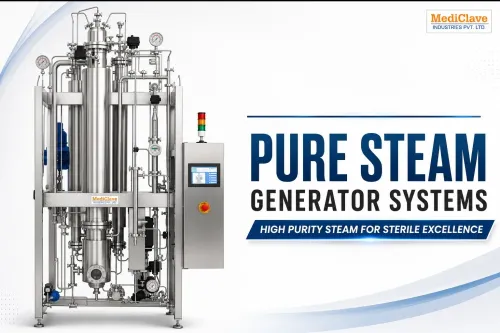
Pure Steam Generator Systems
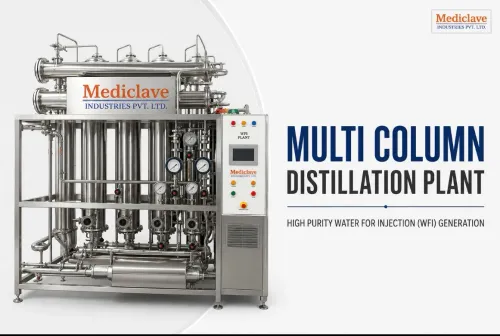
Multi Column Distillation Plants
Water Distribution Systems
Water Storage Tanks
Steam Sterilizer Autoclaves
Together, these systems create a complete sterile manufacturing environment.
Future Trends in Dry Heat Sterilization
Modern sterilization technology continues to evolve.
Emerging developments include:
PLC-based automation
SCADA integration
Data logging systems
Remote monitoring
Energy-efficient heating technologies
Advanced validation software
These innovations improve process reliability while supporting regulatory compliance.
Why Mediclave Industries for Dry Heat Sterilization Solutions?
Mediclave Industries specializes in manufacturing high-quality pharmaceutical sterilization and utility equipment designed for modern GMP-compliant facilities.
Key advantages include:
GMP-compliant engineering
Advanced automation options
Robust stainless steel construction
Reliable sterilization performance
Validation support
Long-term operational efficiency
Combined with pharmaceutical utility solutions such as Pure Steam Generators, Multi Column Distillation Plants, Water Distribution Systems, and Steam Sterilizers, Mediclave Industries offers comprehensive solutions for sterile manufacturing environments.
Conclusion
Dry Heat Sterilization remains one of the most trusted sterilization methods in pharmaceutical manufacturing, healthcare, biotechnology, and laboratory environments. By using high temperatures without moisture, it effectively sterilizes heat-resistant materials while providing exceptional depyrogenation capabilities.
From injectable drug production to laboratory operations, dry heat sterilization continues to play a vital role in ensuring product quality, regulatory compliance, and patient safety. As sterile manufacturing standards become increasingly stringent, investing in reliable and validated dry heat sterilization equipment remains a critical decision for pharmaceutical organizations worldwide.
Frequently Asked Questions (FAQs)
What is Dry Heat Sterilization?
Dry Heat Sterilization is a sterilization method that uses high temperatures without moisture to eliminate microorganisms and bacterial spores.
How does Dry Heat Sterilization work?
It destroys microorganisms through oxidation and protein denaturation caused by prolonged exposure to high temperatures.
What materials can be sterilized using dry heat?
Glassware, metal instruments, powders, oils, and heat-resistant pharmaceutical components can be sterilized using dry heat.
What temperature is used for dry heat sterilization?
Common sterilization cycles include 160°C for 120 minutes, 170°C for 60 minutes, and 180°C for 30 minutes.
What is the difference between dry heat and steam sterilization?
Dry heat uses hot air without moisture, while steam sterilization relies on saturated steam under pressure.
Why is dry heat sterilization important in pharmaceutical manufacturing?
It provides reliable sterilization and depyrogenation of glass containers and heat-resistant materials used in sterile drug production.

 Chat with us