Thank you for writing to us. One of our executive will reach back to you through your submitted medium. In case there’s an urgency, feel free to connect over WhatsApp for faster response.
Prefer calling? Dial +917041232204 (International callers) or +917041232204 (Indian callers).
Pure Steam Generator System: The Backbone of Sterile Pharmaceutical Manufacturing
Pure Steam Generator System – Working Principle, Applications, Benefits & GMP Compliance | Hyderabad
Pure Steam Generator System: The Backbone of Sterile Pharmaceutical Manufacturing
In the pharmaceutical industry, maintaining sterility is not just a quality requirement—it is a regulatory necessity. Every process involved in manufacturing sterile products must be carefully controlled to eliminate the risk of contamination. One of the most important systems that helps achieve this objective is the Pure Steam Generator System.
Pure steam plays a critical role in sterilization processes, equipment sanitation, cleanroom operations, and pharmaceutical production. Unlike industrial steam, pure steam is generated from purified water and is completely free from contaminants, chemicals, and impurities that could compromise product quality.
As pharmaceutical facilities continue to adopt stricter GMP standards and advanced manufacturing technologies, the demand for reliable Pure Steam Generator Systems has grown significantly. Whether it is a vaccine manufacturing plant, injectable production facility, biotechnology laboratory, or healthcare institution, pure steam remains an essential utility for maintaining sterile operations.
In this comprehensive guide, we will explore how a Pure Steam Generator System works, its major components, applications, benefits, GMP requirements, and factors to consider when selecting the right system for your facility.
What Is a Pure Steam Generator System?
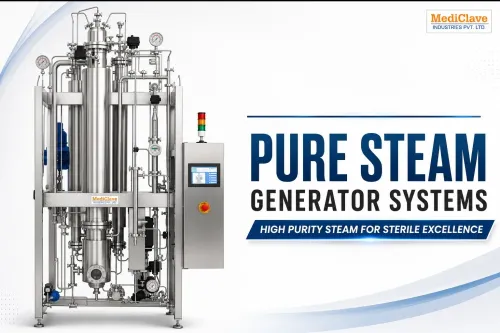
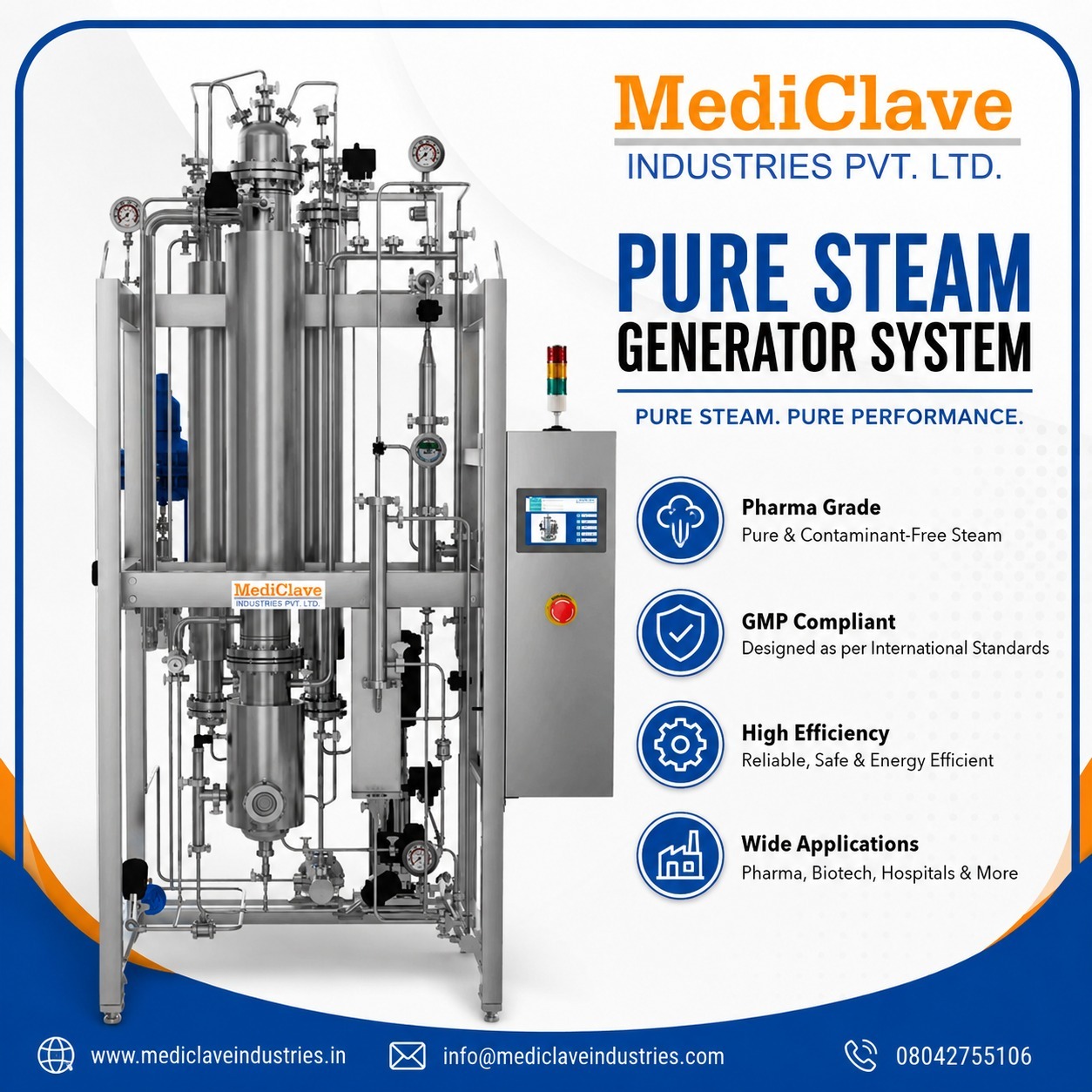
A Pure Steam Generator (PSG) is a specialized system designed to produce high-purity steam from Purified Water (PW) or Water for Injection (WFI). The generated steam is free from pyrogens, endotoxins, dissolved solids, and contaminants.
Unlike conventional boiler steam, pure steam comes into direct contact with pharmaceutical equipment, product-contact surfaces, and sterilization chambers. Therefore, its quality must comply with pharmaceutical regulations and international GMP standards.
Pure steam is widely used in:
Sterilization of pharmaceutical equipment
Sterilization of manufacturing vessels
SIP (Sterilization-in-Place) systems
Sterile piping networks
Autoclaves
Cleanroom humidification
Biotechnology production facilities
A high-quality Pure Steam Generator System ensures that every sterilization cycle meets stringent quality and compliance requirements.
For integrated pharmaceutical utility systems, pure steam generation is often combined with a Water Distribution System, helping maintain consistent water quality throughout the manufacturing process.
Why Pure Steam Is Different from Industrial Steam
Many people assume that all steam is the same, but in pharmaceutical manufacturing, the difference is substantial.
Industrial steam may contain:
Boiler treatment chemicals
Corrosion inhibitors
Dissolved minerals
Metallic particles
Contaminants from pipelines
Pure steam, on the other hand:
Contains no added chemicals
Is generated using purified feed water
Meets pharmaceutical quality standards
Can directly contact sterile surfaces
Supports validated sterilization processes
This distinction is crucial because even microscopic contamination can compromise sterile drug products and result in batch rejection.
How a Pure Steam Generator System Works
The operating principle of a Pure Steam Generator System is relatively straightforward, yet highly controlled.
Step 1: Feed Water Supply
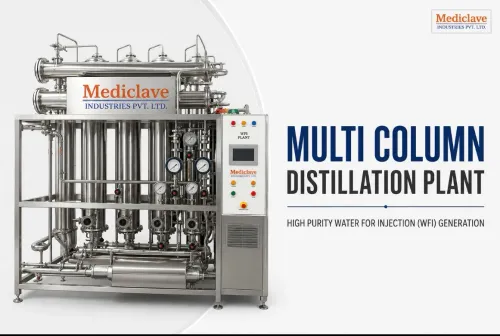
The system receives feed water from a purified source, typically generated by a Multi Column Distillation Plant or another pharmaceutical water treatment system.
The quality of incoming water directly affects the quality of the pure steam produced.
Step 2: Heating Process
The feed water enters the evaporation chamber where it is heated using plant steam or another energy source.
As the temperature rises, pure water begins to evaporate.
Step 3: Separation of Impurities
Special separation mechanisms ensure that contaminants, dissolved solids, droplets, and impurities do not carry over into the steam phase.
This stage is essential for maintaining pharmaceutical-grade steam quality.
Step 4: Steam Purification
The generated steam passes through separators that remove any remaining moisture and contaminants.
Only high-purity steam exits the system.
Step 5: Distribution
The pure steam is then distributed through sanitary pipelines to various applications, including:
Autoclaves
SIP systems
Sterile vessels
Manufacturing equipment
Process tanks
Proper distribution ensures that steam quality remains intact until the point of use.
Main Components of a Pure Steam Generator System
A modern PSG consists of several critical components that work together to ensure efficient and reliable steam production.
Evaporator
The evaporator is responsible for converting purified water into steam.
Demister Separator
This component removes entrained water droplets from the steam stream.
Heat Exchanger
Heat exchangers facilitate energy transfer while maintaining operational efficiency.
Control System
Automated PLC-based controls monitor:
Temperature
Pressure
Water levels
Steam quality
Safety parameters
Condensate Collection System
Helps recover condensate and improve overall energy efficiency.
Pure steam enables validated sterilization processes and contamination prevention.
Healthcare and Hospital CSSD Departments
Modern CSSD facilities depend heavily on steam sterilization systems.
Pure steam helps ensure the effective sterilization of medical instruments and equipment.
Organizations operating advanced CSSD Equipment often rely on integrated steam generation systems to support critical sterilization processes.
Benefits of Using a Pure Steam Generator System
Enhanced Sterility Assurance
The primary advantage is reliable sterilization performance.
Pure steam eliminates contaminants that could affect sterile products.
Regulatory Compliance
Pharmaceutical manufacturers must comply with:
GMP requirements
FDA regulations
EU GMP guidelines
WHO standards
Pure steam systems help facilities meet these requirements consistently.
Product Quality Protection
Contaminated steam can negatively impact product quality.
Pure steam minimizes contamination risks and protects product integrity.
Improved Process Reliability
Modern PSG systems provide:
Stable steam production
Consistent quality
Automated monitoring
Reduced operational risks
Reduced Maintenance
Advanced system designs reduce fouling, scaling, and operational downtime.
Long-Term Cost Savings
Although the initial investment may be significant, reliable operation and reduced contamination-related losses often result in substantial savings over time.
Importance of Pure Steam in Sterilization Processes
Sterilization is one of the most critical processes in pharmaceutical manufacturing.
A sterilization cycle is only as effective as the quality of the steam used.
Pure steam ensures:
Uniform heat distribution
Effective microbial destruction
Reliable validation results
Consistent sterilization performance
This is particularly important for facilities using Steam Sterilizer Autoclave systems where steam quality directly affects sterilization effectiveness.
Pure Steam Generator and Water for Injection Systems
Pure steam generation is closely linked to pharmaceutical water systems.
Most facilities use purified water generated through systems such as:
Reverse Osmosis
EDI Systems
Distillation Units
Multi Column Distillation Plants
A properly designed Multi Column Distillation Plant helps provide high-quality feed water required for pharmaceutical steam generation.
The integration of water treatment and steam generation creates a complete pharmaceutical utility infrastructure.
GMP Requirements for Pure Steam Systems
Regulatory agencies expect pharmaceutical manufacturers to maintain strict control over utility systems.
Key GMP considerations include:
Material Selection
Most systems use:
SS 316L stainless steel
Electropolished surfaces
Sanitary fittings
Validation
Systems must undergo:
Installation Qualification (IQ)
Operational Qualification (OQ)
Performance Qualification (PQ)
Monitoring
Critical parameters include:
Temperature
Pressure
Conductivity
Microbial quality
Documentation
Comprehensive records must be maintained for:
Maintenance
Calibration
Validation
Performance monitoring
Key Factors to Consider When Choosing a Pure Steam Generator
Selecting the right system requires careful evaluation.
Production Capacity
The system should match current and future steam demand.
Automation Features
Advanced PLC and HMI controls improve operational efficiency.
Compliance Standards
Ensure compliance with:
GMP
FDA
WHO
EU standards
Construction Quality
Look for:
SS 316L construction
Hygienic design
Easy maintenance access
Energy Efficiency
Energy-efficient systems help reduce operational costs.
Integration Capability
The PSG should integrate smoothly with:
Water purification systems
Water storage systems
Distribution networks
Sterilization equipment
Facilities often combine PSG installations with a Water Storage Tank and Water Distribution System to create a complete pharmaceutical utility solution.
Common Challenges and Their Solutions
Scaling
Challenge: Mineral deposits can affect efficiency.
Solution: Use properly treated feed water and regular maintenance schedules.
Inconsistent Steam Quality
Challenge: Poor separation of contaminants.
Solution: Use high-efficiency separators and monitor system performance.
Solution: Maintain proper documentation and validation protocols.
Future Trends in Pure Steam Generation
The pharmaceutical industry continues to evolve rapidly.
Emerging trends include:
Smart automation systems
Remote monitoring capabilities
Industry 4.0 integration
Predictive maintenance
Enhanced energy recovery
Advanced validation technologies
These innovations improve reliability while reducing operational costs.
Why Mediclave Industries for Pure Steam Generator Systems?
When selecting a pharmaceutical utility partner, reliability, compliance, and engineering expertise are critical.
At Mediclave Industries, Pure Steam Generator Systems are designed to meet the demanding requirements of pharmaceutical, biotechnology, healthcare, and sterile manufacturing facilities.
The company focuses on:
GMP-compliant designs
High-quality stainless steel construction
Advanced automation options
Reliable performance
Efficient utility integration
Long-term operational support
Combined with solutions such as Multi Column Distillation Plants, Water Distribution Systems, Water Storage Tanks, and Steam Sterilizers, Mediclave Industries delivers comprehensive pharmaceutical utility solutions tailored to modern manufacturing environments.
Conclusion
A Pure Steam Generator System is far more than just a utility—it is a critical component of sterile pharmaceutical manufacturing. From equipment sterilization and SIP applications to biotechnology processes and vaccine production, pure steam plays a vital role in ensuring product safety, regulatory compliance, and operational excellence.
As pharmaceutical regulations become increasingly stringent, investing in a reliable, GMP-compliant Pure Steam Generator System is essential for maintaining high-quality manufacturing standards. By selecting the right system and integrating it with advanced pharmaceutical water and sterilization infrastructure, manufacturers can achieve consistent performance, reduced contamination risks, and long-term operational efficiency.
Frequently Asked Questions (FAQs)
What is a Pure Steam Generator System?
A Pure Steam Generator System produces pharmaceutical-grade steam from purified water for sterilization and manufacturing applications.
What is the difference between pure steam and industrial steam?
Pure steam is free from chemicals, contaminants, and impurities, whereas industrial steam may contain treatment chemicals and dissolved solids.
Where is pure steam used?
Pure steam is commonly used in pharmaceutical manufacturing, biotechnology facilities, vaccine production plants, and hospital sterilization departments.
Why is pure steam important in pharmaceutical manufacturing?
It helps ensure sterility, regulatory compliance, contamination control, and product quality.
Can pure steam come into direct contact with pharmaceutical equipment?
Yes. Pure steam is specifically designed for direct contact with sterile equipment and product-contact surfaces.
Is a Pure Steam Generator required for GMP compliance?
For many sterile pharmaceutical operations, pure steam systems play a critical role in meeting GMP and regulatory requirements.

 Chat with us