
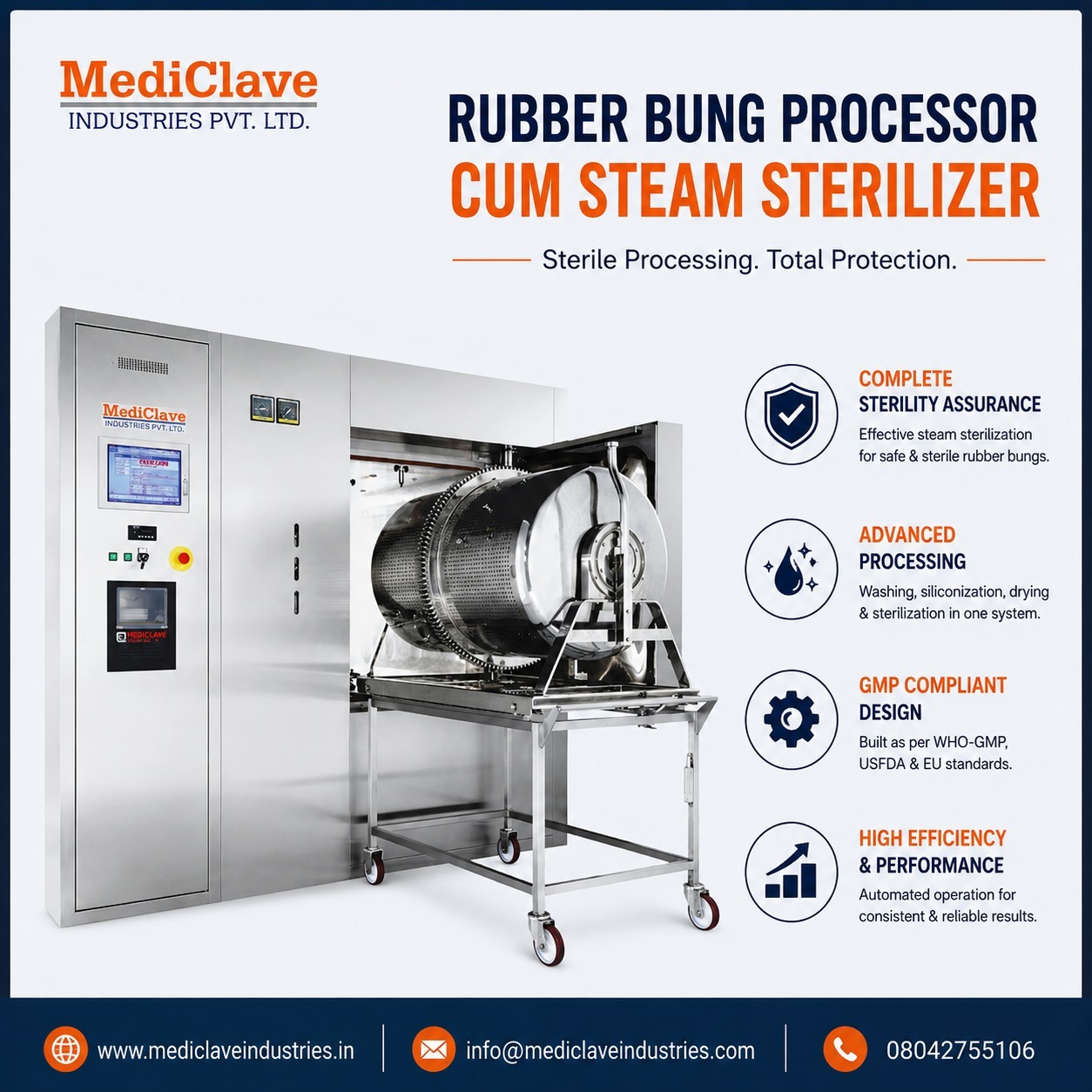
Rubber Bung Processor Cum Steam Sterilizer: Complete Guide for Pharmaceutical Manufacturing
In the pharmaceutical industry, maintaining sterility is not limited to the drug product alone. Every component that comes into contact with the product—including containers, closures, rubber stoppers, and seals—must meet stringent sterility requirements. Among these components, rubber bungs play a critical role in preserving product integrity, preventing contamination, and ensuring patient safety.
Rubber stoppers are widely used in injectable vials, infusion bottles, vaccine containers, and sterile pharmaceutical packaging. Since these closures come into direct contact with sterile products, they must undergo a validated cleaning and sterilization process before use.
This is where a Rubber Bung Processor Cum Steam Sterilizer becomes an essential piece of pharmaceutical equipment. Designed specifically for washing, siliconization, sterilization, drying, and processing rubber closures, the system ensures that rubber stoppers meet GMP, WHO-GMP, and regulatory standards.
As pharmaceutical manufacturing standards continue to become more stringent, automated rubber bung processing systems have become an indispensable part of modern sterile production facilities.
In this comprehensive guide, we will explore how Rubber Bung Processor Cum Steam Sterilizers work, their applications, benefits, GMP requirements, and why they are crucial in injectable manufacturing.
What Is a Rubber Bung Processor Cum Steam Sterilizer?
A Rubber Bung Processor Cum Steam Sterilizer is an advanced pharmaceutical processing system designed to clean, wash, sterilize, dry, and prepare rubber closures for sterile manufacturing applications.
The system combines multiple operations into a single automated process, including:
- Washing
- Rinsing
- Siliconization
- Sterilization
- Drying
- Cooling
The processed rubber stoppers are then ready for aseptic filling operations.
Unlike conventional sterilization systems, a Rubber Bung Processor integrates both processing and sterilization functions, reducing manual handling and contamination risks.
Importance of Rubber Bungs in Pharmaceutical Manufacturing
Rubber closures serve as the primary barrier between the drug product and the external environment.
They help:
- Maintain sterility
- Prevent microbial contamination
- Preserve product stability
- Ensure container integrity
- Support long-term storage
A contaminated rubber stopper can compromise an entire batch of injectable products, resulting in costly recalls and regulatory issues.
Therefore, proper cleaning and sterilization are essential.
Why Rubber Bungs Require Sterilization
Rubber closures may accumulate contaminants during:
- Manufacturing
- Packaging
- Transportation
- Storage
- Handling
Potential contaminants include:
- Dust particles
- Microorganisms
- Bacterial spores
- Endotoxins
- Processing residues
Without effective sterilization, these contaminants can enter sterile pharmaceutical products.
This is particularly critical for:
- Injectable drugs
- Vaccines
- IV fluids
- Ophthalmic products
- Biotechnology products
Working Principle of Rubber Bung Processor Cum Steam Sterilizer
The system performs multiple processing stages in a controlled environment.
Step 1: Loading
Raw rubber stoppers are loaded into the processing chamber.
The chamber is designed to ensure uniform exposure during washing and sterilization.
Step 2: Pre-Washing
Initial washing removes:
- Dust
- Particulate matter
- Surface contaminants
This stage significantly reduces the microbial load.
Step 3: Washing Cycle
The system performs intensive washing using purified water.
Depending on process requirements, multiple wash cycles may be programmed.
The washing process ensures:
- Removal of manufacturing residues
- Reduction of particulate contamination
- Improved cleanliness
Step 4: Siliconization
Many pharmaceutical closures require siliconization.
Benefits include:
- Improved stopper performance
- Reduced friction
- Enhanced sealing characteristics
- Better machine compatibility
Siliconization is performed under controlled conditions.
Step 5: Final Rinsing
The stoppers are rinsed using:
- Purified Water (PW)
- Water for Injection (WFI)
This step removes residual cleaning agents.
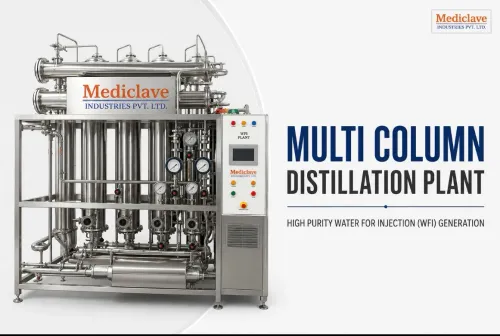
For pharmaceutical applications, WFI generated through systems such as Multi Column Distillation Plants is often used.
Step 6: Steam Sterilization
The cleaned closures undergo steam sterilization.
Saturated steam enters the chamber under controlled pressure and temperature conditions.
Typical sterilization cycles include:
- 121°C
- 124°C
- 134°C
The exact cycle depends on validation requirements.
Steam effectively destroys:
- Microorganisms
- Bacterial spores
- Fungi
- Viruses
Step 7: Drying
Following sterilization, the system initiates a drying cycle.
This prevents moisture retention and prepares the closures for aseptic transfer.
Step 8: Cooling
The processed stoppers are cooled to suitable handling temperatures.
Step 9: Unloading
The sterile rubber closures are transferred to aseptic filling areas for production use.
Major Components of a Rubber Bung Processor Cum Steam Sterilizer
A modern system consists of several integrated components.
Sterilization Chamber
Constructed from pharmaceutical-grade stainless steel.
Provides:
- Corrosion resistance
- Easy cleaning
- Long service life
Steam Generation Interface
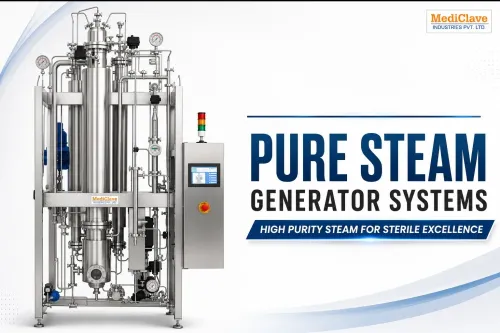
The system receives sterile steam from utility systems such as a Pure Steam Generator System.
Pure steam ensures contamination-free sterilization.
Water Circulation System
Responsible for:
- Washing
- Rinsing
- Process water management
PLC Control System
Provides automated control over:
- Temperature
- Pressure
- Time
- Cycle parameters
Modern systems feature HMI touchscreen interfaces.
HEPA Filtration System
Ensures contamination-free drying air.
Supports aseptic processing requirements.
Validation Sensors
Monitor critical process parameters.
These include:
- Temperature probes
- Pressure transmitters
- Flow monitoring devices
Applications of Rubber Bung Processor Cum Steam Sterilizers
These systems are widely used across pharmaceutical sectors.
Injectable Manufacturing Plants
Rubber stoppers used in injectable products require validated sterilization.
Applications include:
- Antibiotics
- Injectable formulations
- Biologics
- Critical care drugs
Vaccine Manufacturing Facilities
Vaccines demand extremely high sterility assurance levels.
Rubber closures are processed using automated systems to ensure product safety.
IV Fluid Manufacturing
Large-volume parenteral products rely on sterile closures.
Rubber Bung Processors help maintain product integrity.
Biotechnology Industry
Biotech products often require aseptic packaging systems.
Sterilized closures support contamination-free manufacturing.
Contract Manufacturing Organizations (CMOs)
CMOs handling multiple pharmaceutical products utilize these systems to meet client quality standards.
Benefits of Rubber Bung Processor Cum Steam Sterilizers
Reduced Human Intervention
Automation minimizes contamination risks caused by manual handling.
Improved Sterility Assurance
Validated sterilization cycles provide reliable microbial destruction.
GMP Compliance
Supports compliance with:
- WHO GMP
- US FDA
- EU GMP
- PIC/S Guidelines
Enhanced Productivity
Combining multiple operations into one system reduces processing time.
Consistent Product Quality
Automated processing improves batch-to-batch consistency.
Better Regulatory Compliance
Integrated monitoring simplifies documentation and audit readiness.
Role of Water Quality in Rubber Bung Processing
Water quality significantly impacts final product cleanliness.
Common water types used include:
Purified Water (PW)
Used during washing operations.
Water for Injection (WFI)
Used for final rinsing operations.
WFI is generally generated using:
- Multi Column Distillation Plants
- Pure Steam Systems
- Pharmaceutical Water Distribution Systems
High-quality water ensures contamination-free processing.
GMP Requirements for Rubber Bung Processing
Regulatory authorities require strict validation and monitoring.
IQ – Installation Qualification
Verifies correct installation of equipment.
OQ – Operational Qualification
Confirms equipment functions according to design specifications.
PQ – Performance Qualification
Demonstrates consistent processing performance under actual operating conditions.
Temperature Mapping
Ensures uniform sterilization throughout the chamber.
Biological Validation
Confirms microbial destruction effectiveness.
Documentation
Comprehensive documentation is required for:
- Batch records
- Validation reports
- Maintenance records
- Calibration records
Common Challenges in Rubber Bung Processing
Manufacturers may encounter:
- Inadequate washing
- Incomplete drying
- Uneven sterilization
- Improper siliconization
- Validation failures
Modern automated systems help overcome these challenges through advanced process control.
Integration with Pharmaceutical Utility Systems
A Rubber Bung Processor Cum Steam Sterilizer typically operates alongside:
Pure Steam Generator Systems
Supply sterile steam for sterilization.
Multi Column Distillation Plants
Generate Water for Injection.
Water Distribution Systems
Deliver purified process water.
Water Storage Tanks
Maintain pharmaceutical water quality.
Steam Sterilizer Autoclaves
Support additional sterilization requirements.
Together, these systems form a complete sterile manufacturing infrastructure.
How to Select the Right Rubber Bung Processor Cum Steam Sterilizer
When evaluating equipment, consider:
Chamber Capacity
Match equipment size with production requirements.
Automation Level
Look for PLC and HMI-based controls.
Validation Support
Ensure IQ, OQ, and PQ documentation availability.
Water and Steam Integration
Compatibility with existing utility systems is important.
GMP Compliance
Select equipment designed according to international pharmaceutical standards.
After-Sales Support
Reliable service support minimizes downtime.
Why Mediclave Industries?
Mediclave Industries specializes in manufacturing advanced pharmaceutical utility and sterilization systems for GMP-compliant facilities.
Key advantages include:
- Pharmaceutical-grade construction
- Advanced PLC automation
- GMP-compliant design
- Reliable sterilization performance
- Validation support
- Customized solutions
- Long operational life
Mediclave Industries also provides complementary solutions including:
- Pure Steam Generator Systems
- Multi Column Distillation Plants
- Water Distribution Systems
- Water Storage Tanks
- Steam Sterilizers
- Pharmaceutical Utility Equipment
These integrated systems help pharmaceutical manufacturers achieve superior sterility assurance and regulatory compliance.
Future Trends in Rubber Bung Processing
Industry trends include:
- Fully automated processing
- SCADA integration
- Electronic batch records
- Data integrity compliance
- Remote monitoring
- Energy-efficient sterilization cycles
- Industry 4.0 compatibility
These innovations continue to improve productivity and quality assurance.
Conclusion
Rubber Bung Processor Cum Steam Sterilizers play a crucial role in pharmaceutical manufacturing by ensuring that rubber closures used in injectable products remain clean, sterile, and compliant with regulatory standards.
By combining washing, siliconization, sterilization, drying, and cooling into a single integrated system, these machines significantly reduce contamination risks while improving operational efficiency.
As sterile manufacturing requirements continue to evolve, investing in a reliable, GMP-compliant Rubber Bung Processor Cum Steam Sterilizer remains essential for pharmaceutical companies seeking to maintain product quality, patient safety, and regulatory compliance.
FAQs
What is a Rubber Bung Processor Cum Steam Sterilizer?
It is a pharmaceutical processing system used to wash, sterilize, dry, and prepare rubber closures for sterile manufacturing applications.
Why are rubber stoppers sterilized?
Rubber stoppers must be sterilized to eliminate microorganisms, contaminants, and particulate matter before use in sterile products.
What temperature is used for sterilization?
Common sterilization cycles include 121°C, 124°C, and 134°C depending on validation requirements.
What water is used during processing?
Purified Water (PW) and Water for Injection (WFI) are typically used.
Why is siliconization performed?
Siliconization improves stopper performance and reduces friction during filling operations.
Is validation required?
Yes. IQ, OQ, PQ, temperature mapping, and biological validation are essential for GMP compliance.
Which industries use Rubber Bung Processors?
Pharmaceutical, biotechnology, vaccine manufacturing, injectable production, and IV fluid manufacturing industries.
What are the benefits of automation?
Automation reduces contamination risks, improves consistency, and enhances regulatory compliance.
How does steam sterilization work?
Saturated steam destroys microorganisms through heat transfer and protein denaturation.
Why choose Mediclave Industries?
Mediclave Industries offers GMP-compliant, reliable, and fully validated pharmaceutical sterilization and utility solutions for modern manufacturing facilities.