

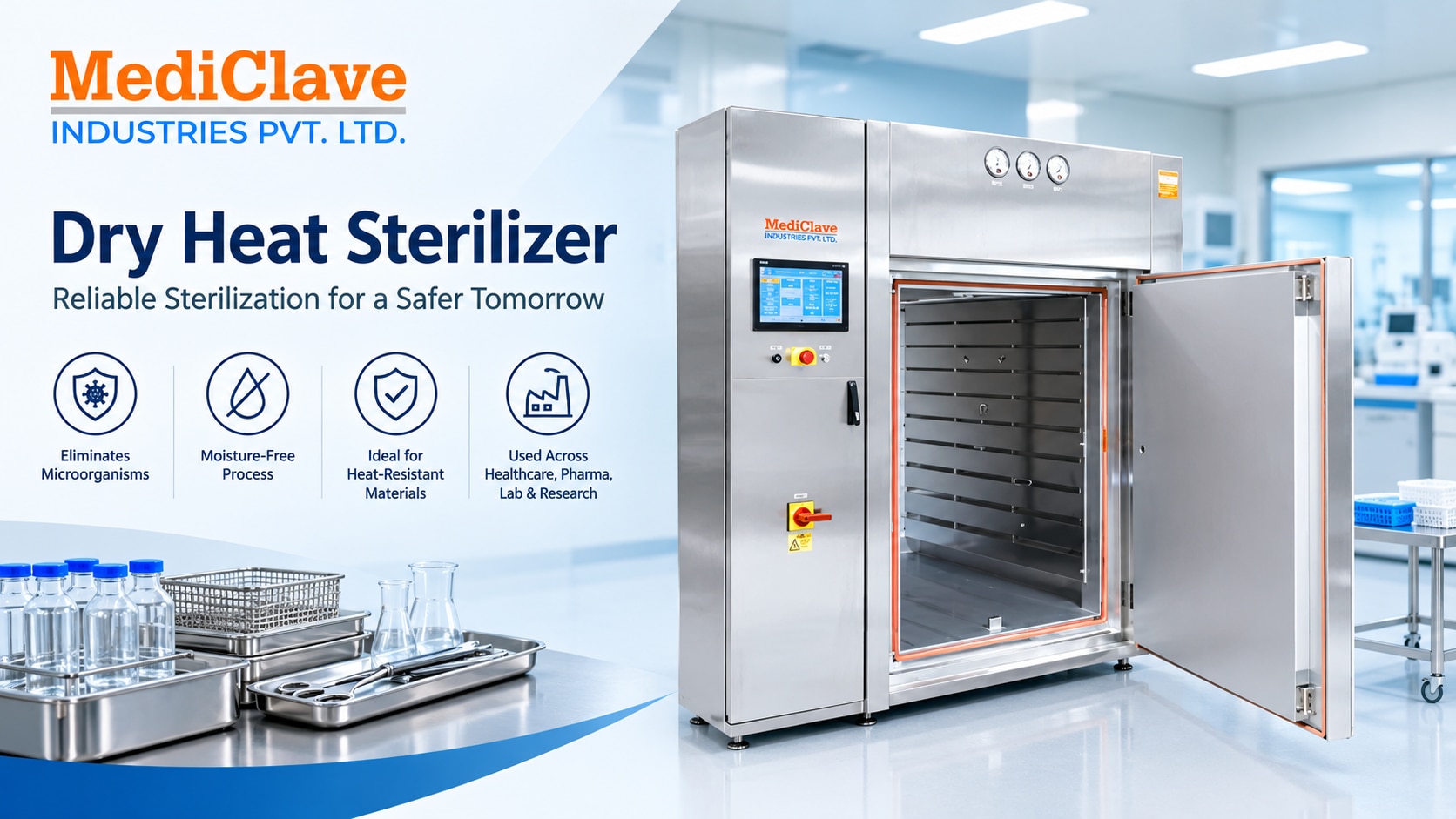
Sterilization is one of the most important processes in healthcare, pharmaceutical manufacturing, laboratories, and other industries where contamination control is essential. Every organization that handles instruments, glassware, containers, or other heat-resistant materials needs a dependable sterilization method to maintain hygiene, product quality, and process safety.
A Dry Heat Sterilizer is a widely used sterilization system designed to eliminate microorganisms from suitable heat-resistant materials through controlled dry heat. Unlike steam-based sterilization, dry heat sterilization works without moisture, making it particularly useful for applications where moisture may not be desirable.
For hospitals, pharmaceutical companies, laboratories, research organizations, and healthcare facilities, choosing the right sterilization equipment is an important part of establishing a reliable contamination-control process.
In this guide, we will understand what a Dry Heat Sterilizer is, how the process works, where it is used, its advantages, and what organizations should consider when selecting a suitable system.
What Is a Dry Heat Sterilizer?
A Dry Heat Sterilizer is a sterilization machine that uses heated air to treat materials that can withstand elevated temperatures. The process is based on the controlled application of dry heat for a defined period to achieve the required level of microbial destruction.
The major difference between dry heat sterilization and steam sterilization is the sterilizing medium. Steam sterilizers use moist heat, while a Dry Heat Sterilizer uses hot air without steam.
This makes dry heat particularly suitable for certain materials that may be affected by moisture or for applications where a dry sterilization environment is preferred.
The sterilization process takes place inside a dedicated chamber where the materials are placed before the cycle begins. The equipment manages the sterilization process in a controlled manner so that the required treatment can be achieved consistently.
Why Is Dry Heat Sterilization Important?
Microbial contamination can create serious challenges for healthcare and pharmaceutical operations. Bacteria, fungi, spores, and other microorganisms can affect products, instruments, laboratory processes, and manufacturing environments.
Sterilization helps organizations control these risks by reducing or eliminating viable microorganisms from suitable materials.
Dry heat sterilization is particularly valuable because it provides a moisture-free sterilization method. Some materials may not be appropriate for steam-based processes because exposure to moisture can cause unwanted effects.
For example, certain glassware, metal components, powders, oils, and other suitable heat-resistant materials may benefit from dry heat treatment.
The process can therefore become an important part of a broader contamination-control strategy.
How Does a Dry Heat Sterilizer Work?
The basic principle of dry heat sterilization is straightforward.
Materials requiring sterilization are placed inside the sterilizer chamber. Once the sterilization cycle begins, heated air is introduced and circulated within the chamber. The heat is maintained for the required process duration so that microorganisms are exposed to the sterilizing conditions.
The effectiveness of the process depends on factors such as the material being sterilized, load arrangement, heat distribution, process conditions, and validated cycle requirements.
After completion of the sterilization cycle, the treated materials can be handled according to the organization's established procedures.
Modern sterilization systems are designed to provide controlled and repeatable processing, helping organizations maintain consistency between different sterilization cycles.
Dry Heat Sterilizer vs. Steam Sterilizer
Both dry heat and steam sterilization are important sterilization methods, but they are used for different applications.
A steam sterilizer uses moist heat and is commonly selected for instruments, textiles, surgical materials, and other products compatible with steam.
A Dry Heat Sterilizer, on the other hand, uses dry heated air and is often selected for materials where moisture-free processing is preferred.
The choice between these methods should be based on the material, application, process requirements, and validated sterilization method.
Therefore, a Dry Heat Sterilizer is not necessarily a replacement for a steam sterilizer. Instead, it provides another important sterilization option for suitable applications.
Common Applications of Dry Heat Sterilizers
Dry Heat Sterilizers are used across several industries because of their ability to process suitable heat-resistant materials without moisture.
1. Pharmaceutical Industry
Pharmaceutical manufacturing requires strict contamination control throughout production.
Dry heat sterilization can be used for suitable pharmaceutical materials, containers, glassware, and other components depending on the validated manufacturing process.
Pharmaceutical organizations may integrate dry heat sterilization into their production workflow to support product quality and contamination-control requirements.
2. Hospitals and Healthcare Facilities
Healthcare facilities use various sterilization methods depending on the type of instrument or material.
Dry heat sterilization may be suitable for selected heat-resistant items that are compatible with dry heat processing.
It can be particularly useful when the material requires a dry sterilization environment rather than exposure to steam or moisture.
3. Laboratories
Research and testing laboratories frequently work with glassware, laboratory equipment, and other heat-resistant materials.
A Dry Heat Sterilizer can provide a practical method for treating suitable laboratory materials before or after use, according to laboratory procedures.
4. Medical Device Manufacturing
Medical device manufacturers operate under strict quality and contamination-control requirements.
Dry heat sterilization may be incorporated into manufacturing processes for suitable components and materials where the sterilization method is compatible with the product.
5. Research and Biotechnology
Research organizations and biotechnology facilities may require reliable sterilization processes for different types of heat-resistant materials.
Dry heat equipment can support these activities where a validated dry heat process is appropriate.
Materials Suitable for Dry Heat Sterilization
One of the important advantages of dry heat sterilization is its suitability for certain materials that may not be ideal for moist heat.
Common examples may include:
- Glassware
- Metal instruments
- Heat-resistant laboratory equipment
- Selected containers
- Certain powders
- Suitable oils
- Heat-resistant components
However, not every material can be sterilized using dry heat. Materials must be evaluated for their ability to tolerate the required sterilization process.
Organizations should always establish and validate the appropriate sterilization method for each product or material rather than selecting a process solely based on convenience.
Advantages of Using a Dry Heat Sterilizer
A Dry Heat Sterilizer can offer several benefits when used for the right application.
Moisture-Free Sterilization
One of the most important advantages is that the process does not rely on steam or moisture.
This makes it useful for materials that may be unsuitable for moist heat sterilization.
Suitable for Heat-Resistant Materials
Dry heat is particularly useful for selected heat-resistant materials such as glass and certain metal components.
Helps Support Contamination Control
A controlled sterilization process can become an important part of an organization's overall contamination-control strategy.
Useful Across Multiple Industries
Dry heat sterilization can be applied in pharmaceutical, healthcare, laboratory, research, biotechnology, and medical device environments.
Process Consistency
A properly designed and validated sterilization process can provide repeatable treatment from one cycle to another.
Reduced Moisture-Related Concerns
Because the process does not use steam, organizations can avoid certain moisture-related concerns associated with moist heat processing.
Why Choose the Right Dry Heat Sterilizer?
Selecting sterilization equipment is an important investment decision. A machine should not be selected simply because it is available or because it has a large chamber.
The equipment should be appropriate for the organization's application, material type, workflow, and sterilization requirements.
Before purchasing a Dry Heat Sterilizer, organizations should consider factors such as:
- Type of material being sterilized
- Expected load requirements
- Frequency of sterilization
- Available installation space
- Workflow and material movement
- Cleaning requirements
- Ease of operation
- Maintenance support
- Documentation and validation requirements
- Manufacturer experience
- After-sales service availability
A clear understanding of the application helps ensure that the selected sterilization system fits the actual needs of the facility.
Importance of Sterilization Validation
Sterilization is not simply a matter of heating materials and assuming they are sterile.
For pharmaceutical, medical device, healthcare, and other regulated environments, sterilization processes may need to be appropriately developed, documented, monitored, and validated according to applicable requirements.
Validation provides confidence that the selected sterilization process can consistently achieve its intended purpose.
Organizations should establish appropriate procedures for loading, operating, monitoring, unloading, and documenting sterilization cycles.
The sterilization process should also be reviewed whenever there are significant changes to the material, packaging, load configuration, or process.
Role of Proper Loading
Correct loading is an important part of achieving consistent sterilization results.
Materials should be arranged according to the organization's validated loading pattern. Overloading or improper arrangement can affect heat movement and may create areas that do not receive the intended treatment.
Operators should therefore follow established loading procedures and avoid making unauthorized changes to validated load configurations.
Training operators is equally important. Even a well-designed sterilizer requires correct operation to achieve reliable results.
Cleaning and Maintenance
Regular cleaning and maintenance help support the long-term performance of sterilization equipment.
The chamber and other accessible areas should be maintained according to the manufacturer's recommendations and the organization's standard operating procedures.
Routine maintenance can help identify potential issues before they affect production or sterilization activities.
A documented maintenance program is especially important in pharmaceutical and healthcare environments, where equipment performance and process reliability are closely connected.
Organizations should also maintain appropriate service records and ensure that maintenance activities are performed by trained personnel.
Dry Heat Sterilizer in Pharmaceutical Manufacturing
The pharmaceutical industry has some of the most demanding contamination-control requirements.
Products, containers, equipment, and manufacturing areas must be managed carefully to prevent contamination.
Dry heat sterilization can play an important role in selected pharmaceutical processes, particularly when materials are compatible with dry heat and a moisture-free sterilization method is required.
For pharmaceutical manufacturers, selecting a suitable sterilization system is only one part of the overall process. Facility design, personnel practices, material handling, cleaning, validation, documentation, and quality systems all contribute to effective contamination control.
A Dry Heat Sterilizer should therefore be integrated into the overall manufacturing process rather than treated as an isolated piece of equipment.
Dry Heat Sterilizer for Glassware
Glassware is one of the common material categories associated with dry heat sterilization.
Glass containers and laboratory glassware can often tolerate heat-based sterilization processes, making dry heat a useful option in suitable applications.
The absence of moisture can also be beneficial where organizations want to maintain dry conditions after sterilization.
However, glassware must be appropriately cleaned, prepared, loaded, and handled to ensure the overall process is effective.
Choosing a Dry Heat Sterilizer Manufacturer
The manufacturer plays an important role in the overall value of sterilization equipment.
Organizations should look beyond the machine itself and evaluate the manufacturer's experience, service capabilities, documentation, application knowledge, and understanding of sterilization processes.
A reliable manufacturer should be able to understand the customer's application and recommend an appropriate solution.
After-sales support is also important. Installation assistance, operator training, maintenance, troubleshooting, spare parts availability, and service support can contribute significantly to the long-term usability of the equipment.
For pharmaceutical and healthcare organizations, documentation and validation support may also be an important part of the purchasing decision.
Future of Dry Heat Sterilization
As healthcare, pharmaceutical manufacturing, biotechnology, and laboratory industries continue to grow, the importance of reliable contamination-control processes will also remain strong.
Manufacturers are increasingly focused on equipment that supports process consistency, operational convenience, documentation, safety, and integration with modern production environments.
The future of dry heat sterilization will continue to be influenced by the changing needs of regulated industries and the demand for reliable, efficient, and well-controlled sterilization processes.
Conclusion
A Dry Heat Sterilizer is an important sterilization solution for applications where controlled dry heat is suitable and moisture-free processing is preferred.
From pharmaceutical manufacturing and medical device production to laboratories, hospitals, biotechnology, and research facilities, dry heat sterilization can support effective contamination-control programs for appropriate heat-resistant materials.
The key to successful sterilization is not simply choosing a machine. It involves selecting the appropriate sterilization method, understanding the material being processed, establishing suitable procedures, validating the process, training operators, and maintaining the equipment properly.
For organizations looking for a reliable Dry Heat Sterilizer, working with an experienced manufacturer can help ensure that the equipment is selected according to the actual application and operational requirements.
When properly selected, installed, operated, and maintained, a Dry Heat Sterilizer can become a valuable part of a facility's sterilization and contamination-control workflow.
