

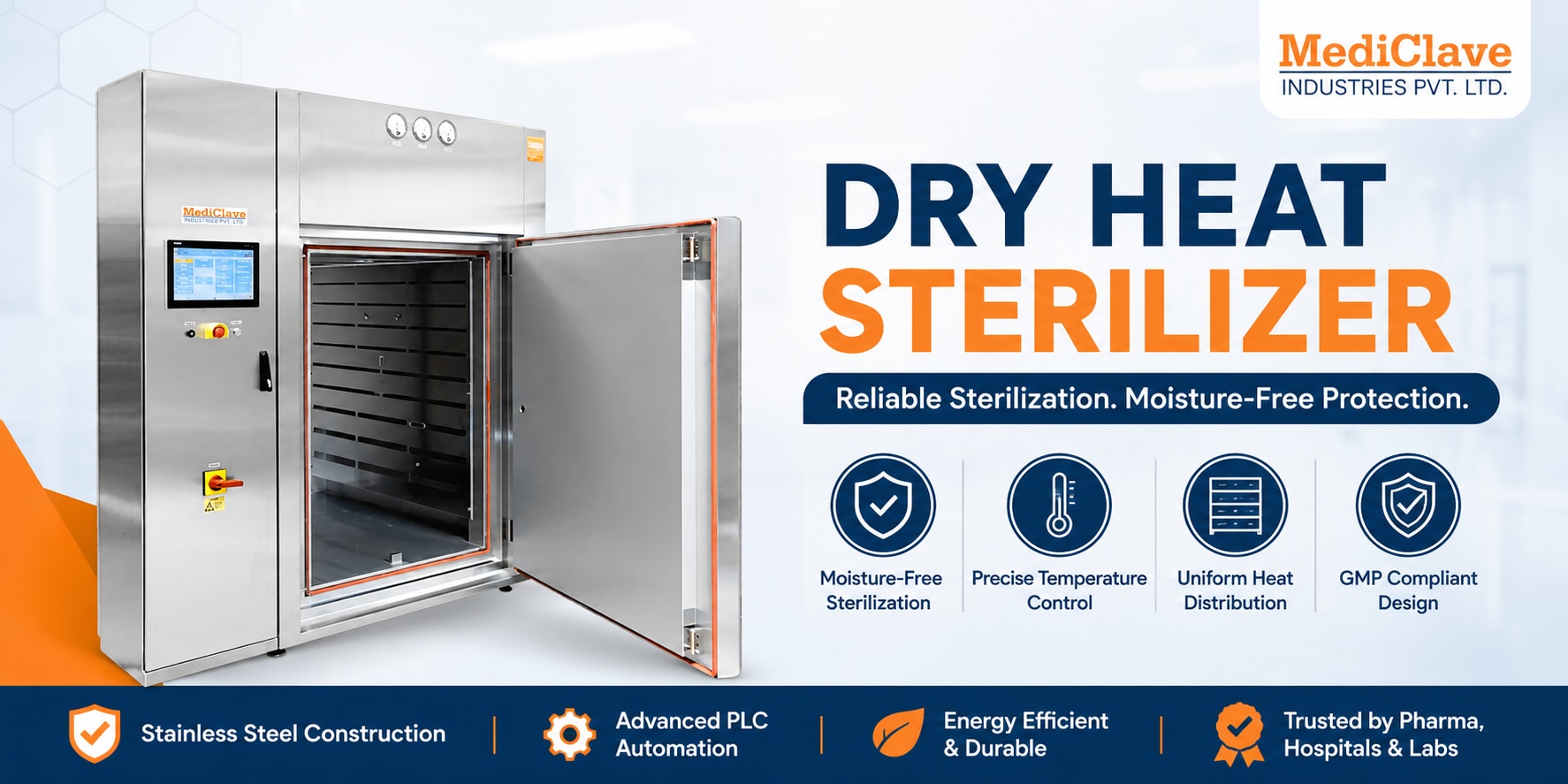
What Is a Dry Heat Sterilizer and Why Is It Essential for Safe Sterilization?
Sterilization is one of the most important processes in healthcare, pharmaceutical manufacturing, laboratories, and research facilities. Every day, thousands of instruments, glassware, metal tools, powders, and heat-resistant materials are sterilized before they are used. Proper sterilization helps eliminate bacteria, viruses, fungi, and bacterial spores, ensuring products and instruments remain safe for use.
Among the different sterilization methods available today, the Dry Heat Sterilizer is one of the most reliable solutions for sterilizing moisture-sensitive and heat-resistant materials. Unlike steam sterilization, dry heat sterilization uses hot air to destroy microorganisms without introducing moisture into the sterilization chamber. This makes it an ideal choice for many industrial and laboratory applications where steam may damage products or affect their quality.
Whether you operate a pharmaceutical manufacturing facility, a microbiology laboratory, a research institute, a hospital, or a quality control department, understanding how dry heat sterilization works can help you select the right equipment for your sterilization process.
At Mediclave Industries, we manufacture advanced Dry Heat Sterilizers designed to deliver reliable performance, precise temperature control, excellent uniformity, and compliance with pharmaceutical and laboratory standards.
Understanding Dry Heat Sterilization
Dry heat sterilization is a process that destroys microorganisms by exposing materials to high temperatures for a specific period. Unlike steam sterilization, this method does not use water or moisture. Instead, heated air circulates throughout the chamber to transfer heat evenly to every surface of the load.
The process works by oxidizing cellular components of microorganisms and denaturing proteins, ultimately killing bacteria, viruses, fungi, and resistant bacterial spores.
Because there is no moisture involved, dry heat sterilization is especially useful for materials that could corrode, rust, or become damaged in steam-based sterilization.
How Does a Dry Heat Sterilizer Work?
A Dry Heat Sterilizer consists of an insulated chamber equipped with high-quality heating elements and an efficient hot air circulation system. The sterilization cycle generally follows these steps:
First, the materials are loaded inside the chamber with adequate spacing to allow proper airflow.
The heating system gradually raises the chamber temperature to the required sterilization level.
High-performance air circulation fans distribute heated air uniformly throughout the chamber, ensuring every item receives consistent heat exposure.
Once the desired temperature is achieved, the sterilizer maintains that temperature for a predetermined holding period.
After completion, the chamber cools gradually before operators remove the sterilized materials.
This controlled heating process ensures complete sterilization while protecting heat-resistant materials from moisture-related damage.
Common Temperature and Time Cycles
Different products require different sterilization cycles depending on their material characteristics.
Some commonly used cycles include:
160°C for approximately 2 hours
170°C for approximately 1 hour
180°C for approximately 30 minutes
The appropriate cycle depends on regulatory requirements, product type, validation studies, and process specifications.
Applications of Dry Heat Sterilizers
Dry Heat Sterilizers are widely used across numerous industries due to their versatility and reliability.
Pharmaceutical Industry
Pharmaceutical manufacturers use Dry Heat Sterilizers for sterilizing:
Glass bottles
Glass vials
Ampoules
Stainless steel components
Production accessories
Metal instruments
Laboratory equipment
Powder handling tools
These sterilizers are also used in depyrogenation processes where high temperatures help remove bacterial endotoxins from glass containers.
For pharmaceutical facilities requiring complete sterile processing solutions, Mediclave Industries also manufactures Saturated Steam Sterilizers (Autoclaves) that complement dry heat sterilization in various production environments: https://www.mediclaveindustries.in/saturated-steam-sterilizer/
Hospitals
Hospitals use Dry Heat Sterilizers for sterilizing:
Surgical instruments
Metal trays
Stainless steel tools
Glass syringes
Forceps
Scalpels
Medical laboratory equipment
For moisture-sensitive surgical instruments, dry heat provides an excellent alternative to steam sterilization.
Hospitals also benefit from advanced ETO Sterilizers when sterilizing heat-sensitive medical devices: https://www.mediclaveindustries.in/eto-sterilizer/
Research Laboratories
Laboratories frequently sterilize:
Glassware
Petri dishes
Beakers
Pipettes
Test tubes
Metal laboratory tools
Measuring instruments
Since many laboratory materials are repeatedly reused, maintaining contamination-free equipment is essential for accurate research results.
Biotechnology Industry
Biotechnology companies rely on dry heat sterilization for contamination control during research and production processes where sterile equipment is essential.
Chemical Industry
Chemical laboratories often sterilize equipment used for testing and analytical procedures without exposing sensitive instruments to moisture.
Materials Suitable for Dry Heat Sterilization
Dry heat sterilization is ideal for many heat-resistant materials, including:
Glassware
Stainless steel instruments
Metal tools
Powders
Oils
Petroleum products
Certain pharmaceutical containers
Heat-resistant laboratory equipment
These materials maintain their structural integrity even after prolonged exposure to elevated temperatures.
Materials Not Suitable
Some materials should never be processed in a Dry Heat Sterilizer, including:
Plastics with low melting points
Rubber products
Latex
Fabrics
Dressings
Paper products
Moisture-containing materials
Certain medical devices designed only for steam or gas sterilization
Understanding material compatibility helps prevent equipment damage and product loss.
Advantages of Dry Heat Sterilizers
Moisture-Free Sterilization
Since no steam or water is involved, products remain completely dry throughout the sterilization process.
Corrosion Prevention
Metal instruments are protected from rust and corrosion that may occur during repeated steam sterilization cycles.
Excellent for Glassware
Glass containers remain dry, clean, and free from water spots after sterilization.
Suitable for Powders and Oils
Dry heat is one of the few sterilization methods appropriate for powders, oils, waxes, and petroleum-based materials.
Simple Operation
Modern Dry Heat Sterilizers feature user-friendly PLC or digital controllers that simplify operation and process monitoring.
Reliable Temperature Uniformity
Advanced hot air circulation systems ensure consistent temperature throughout the chamber, improving sterilization efficiency.
Low Maintenance
With fewer moisture-related components, Dry Heat Sterilizers often require less maintenance compared to steam-based systems.
Key Features of Modern Dry Heat Sterilizers
Today's pharmaceutical-grade Dry Heat Sterilizers include several advanced features:
Stainless steel chamber construction
GMP-compliant design
Double-wall insulated chamber
Digital temperature controller
PLC-based automation
Touch screen HMI
Uniform hot air circulation
High-density insulation
Automatic cycle control
Safety interlocks
Data logging capability
Validation support
Over-temperature protection
Alarm systems
Energy-efficient heating elements
These features improve safety, efficiency, and process consistency.
Dry Heat Sterilizer vs Steam Sterilizer
Both sterilization methods have unique advantages.
Dry Heat Sterilizer:
Uses hot air
No moisture involved
Ideal for glassware, powders, oils, and metal instruments
Prevents corrosion
Longer sterilization cycles
Steam Sterilizer:
Uses saturated steam
Faster sterilization
Suitable for surgical instruments, textiles, and many medical devices
High penetration capability
Excellent for moisture-resistant materials
Many pharmaceutical companies use both systems together because different products require different sterilization methods.
To support complete pharmaceutical sterilization requirements, Mediclave Industries also offers Steam Air Mixture Sterilizers for specialized applications requiring precise pressure and temperature control: https://www.mediclaveindustries.in/steam-air-mixture-sterilizer/
Factors to Consider Before Purchasing a Dry Heat Sterilizer
Selecting the right Dry Heat Sterilizer involves evaluating several important factors.
Chamber Size
Choose a chamber capacity based on daily production volume and available installation space.
Temperature Range
Ensure the equipment supports the required sterilization temperatures for your products.
Temperature Uniformity
Uniform heat distribution directly affects sterilization effectiveness.
Automation
PLC-controlled systems improve repeatability, reduce operator errors, and simplify validation.
Construction Quality
High-grade stainless steel construction increases durability and supports GMP compliance.
Validation Support
Pharmaceutical manufacturers should choose equipment designed for IQ, OQ, and PQ validation requirements.
Safety Features
Reliable safety systems protect operators while preventing process failures.
Service Support
Selecting a manufacturer with strong technical support ensures long-term equipment performance.
Importance of Validation
Validation confirms that a Dry Heat Sterilizer consistently performs according to predetermined specifications.
Validation generally includes:
Installation Qualification (IQ)
Operational Qualification (OQ)
Performance Qualification (PQ)
Temperature mapping
Heat distribution studies
Biological indicator testing
Validated equipment helps pharmaceutical companies comply with regulatory expectations while ensuring product quality.
Routine Maintenance Tips
Proper maintenance extends equipment life and maintains sterilization performance.
Recommended maintenance includes:
Cleaning the chamber regularly
Inspecting heating elements
Checking door gasket condition
Calibrating temperature sensors
Verifying airflow performance
Testing safety alarms
Monitoring controller accuracy
Maintaining maintenance records
Preventive maintenance minimizes downtime and improves long-term reliability.
Why Temperature Uniformity Matters
Uniform temperature distribution is one of the most critical factors in dry heat sterilization.
Even small temperature differences inside the chamber may result in incomplete sterilization.
Advanced airflow systems ensure every corner of the chamber receives equal heat exposure, eliminating cold spots and ensuring all materials achieve the required sterilization conditions.
Energy Efficiency in Modern Dry Heat Sterilizers
Today's Dry Heat Sterilizers are designed with energy-saving features that improve operational efficiency.
These include:
High-quality thermal insulation
Optimized heating systems
Efficient airflow design
Intelligent temperature control
Reduced heat loss
Programmable operating cycles
Energy-efficient equipment lowers operating costs while maintaining high sterilization performance.
Industries That Benefit from Dry Heat Sterilizers
Dry Heat Sterilizers are valuable across many industries, including:
Pharmaceutical manufacturing
Biotechnology
Medical device manufacturing
Research laboratories
Universities
Hospitals
Chemical industries
Food testing laboratories
Quality control laboratories
Industrial testing facilities
Their versatility makes them a preferred solution wherever moisture-free sterilization is required.
Why Choose Mediclave Industries?
Mediclave Industries is committed to manufacturing high-quality pharmaceutical and hospital sterilization equipment that meets modern industry expectations.
Our Dry Heat Sterilizers are engineered for:
Reliable sterilization performance
Robust stainless steel construction
Precise temperature control
Uniform heat distribution
User-friendly operation
Energy efficiency
GMP-oriented design
Long service life
Excellent after-sales support
Custom-built solutions
Beyond Dry Heat Sterilizers, Mediclave Industries provides a complete range of pharmaceutical processing and sterilization equipment. Facilities looking to establish an integrated sterile manufacturing setup can also explore our Pure Steam Generator for high-purity steam generation: https://www.mediclaveindustries.in/pure-steam-generator/
Conclusion
A Dry Heat Sterilizer remains one of the most dependable sterilization solutions for industries that require moisture-free, high-temperature sterilization. Its ability to sterilize glassware, metal instruments, powders, oils, and other heat-resistant materials makes it indispensable in pharmaceutical manufacturing, hospitals, research laboratories, and quality control facilities.
Choosing the right Dry Heat Sterilizer involves more than selecting a chamber size. Factors such as temperature uniformity, automation, validation support, construction quality, energy efficiency, and long-term reliability all contribute to successful sterilization outcomes.
At Mediclave Industries, we understand the evolving needs of pharmaceutical, healthcare, and laboratory professionals. Our Dry Heat Sterilizers are designed with advanced engineering, robust construction, and precision controls to deliver consistent, reliable, and compliant sterilization performance. Whether you are upgrading an existing facility or establishing a new production line, investing in a high-quality Dry Heat Sterilizer helps protect product quality, improve operational efficiency, and maintain the highest standards of safety and compliance.
