
In every
healthcare facility, patient safety begins with proper hygiene and infection
prevention. Whether it is a dental clinic, dermatology center, surgical clinic,
or general medical practice, reusable medical instruments must be properly
cleaned and sterilized before being used on another patient.
An
autoclave for clinics is an essential piece of sterilization equipment that
helps healthcare professionals maintain high standards of infection control. By
using saturated steam under controlled pressure and temperature, an autoclave
effectively inactivates microorganisms, including resistant bacterial spores,
when the appropriate validated cycle is followed.
At
Mediclave Industries Pvt. Ltd., we understand the importance of dependable
sterilization equipment for healthcare environments. Our sterilization
solutions are designed to support the operational requirements of medical
facilities, from smaller clinics to larger healthcare institutions.
Why Does Every Clinic Need an Autoclave?
Medical
instruments frequently come into contact with blood, body fluids, skin, and
other potentially contaminated surfaces. Even when instruments appear visibly
clean, harmful microorganisms may remain.
An
autoclave provides a reliable sterilization method for compatible reusable
medical instruments.
The main
benefits of using an autoclave in clinics include:
- Patient
Safety: Helps prevent cross-contamination and healthcare-associated
infections.
- Effective
Sterilization: Uses steam to destroy microorganisms, including bacterial
spores.
- Instrument
Reusability: Allows suitable reusable medical instruments to be safely
reprocessed.
- Operational
Efficiency: Supports consistent instrument turnaround and daily clinical
workflows.
- Infection
Control: Helps clinics follow established instrument-reprocessing
protocols.
- Long-Term
Value: Provides a practical sterilization solution for facilities using
reusable instruments.
A
properly selected autoclave is not simply a piece of equipment. It is an
important investment in the safety of patients and healthcare professionals.
How Does an Autoclave Work in a Clinic?
An
autoclave works through the principle of moist heat sterilization. It uses
saturated steam under pressure to achieve the required sterilization
conditions.
The
process generally involves the following stages:
- Instrument
Preparation: Used instruments are thoroughly cleaned, rinsed, dried where
required, inspected, and packaged according to their reprocessing
instructions.
- Loading:
Instruments are arranged inside the sterilization chamber to allow
effective steam penetration.
- Air
Removal: Air is removed from the chamber and load using the method
supported by the sterilizer.
- Sterilization:
Steam reaches the specified temperature and exposure conditions required
for the validated cycle.
- Drying
and Unloading: Instruments are dried where applicable and unloaded safely
after cycle completion.
- Monitoring
and Storage: Cycle records and appropriate indicators are checked before
sterile packs are released and stored.
Common
steam sterilization temperatures include 121°C and 134°C, but the correct
exposure time and cycle depend on the sterilizer, instrument type, packaging,
load configuration, and manufacturer instructions.
Types of Autoclaves Suitable for Clinics
Different
clinics have different sterilization requirements depending on the number of
instruments, available space, and types of medical procedures performed.
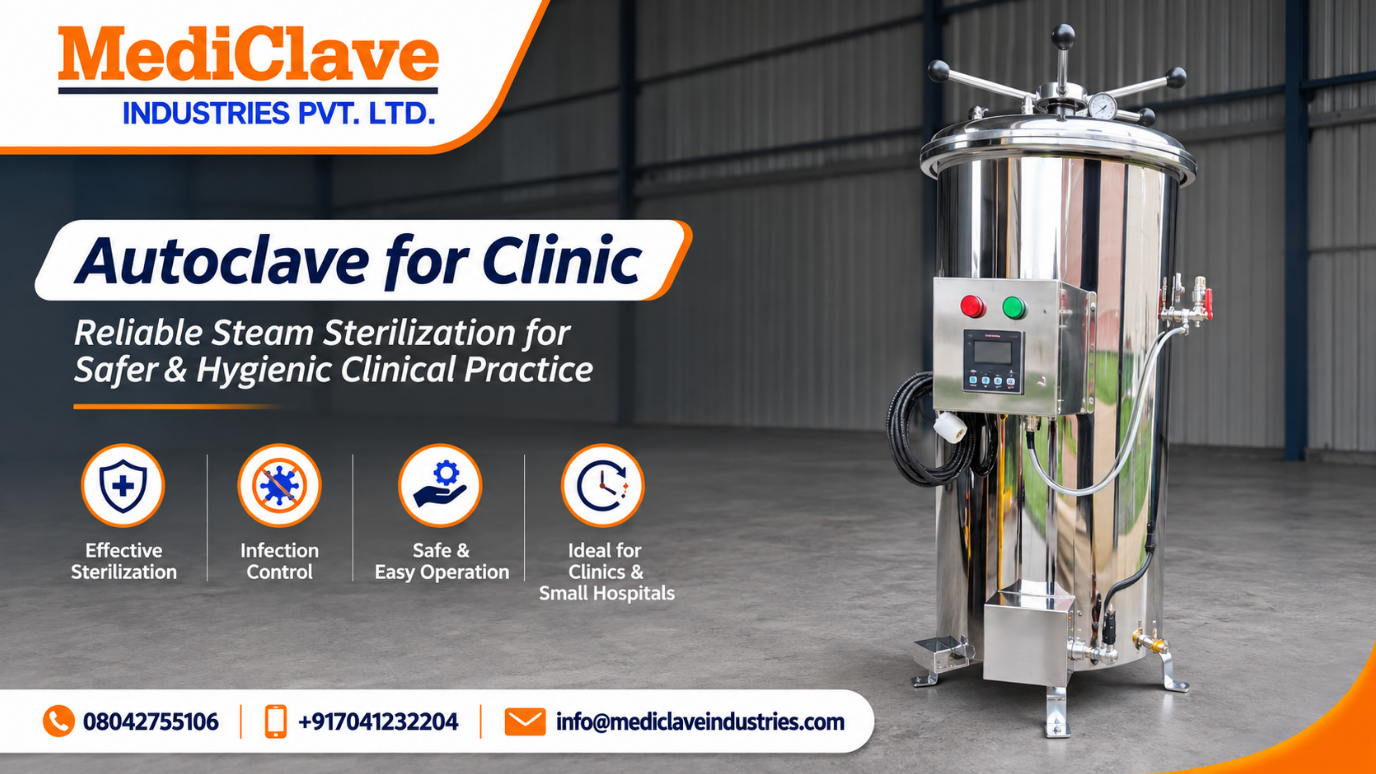
1. Vertical Autoclave
A
vertical autoclave is a practical option for healthcare facilities that require
a compact, top-loading sterilization system.
These
autoclaves are commonly used for compatible instruments, laboratory materials,
and other loads approved for the particular model.
Key
advantages:
- Compact
floor-space requirements
- Stainless
steel chamber construction
- Suitable
for various compatible sterilization loads
- Practical
for facilities with limited space
2. Horizontal Steam Autoclave
Horizontal
autoclaves are commonly preferred where higher instrument-processing volumes
and more structured sterilization workflows are required.
Depending
on the model and configuration, they may offer automatic cycle controls,
monitoring systems, and additional loading capacity.
Key
advantages:
- Convenient
front-loading operation
- Suitable
for larger instrument loads
- Options
for automated sterilization cycles
- Useful
for busy clinics and surgical facilities
3. Tabletop Autoclave
Tabletop
autoclaves are compact sterilizers often used in dental clinics, outpatient
facilities, and other smaller healthcare practices.
Certain
Class B models use pre-vacuum air removal and are designed for a broader range
of compatible packaged, hollow, and porous loads, subject to the manufacturer's
specifications.
The
appropriate model should always be selected based on the actual instruments
being processed.
Applications of Autoclaves in Different Clinics
|
Clinic Type |
Typical Sterilization
Applications |
|
Dental Clinics |
Reusable dental instruments, forceps, mirrors,
and compatible handpieces |
|
Dermatology Clinics |
Reusable surgical tools and minor procedure
instruments |
|
Gynecology Clinics |
Compatible examination and procedural instruments |
|
General Medical Clinics |
Reusable instruments used in minor procedures |
|
ENT Clinics |
Compatible ENT examination and surgical
instruments |
|
Surgical Clinics |
Reusable surgical instrument sets and procedure
equipment |
|
Veterinary Clinics |
Reusable veterinary surgical instruments |
Not every
medical instrument can be steam sterilized. Clinics must follow the instrument
manufacturer's instructions for use and select the correct sterilization
method.
How to Choose the Right Autoclave for Your Clinic
Selecting
an autoclave requires more than comparing machine prices. The equipment must
match the clinic's daily workload, instrument types, and available facilities.
Chamber Capacity
Choose a
chamber size based on the quantity and dimensions of instruments processed
during each working day. Consider future requirements as well.
Sterilization Cycle Compatibility
Confirm
that the autoclave supports the cycles required for your instruments,
particularly packaged instruments, hollow devices, and other specialized loads.
Stainless Steel Construction
A
high-quality stainless steel chamber supports durability, cleanability, and
resistance to corrosion when maintained correctly.
Automation and Safety
Depending
on the model, useful features may include temperature monitoring, pressure
monitoring, cycle recording, door interlocks, and fault alarms.
Maintenance and Service Support
Routine
maintenance, calibration, validation, and timely technical support are
important for reliable sterilizer performance.
Importance of Proper Autoclave Maintenance
Regular
maintenance helps clinics maintain consistent sterilization performance and reduce
unexpected equipment downtime.
Healthcare
professionals should follow the manufacturer's maintenance schedule, including
chamber cleaning, gasket inspection, water-quality requirements, and
verification of control systems.
Routine
sterilization monitoring should include the appropriate physical, chemical, and
biological indicators according to applicable protocols. Where required,
air-removal and steam-penetration tests should also be performed.
An
autoclave should never be considered effective solely because the chamber
reaches a displayed temperature. Proper cleaning, validated cycles, monitoring,
and correct loading are all essential.
Why Choose Mediclave Industries for Clinic
Sterilization Equipment?
Mediclave
Industries Pvt. Ltd. provides sterilization equipment solutions for healthcare
and pharmaceutical applications.
We
understand that clinics require equipment that balances safety, practical
operation, sterilization performance, and long-term reliability.
Our focus
includes:
- Stainless
steel sterilization equipment
- Healthcare-oriented
equipment configurations
- Practical
sterilization system design
- Solutions
for different chamber-capacity requirements
- Technical
guidance for selecting suitable equipment
Whether
you are establishing a new clinic, expanding an existing facility, or upgrading
your sterilization infrastructure, choosing the right equipment is an important
step toward safer healthcare delivery.
Explore
our sterilization equipment and healthcare solutions at Mediclave Industries.
Conclusion
An
autoclave for clinics plays an important role in maintaining safe and hygienic
healthcare environments. From dental practices to minor surgical facilities,
effective steam sterilization helps protect patients and supports dependable
instrument-reprocessing procedures.
Choosing
the right autoclave involves understanding instrument compatibility,
sterilization capacity, safety features, and maintenance requirements.
With
suitable equipment and proper operating practices, clinics can establish a
reliable sterilization workflow that supports patient care every day.
Mediclave
Industries Pvt. Ltd. is committed to providing sterilization equipment
solutions that support healthcare facilities in maintaining high standards of
hygiene, safety, and operational efficiency.
Contact Mediclave Industries Pvt. Ltd.
For
clinic autoclave requirements, product information, and sterilization equipment
inquiries:
Phone:
08042755106
Mobile: +91 7041232204
Email: info@mediclaveindustries.com
Website: www.mediclaveindustries.in