
Sterilization
is one of the most important processes in pharmaceutical manufacturing,
healthcare facilities, laboratories, and medical device production. Choosing
the right sterilization method is essential for maintaining product quality,
preventing contamination, and ensuring patient safety.
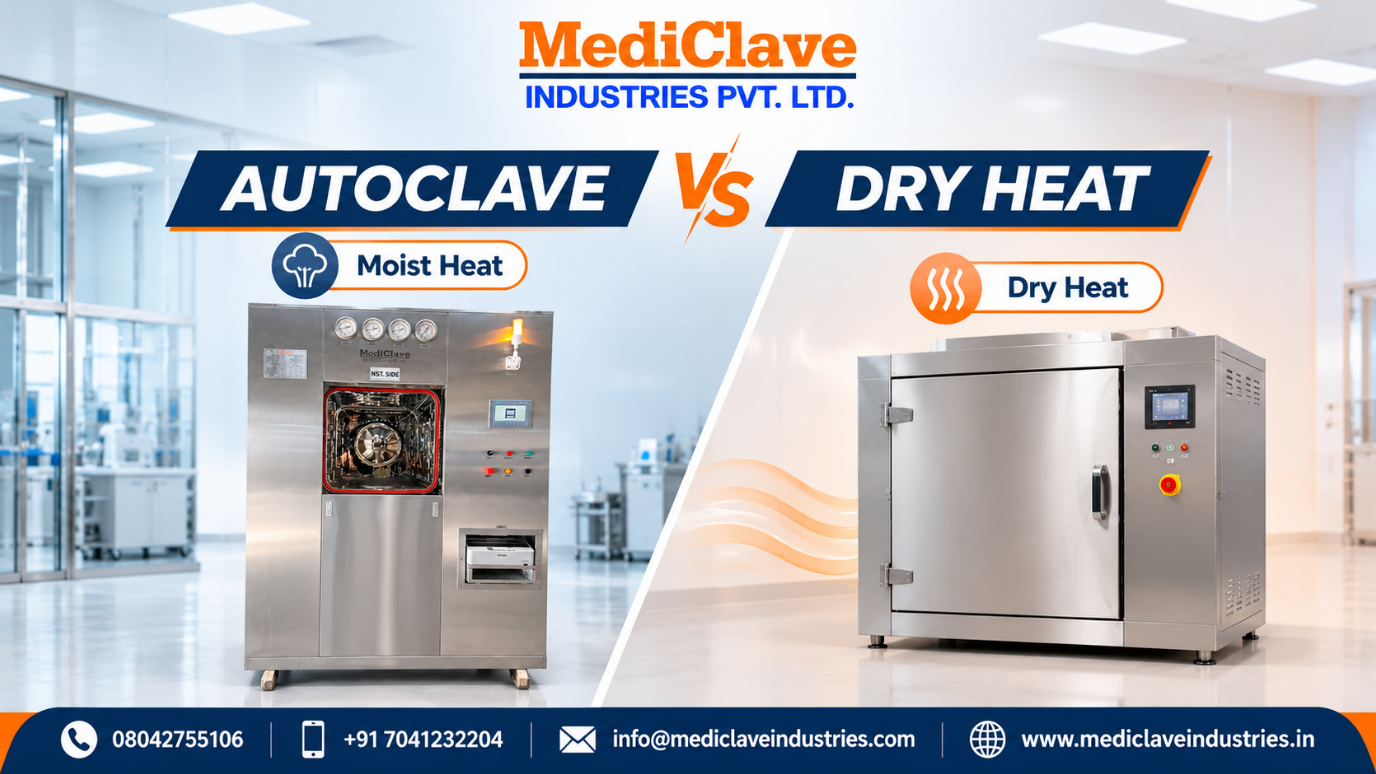
Two
widely used thermal sterilization methods are Autoclave Sterilization (Moist
Heat) and Dry Heat Sterilization.
Although
both methods use elevated temperatures to achieve sterilization, they differ
significantly in their working principles, operating temperatures, cycle times,
and applications.
Understanding
the differences between Autoclave vs Dry Heat Sterilization helps
pharmaceutical manufacturers, hospitals, and laboratories select suitable
equipment for their specific requirements.
Mediclave
Industries Private Limited, a manufacturer of pharmaceutical and healthcare
sterilization equipment in India, provides sterilization solutions designed to
support reliable processing and contamination control.
What Is Autoclave Sterilization?
An
autoclave is a sterilization machine that uses saturated steam under pressure
to sterilize compatible medical instruments, pharmaceutical equipment,
laboratory materials, and other products.
Steam
sterilization is commonly known as moist heat sterilization.
The
process works by exposing the load to saturated steam at a controlled
temperature for a validated period. Moist heat inactivates microorganisms,
including bacterial spores, primarily through the denaturation and coagulation
of essential cellular proteins.
How Does an Autoclave Work?
The
general autoclave sterilization process includes:
- Loading:
Instruments or products are placed inside the sterilization chamber.
- Air
Removal: Air is removed using gravity displacement or vacuum-assisted
processes, depending on the sterilizer design.
- Steam
Admission: Saturated steam enters the chamber and transfers heat to the
load.
- Sterilization
Holding: The required temperature is maintained for the validated exposure
period.
- Steam
Exhaust: Steam is released or evacuated according to the programmed cycle.
- Drying
and Unloading: Suitable loads undergo drying before safe unloading.
Common Autoclave Sterilization Temperatures
Autoclave
sterilization cycles commonly operate at:
- 121°C:
Frequently used for suitable laboratory and pharmaceutical loads.
- 134°C:
Commonly used for compatible surgical instruments and certain medical
device loads.
The
required holding time depends on the product, load configuration, sterilizer
type, and validated sterilization cycle.
Applications of Autoclave Sterilization
- Surgical
instruments
- Hospital
CSSD equipment
- Laboratory
glassware
- Pharmaceutical
manufacturing components
- Compatible
medical devices
- Suitable
culture media
- Stainless
steel processing accessories
- Steam-compatible
textile packs
For
hospitals and pharmaceutical facilities, Mediclave Industries provides
sterilization equipment solutions for different processing requirements.
What Is Dry Heat Sterilization?
Dry heat
sterilization is a thermal sterilization method that uses hot air without steam
or added moisture.
The
process is carried out using equipment such as a Dry Heat Sterilizer or Hot Air
Oven. Specialized dry heat systems may also be used for depyrogenation
processes in pharmaceutical manufacturing.
Dry heat
inactivates microorganisms through heat-induced damage to essential cellular
components, including oxidative effects and protein damage.
Compared
with moist heat sterilization, dry heat generally requires higher temperatures
and longer exposure periods to achieve the required microbial lethality.
How Does a Dry Heat Sterilizer Work?
The dry
heat sterilization process generally involves:
- Loading:
Heat-resistant materials are placed inside the chamber.
- Air
Heating: Electrical heating elements raise the chamber temperature.
- Hot
Air Circulation: Heated air circulates to promote temperature
distribution.
- Sterilization
Holding: The load is maintained at the validated sterilization temperature
for the required exposure period.
- Controlled
Cooling: The system cools the load under appropriate conditions.
- Unloading:
Sterilized materials are removed after meeting the required release conditions.
Common Dry Heat Sterilization Temperatures
Examples
of traditional dry heat sterilization conditions include:
- 160°C
for 120 minutes
- 170°C
for 60 minutes
- 180°C
for 30 minutes
These are
illustrative exposure conditions, not universal operating cycles. Actual
sterilization parameters must be validated for the equipment, product, and
load, including heat-up and heat-penetration considerations.
Applications of Dry Heat Sterilization
- Heat-resistant
glassware
- Metal
instruments suitable for dry heat
- Certain
pharmaceutical powders
- Suitable
oils and non-aqueous materials
- Laboratory
equipment
- Selected
pharmaceutical manufacturing components
Specialized
dry heat depyrogenation systems are also used for suitable pharmaceutical glass
containers, including vials and ampoules.
Autoclave vs Dry Heat Sterilization: Key
Differences
|
Parameter |
Autoclave Sterilization |
Dry Heat Sterilization |
|
Sterilization method |
Moist heat |
Dry heat |
|
Heating medium |
Saturated steam |
Heated air |
|
Common temperature |
121°C–134°C |
160°C–180°C |
|
Exposure duration |
Generally shorter |
Generally longer |
|
Microbial inactivation |
Moist heat protein denaturation |
Thermal and oxidative damage |
|
Moisture requirement |
Steam required |
No added moisture |
|
Heat transfer |
Efficient steam condensation |
Hot air convection and conduction |
|
Typical applications |
Surgical instruments, textiles, compatible
equipment |
Glassware, metals, oils, powders |
|
Packaging compatibility |
Steam-permeable, validated packaging |
Heat-resistant, validated packaging |
|
Equipment examples |
Horizontal and vertical autoclaves |
Hot air ovens and dry heat sterilizers |
Temperature
ranges and cycle durations are typical examples. Actual sterilization cycles
must be developed and validated for each application.
Advantages of Autoclave Sterilization
1. Efficient Heat Transfer
Saturated
steam transfers thermal energy effectively to compatible loads, supporting
efficient sterilization processes.
2. Shorter Sterilization Exposure
Moist
heat generally achieves microbial inactivation at lower temperatures and
shorter exposure times compared with dry heat.
3. Suitable for Hospital CSSD
Steam
autoclaves are widely used in hospital Central Sterile Supply Departments for
sterilizing compatible reusable medical instruments.
4. Automated Operation
Modern
autoclaves can incorporate PLC-based controls, cycle monitoring, alarms, and
automatic data recording.
5. Broad Application Range
Autoclaves
are suitable for many healthcare, pharmaceutical, laboratory, and industrial
sterilization applications.
Advantages of Dry Heat Sterilization
1. Suitable for Moisture-Sensitive Materials
Dry heat
can be appropriate for certain products that cannot tolerate moisture but can
withstand high temperatures.
2. No Steam Requirement
Dry heat
systems use heated air and do not require steam as the sterilizing medium.
3. Suitable for Glassware and Metals
Certain
glass and metal components can be processed using validated dry heat
sterilization cycles.
4. Pharmaceutical Depyrogenation Applications
Specialized
dry heat systems can be designed for endotoxin reduction on suitable
pharmaceutical glassware.
5. No Moisture-Related Corrosion
The
absence of steam can be advantageous for certain moisture-sensitive metal
components, provided they are compatible with the operating temperature.
Which Is Better: Autoclave or Dry Heat
Sterilization?
The
choice between autoclave and dry heat sterilization depends on the
characteristics of the materials being processed.
Choose
Autoclave Sterilization When:
- Materials
are compatible with steam and moisture.
- Shorter
sterilization exposure is desirable.
- Surgical
instruments require routine reprocessing.
- Hospital
CSSD sterilization is required.
- Pharmaceutical
components can withstand moist heat.
Choose
Dry Heat Sterilization When:
- Materials
are moisture-sensitive but heat-resistant.
- Suitable
glassware or metal components require sterilization.
- Certain
oils or powders need a validated sterilization process.
- A
specialized pharmaceutical depyrogenation process is required.
Neither
method is universally better. The correct choice depends on material
compatibility, microbial control requirements, product stability, and process
validation.
Autoclave vs Dry Heat in Pharmaceutical
Manufacturing
Pharmaceutical
facilities use different sterilization technologies according to the
manufacturing process and product characteristics.
Steam Sterilization in Pharma
Steam
sterilizers are commonly used for compatible equipment components,
manufacturing accessories, vessels, and other materials requiring moist heat
sterilization.
For
suitable products, moist heat may also be used for terminal sterilization.
Dry Heat Sterilization in Pharma
Dry heat
systems are used for selected heat-resistant materials and specialized
applications such as glassware sterilization and depyrogenation.
It is
important to distinguish between dry heat sterilization and depyrogenation.
Sterilization focuses on microbial inactivation, while depyrogenation targets
the reduction of pyrogenic contaminants, such as bacterial endotoxins.
Important Factors Before Selecting Sterilization
Equipment
Before
purchasing an autoclave or dry heat sterilizer, pharmaceutical manufacturers
and healthcare facilities should evaluate:
- Material
Compatibility: Determine whether the product can withstand steam,
moisture, and high temperatures.
- Chamber
Capacity: Select equipment based on load size and production requirements.
- Temperature
Control: Ensure the equipment supports the required process conditions.
- Automation:
Consider PLC controls, alarms, HMI interfaces, and cycle recording.
- Sterilization
Validation: Establish appropriate qualification and validation procedures.
- Utility
Requirements: Evaluate steam, water, electricity, compressed air, and
ventilation needs.
- Safety
Features: Consider temperature protection, door interlocks, and applicable
pressure safety systems.
- Maintenance:
Review equipment accessibility, servicing requirements, and spare-part
availability.
Why Choose Mediclave Industries for Sterilization
Equipment?
Selecting
an experienced sterilization equipment manufacturer is important for achieving
dependable process performance.
Mediclave
Industries Private Limited provides sterilization and pharmaceutical processing
equipment solutions for healthcare and industrial applications.
Pharmaceutical and Healthcare Equipment Expertise
Mediclave
focuses on equipment used in sterilization and pharmaceutical manufacturing
environments where reliable operation and controlled processing are important.
Application-Specific Sterilization Solutions
Different
industries require different sterilization technologies, chamber sizes, and
automation configurations.
Mediclave
helps customers explore equipment options according to their processing
requirements.
Focus on Quality and Reliability
Appropriate
engineering, suitable materials, and controlled operating systems contribute to
consistent equipment performance.
Customized Equipment Configurations
Sterilization
equipment can be selected according to production capacity, installation
requirements, and operating conditions.
Domestic and International Markets
Mediclave
serves customers in India and international markets with pharmaceutical
processing and sterilization equipment solutions.
Explore
more equipment information through the Mediclave Industries
official website.
Frequently Asked Questions (FAQs)
Q1. What
is the main difference between autoclave and dry heat sterilization?
An
autoclave uses saturated steam under pressure, while a dry heat sterilizer uses
hot air. Dry heat generally requires higher temperatures and longer exposure
periods.
Q2. Which
sterilization method is faster?
Moist
heat sterilization generally requires shorter exposure times than dry heat
sterilization for comparable microbial inactivation, although total cycle
duration varies.
Q3. Can
dry heat sterilization kill bacterial spores?
Yes.
Properly validated dry heat sterilization cycles can inactivate bacterial
spores.
Q4. Why
is an autoclave commonly used in hospitals?
Autoclaves
provide an effective and widely established method for sterilizing
steam-compatible reusable surgical instruments and medical equipment.
Q5. Is
dry heat suitable for pharmaceutical glassware?
Yes.
Suitable pharmaceutical glassware can be sterilized using validated dry heat
cycles. Specialized systems may also be used for depyrogenation.
Q6. Can
all medical instruments be sterilized using an autoclave?
No. Some
instruments are sensitive to heat or moisture and require alternative sterilization
methods according to their manufacturer's instructions.
Q7. What
is the difference between dry heat sterilization and depyrogenation?
Dry heat
sterilization is intended to achieve microbial inactivation, whereas
depyrogenation is intended to reduce pyrogenic contaminants. The processes have
different validation objectives.
Conclusion
Both
Autoclave Sterilization and Dry Heat Sterilization are important technologies
in healthcare, pharmaceutical manufacturing, laboratories, and industrial processing.
Autoclaves
offer effective moist heat sterilization for compatible instruments and
materials, while dry heat sterilizers provide an alternative for selected
heat-resistant and moisture-sensitive products.
Understanding
the differences between these technologies helps manufacturers select suitable
sterilization equipment, develop validated processes, and maintain consistent
quality standards.
Mediclave
Industries Private Limited provides pharmaceutical and healthcare sterilization
equipment solutions designed to support diverse processing applications.
Contact Mediclave Industries Private Limited
For
sterilization equipment enquiries, technical specifications, and pharmaceutical
processing solutions:
Mediclave
Industries Private Limited
- Phone:
08042755106
- Mobile:
+91 7041232204
- Email:
info@mediclaveindustries.com
- Website:
www.mediclaveindustries.in