
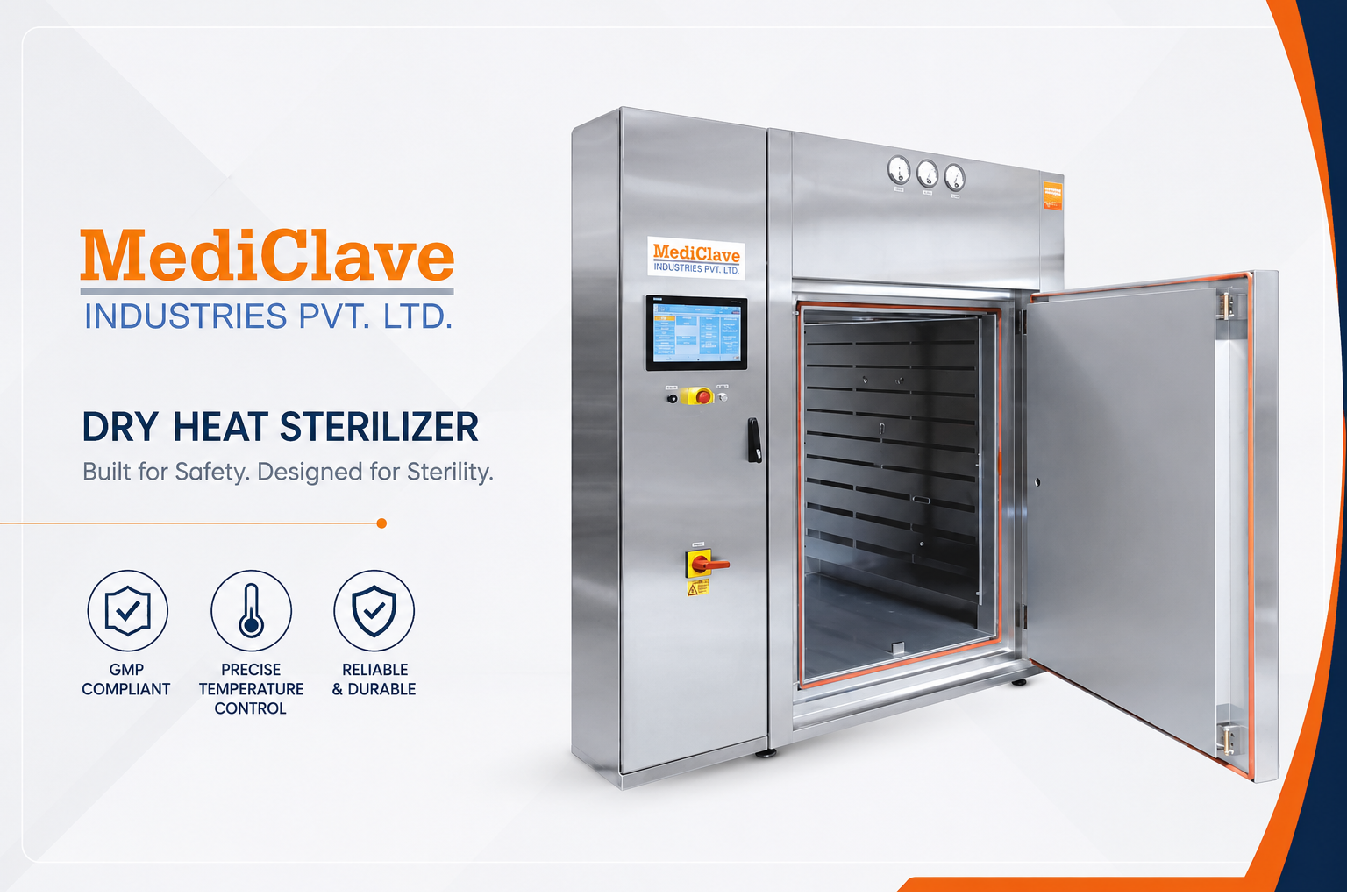
Why Dry Heat Sterilization Matters | Ahmedabad
Introduction
Sterilization is one of the most critical processes in pharmaceutical manufacturing, biotechnology laboratories, research facilities, hospitals, and medical device production. Every product that enters a sterile manufacturing environment must be free from microorganisms and harmful contaminants.
While steam sterilization is the most common method, many products cannot tolerate moisture. Glass containers, metal instruments, powders, oils, and pharmaceutical packaging components require a completely different sterilization process.
This is where Dry Heat Sterilizers become indispensable.
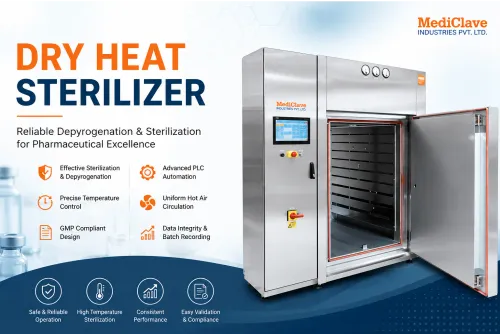
A Dry Heat Sterilizer uses high-temperature hot air to destroy microorganisms and bacterial spores without using steam or moisture. Besides sterilization, these systems are also widely used for depyrogenation, which removes bacterial endotoxins from pharmaceutical glassware before filling operations. Modern pharmaceutical dry heat sterilizers are designed with precise temperature control, forced air circulation, HEPA filtration, and GMP-compliant construction for validated sterile manufacturing.
Whether you're planning a new pharmaceutical facility or upgrading your sterilization process, this guide explains everything you need to know about Dry Heat Sterilizers.
What is a Dry Heat Sterilizer?
A Dry Heat Sterilizer is a high-temperature sterilization system that destroys microorganisms using hot air instead of saturated steam.
Unlike moist heat sterilization, no water vapor enters the chamber. Instead, filtered hot air circulates uniformly around the load, ensuring complete sterilization while protecting moisture-sensitive materials.
These systems are commonly used in:
- Pharmaceutical industries
- Injectable manufacturing plants
- Biotechnology facilities
- Research laboratories
- Quality control laboratories
- Medical device manufacturing
- Glass container sterilization
- Ampoule and vial preparation
- Cleanroom production areas
How Does a Dry Heat Sterilizer Work?
The sterilization process consists of several carefully controlled stages.
1. Loading
Clean glassware, stainless steel components, metal parts, pharmaceutical containers, or heat-resistant materials are loaded into the chamber.
2. Heating
Powerful heaters gradually increase chamber temperature.
Typical operating temperatures include:
- 160°C
- 170°C
- 180°C
- 220°C
- Up to 280°C for depyrogenation applications.
3. Forced Air Circulation
High-temperature blowers circulate HEPA-filtered hot air evenly throughout the chamber.
Uniform airflow eliminates temperature variation and ensures every item receives identical heat exposure.
4. Holding Phase
The chamber maintains the target temperature for a validated holding period.
This phase destroys:
- Bacteria
- Fungi
- Viruses
- Bacterial spores
- Endotoxins (during depyrogenation cycles)
5. Cooling
Filtered cooling air gradually reduces chamber temperature before unloading.
Sterilization vs Depyrogenation
Many people confuse these two processes.
| Sterilization | Depyrogenation |
|---|---|
| Removes microorganisms | Removes bacterial endotoxins |
| Lower temperatures | Higher temperatures |
| Prevents contamination | Prevents pyrogen reactions |
| Used for general sterilization | Used before injectable filling |
Depyrogenation is especially important for:
- Ampoules
- Glass vials
- Syringes
- Injectable bottles
Why Dry Heat Instead of Steam?
Steam sterilization is excellent for many products, but moisture can damage certain materials.
Dry Heat Sterilization is preferred for:
- Glassware
- Stainless steel parts
- Metal tools
- Powders
- Oils
- Petroleum products
- Pharmaceutical containers
- Heat-resistant packaging materials
Unlike steam, dry heat leaves no moisture residue, making it ideal for moisture-sensitive applications.
Major Components of a Dry Heat Sterilizer
Modern pharmaceutical dry heat sterilizers include:
- Stainless Steel Chamber
- Electric Heating Elements
- High Temperature HEPA Filters
- PLC Control System
- Touch Screen HMI
- Temperature Sensors
- Air Circulation Blowers
- Data Logger
- Safety Interlocks
- Door Locking Mechanism
- Validation Ports
- Alarm System
Premium GMP systems also support SCADA integration, recipe management, and electronic batch records.
Advantages of Dry Heat Sterilizers
Moisture-Free Sterilization
Ideal for products that cannot tolerate steam.
Excellent Temperature Uniformity
Forced air circulation ensures every load receives identical treatment.
Depyrogenation Capability
One of the biggest advantages over conventional steam sterilizers.
GMP Compliance
Designed according to pharmaceutical manufacturing standards.
Low Maintenance
No steam generator or boiler maintenance is required.
Long Equipment Life
Stainless steel construction ensures durability.
High Sterility Assurance
Validated cycles provide reliable sterilization performance.
Applications of Dry Heat Sterilizers
Dry Heat Sterilizers are widely used across industries.
Pharmaceutical Industry
- Glass vial sterilization
- Ampoule sterilization
- Bottle sterilization
- Component sterilization
Biotechnology
- Laboratory instruments
- Stainless steel accessories
Hospitals
- Metal surgical instruments
- Stainless steel trays
Research Laboratories
- Glassware
- Petri dishes
- Metal tools
Medical Device Industry
- Surgical equipment
- Heat-resistant components
Common Materials Sterilized
- Glass bottles
- Ampoules
- Vials
- Stainless steel utensils
- Surgical instruments
- Powders
- Oils
- Metal containers
- Laboratory glassware
- Pharmaceutical accessories
Validation Requirements
Every pharmaceutical sterilizer should undergo validation.
This typically includes:
IQ (Installation Qualification)
Verifies proper installation.
OQ (Operational Qualification)
Checks operating parameters.
PQ (Performance Qualification)
Confirms sterilization performance under production conditions.
Temperature mapping and biological indicator studies are also essential parts of validation.
Regulatory Standards
A pharmaceutical Dry Heat Sterilizer should comply with:
- GMP Guidelines
- WHO GMP
- USFDA Expectations
- EU GMP
- ISO Standards
- Validation Documentation Requirements
Proper documentation is essential during regulatory audits.
Choosing the Right Dry Heat Sterilizer
Before purchasing, evaluate:
- Chamber capacity
- Load type
- Operating temperature
- HEPA filtration
- PLC automation
- HMI interface
- Validation support
- Energy efficiency
- Uniform temperature distribution
- After-sales service
Common Mistakes to Avoid
Many facilities experience sterilization failures because of:
- Overloading the chamber
- Improper airflow
- Incorrect validation
- Poor maintenance
- Blocked HEPA filters
- Inadequate temperature mapping
Following SOPs and preventive maintenance schedules helps ensure consistent results.
Why Pharmaceutical Companies Prefer Mediclave Industries
For pharmaceutical manufacturers seeking reliable sterilization solutions, Mediclave Industries offers advanced Dry Heat Sterilizers engineered for sterile production environments.
Key highlights include:
- GMP-compliant construction
- Stainless Steel 316L chamber
- High-temperature HEPA filtration
- Uniform forced-air circulation
- Precise temperature control
- Validation-ready design (IQ/OQ/PQ support)
- Capacities from laboratory scale to high-volume production
- Suitable for sterilization and depyrogenation of pharmaceutical components.
Internal Resources You May Also Like
To build a complete sterile manufacturing setup, you can also explore:
- https://www.mediclaveindustries.in/product/saturated-steam-sterilizer
- https://www.mediclaveindustries.in/product/steam-air-mixture-sterilizer
- https://www.mediclaveindustries.in/product/super-heated-water-shower-sterilizer
- https://www.mediclaveindustries.in/product/rubber-bung-processor-cum-steam-sterilizer
- https://www.mediclaveindustries.in/
These solutions complement Dry Heat Sterilizers for pharmaceutical and healthcare sterilization requirements.
Frequently Asked Questions (FAQs)
What is a Dry Heat Sterilizer used for?
It is used for sterilizing moisture-sensitive materials such as glassware, metal instruments, powders, oils, and pharmaceutical packaging components.
What temperature is used in Dry Heat Sterilization?
Depending on the application, temperatures generally range from 160°C to 280°C, with higher temperatures used for depyrogenation.
Can Dry Heat Sterilizers remove endotoxins?
Yes. Properly validated high-temperature cycles are capable of depyrogenation, removing bacterial endotoxins from pharmaceutical glassware.
Is Dry Heat better than Steam Sterilization?
Neither method is universally better. Dry heat is preferred for moisture-sensitive materials, while saturated steam is ideal for many medical instruments and porous loads.
Which industries use Dry Heat Sterilizers?
Pharmaceutical manufacturing, biotechnology, healthcare, laboratories, medical device production, research institutes, and quality control facilities.
Conclusion
Dry Heat Sterilizers remain an essential part of modern pharmaceutical manufacturing and sterile processing. Their ability to sterilize moisture-sensitive materials, perform depyrogenation, and support validated GMP production makes them indispensable for injectable manufacturing, laboratory operations, and medical device production.
Investing in a high-quality Dry Heat Sterilizer ensures reliable sterilization performance, regulatory compliance, improved product safety, and long-term operational efficiency. For organizations aiming to maintain the highest standards of sterility assurance, choosing a validated, GMP-compliant solution is a critical step toward manufacturing excellence.