
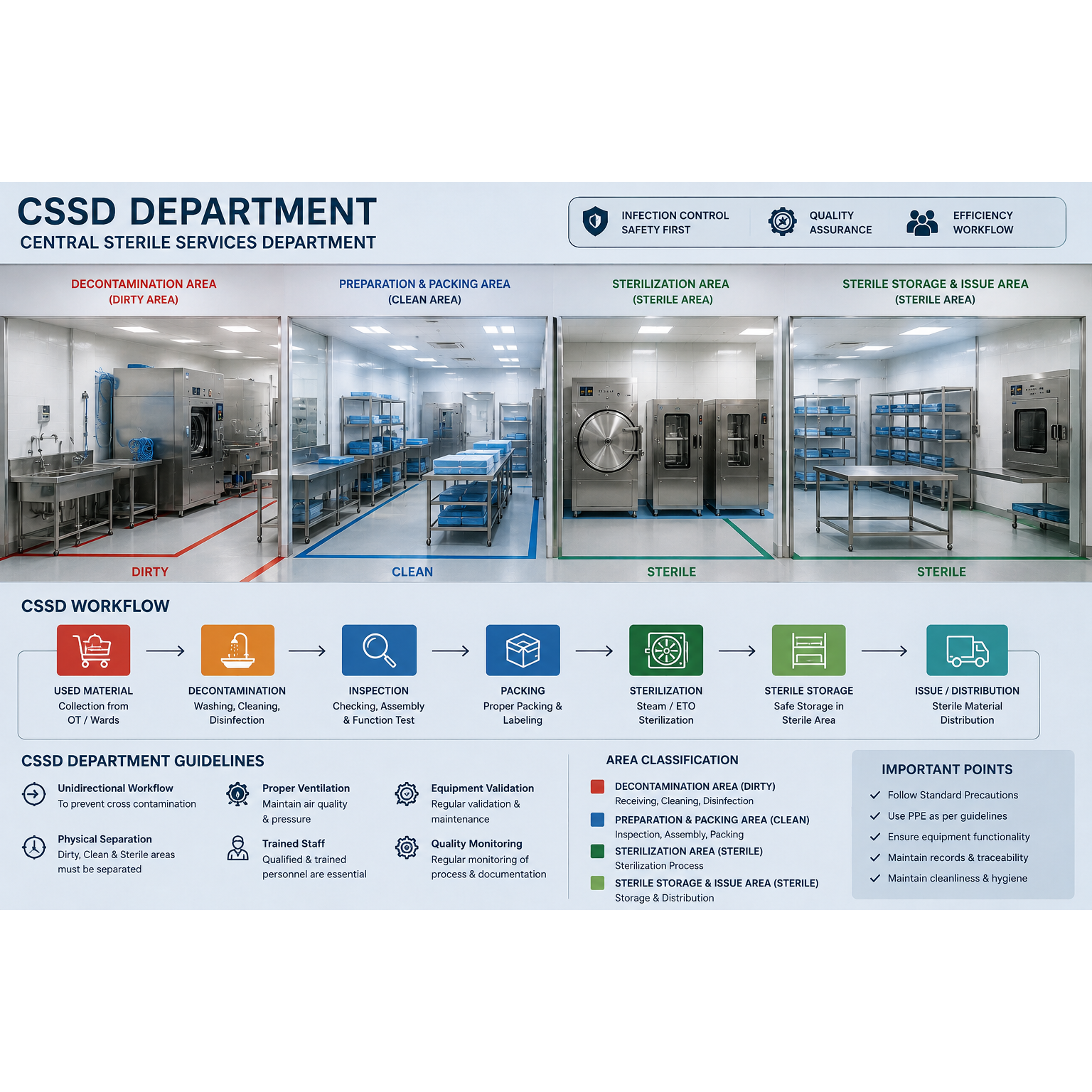
In modern healthcare facilities, infection control is one of the most critical responsibilities. Hospitals handle hundreds of surgical instruments, medical devices, dressing materials, and reusable equipment every day. If these instruments are not cleaned and sterilized properly, they can become a major source of hospital-acquired infections (HAIs).
This is where a CSSD Project plays a vital role.
CSSD, also known as the Central Sterile Supply Department, is the heart of hospital sterilization management. A properly designed CSSD department ensures that all reusable medical instruments are cleaned, disinfected, packed, sterilized, stored, and distributed safely throughout the hospital.
Today, hospitals are investing heavily in advanced CSSD projects to improve patient safety, reduce infection risks, increase operational efficiency, and comply with healthcare standards.
What is a CSSD Project?
A CSSD Project refers to the complete planning, design, manufacturing, installation, and commissioning of a Central Sterile Supply Department in hospitals and healthcare facilities.
The main purpose of a CSSD is:
- Centralized sterilization management
- Infection prevention
- Safe handling of medical instruments
- Maintaining sterile supplies for hospital departments
A CSSD project includes:
- Department layout planning
- Workflow design
- Sterilization equipment
- Washing systems
- Packing stations
- Material movement systems
- Utility planning
- Validation and documentation
The CSSD acts as a centralized unit that supplies sterile instruments to operation theaters, ICUs, wards, laboratories, and other hospital departments.
Importance of CSSD in Hospitals
In hospitals, even a small sterilization failure can create serious health risks for patients.
Improperly sterilized instruments may lead to:
- Cross contamination
- Surgical site infections
- Increased patient recovery time
- Hospital-acquired infections (HAIs)
- Increased treatment costs
- Damage to hospital reputation
A modern CSSD project helps hospitals maintain:
- Proper infection control
- Standardized sterilization process
- Efficient instrument handling
- Better workflow management
- Improved patient safety
This is why CSSD has become an essential department in every modern hospital.
Main Areas of a CSSD Project
A properly designed CSSD department is generally divided into different zones to avoid contamination.
1. Dirty Area (Decontamination Zone)
This is the area where used instruments are received from various hospital departments.
Activities include:
- Sorting
- Cleaning
- Washing
- Decontamination
Equipment used:
- Washing stations
- Ultrasonic cleaners
- Washer disinfectors
This zone is considered contaminated.
2. Clean Area (Packing Zone)
After cleaning, instruments are moved to the clean area for:
- Inspection
- Assembly
- Packing
Staff check instruments carefully before sterilization.
Equipment used:
- Packing tables
- Sealing machines
- Inspection lights
- Instrument preparation stations
3. Sterile Area (Sterile Storage Zone)
After sterilization, materials are stored in the sterile zone.
This area maintains:
- Controlled environment
- Sterile storage conditions
- Safe distribution process
Sterile instruments are then distributed to OT and hospital departments.
Workflow of CSSD Project
A proper one-way workflow is extremely important in CSSD.
The general workflow is:
Used Instruments → Cleaning → Inspection → Packing → Sterilization → Sterile Storage → Distribution
This workflow prevents cross contamination between dirty and sterile materials.
Major Equipment Used in CSSD Projects
A complete CSSD setup includes multiple sterilization and cleaning systems.
Horizontal Cylindrical Autoclave
Used for steam sterilization of:
- Surgical instruments
- Linen
- Dressing materials
- Stainless steel equipment
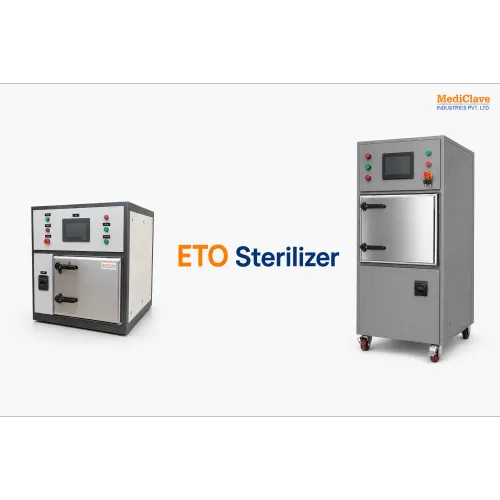
ETO Sterilizer
Used for heat-sensitive medical devices that cannot tolerate steam sterilization.
Suitable for:
- Plastic instruments
- Electronic devices
- Catheters
Washer Disinfector
Automates cleaning and disinfection process.
Benefits:
- Reduces manual handling
- Improves hygiene
- Saves time
Ultrasonic Cleaner
Uses ultrasonic waves for deep cleaning of delicate instruments.
Pass Box
Transfers materials between areas while maintaining cleanliness.
Instrument Workstations
Used for inspection, packing, and tray preparation.
Advantages of a Modern CSSD Project
Better Infection Control
Reduces contamination and hospital infection risks.
Improved Patient Safety
Ensures sterile surgical instruments for medical procedures.
Standardized Sterilization
Maintains consistent sterilization quality.
Increased Efficiency
Centralized workflow improves productivity.
Reduced Human Error
Automation minimizes manual mistakes.
Compliance with Healthcare Standards
Supports NABH, GMP, and international sterilization guidelines.
Importance of CSSD Layout Design
The layout design is one of the most important parts of a CSSD project.
A good CSSD layout should provide:
- Smooth workflow
- Separate dirty and sterile zones
- Proper ventilation
- Utility accessibility
- Space optimization
- Easy material movement
Improper layout planning can create contamination risks and operational problems.
Utilities Required in CSSD Project
A CSSD setup requires multiple utility connections such as:
- Steam supply
- Water supply
- Electricity
- Drainage system
- Compressed air
- HVAC system
Proper utility planning ensures smooth equipment performance.
CSSD Project Planning Process
A professional CSSD project generally includes:
Site Inspection
Understanding available hospital space and workflow.
Layout Design
Planning equipment placement and movement flow.
Equipment Selection
Choosing suitable sterilization and washing systems.
Manufacturing & Supply
Production of required equipment.
Installation & Commissioning
Machine setup and testing.
Validation & Training
Performance validation and staff training.
Challenges in CSSD Operations
Hospitals may face challenges like:
- Limited space
- Improper workflow
- Manual handling errors
- Equipment downtime
- Cross contamination risks
Modern automated CSSD systems help solve these problems efficiently.
Why Hospitals Prefer Advanced CSSD Projects?
Modern hospitals prefer advanced CSSD solutions because they provide:
- Faster sterilization cycles
- Improved infection control
- Better workflow management
- Reduced operational cost
- Long-term reliability
- International compliance standards
A well-designed CSSD department directly improves overall hospital efficiency.
Future of CSSD Technology
The future of CSSD projects includes:
- PLC automation
- Smart sterilization systems
- IoT monitoring
- Barcode tracking systems
- Touchscreen HMI controls
- Energy-efficient sterilizers
- Digital documentation systems
These technologies improve safety, tracking, and process accuracy.
Choosing the Right CSSD Project Manufacturer
Before selecting a CSSD project provider, hospitals should consider:
- Industry experience
- Project execution capability
- Equipment quality
- Customization options
- After-sales support
- Compliance standards
- Technical expertise
A reliable manufacturer ensures long-term project success.
Conclusion
A CSSD Project is one of the most important investments for modern hospitals and healthcare facilities. It plays a critical role in infection control, sterilization management, patient safety, and hospital efficiency.
A professionally designed CSSD department ensures:
- Safe sterilization workflow
- Proper infection prevention
- Reliable sterile instrument supply
- Improved operational performance
As healthcare standards continue to rise, advanced CSSD projects are becoming essential for hospitals worldwide.
Frequently Asked Questions (FAQ)
Q1. What is the full form of CSSD?
CSSD stands for Central Sterile Supply Department.
Q2. What is the purpose of a CSSD project?
The purpose is to clean, disinfect, sterilize, store, and distribute medical instruments safely.
Q3. Which equipment is used in CSSD?
Autoclaves, ETO sterilizers, washer disinfectors, ultrasonic cleaners, and packing stations.
Q4. Why is CSSD important in hospitals?
CSSD helps prevent infections and ensures patient safety through proper sterilization.
Q5. What are the main zones in CSSD?
Dirty area, clean area, and sterile storage area.
Q6. What is the role of an autoclave in CSSD?
It sterilizes instruments using high-pressure saturated steam.
Q7. Can CSSD projects be customized?
Yes, CSSD projects are customized according to hospital size and requirements.
Q8. What standards are followed in CSSD projects?
NABH, GMP, infection control guidelines, and international sterilization standards.
Call To Action
Looking for a complete CSSD project solution for your hospital or healthcare facility?
Get advanced sterilization systems, customized CSSD layouts, high-performance equipment, and professional project execution designed for maximum infection control and operational efficiency.
Contact us today for complete CSSD project consultation and turnkey solutions.
MEDICLAVE INDUSTRIES PRIVATE LIMITED
AHMEDABAD, GUJARAT, INDIA.