

Introduction
Sterilization is one of the most critical processes in pharmaceutical manufacturing, healthcare, biotechnology, and laboratory operations. Any contamination during production or testing can compromise product quality, patient safety, and regulatory compliance. While steam sterilization is widely used, many materials cannot tolerate moisture. This is where the Dry Heat Sterilizer becomes an essential piece of equipment.
A Dry Heat Sterilizer uses high-temperature, moisture-free air to destroy bacteria, viruses, fungi, spores, and other microorganisms. It is especially suitable for sterilizing glassware, stainless steel instruments, powders, oils, empty containers, and other heat-resistant materials that may be damaged by steam.
Modern pharmaceutical facilities rely on advanced Dry Heat Sterilizers to ensure consistent sterilization cycles, maintain product integrity, and comply with GMP, FDA, WHO, and international validation standards. Whether installed in pharmaceutical production plants, microbiology laboratories, research institutes, hospitals, or medical device manufacturing units, these sterilizers provide dependable and repeatable sterilization performance.
This guide explains everything you need to know about Dry Heat Sterilizers, including their working principle, applications, benefits, features, compliance standards, maintenance requirements, and how to choose the right system for your facility.
What is a Dry Heat Sterilizer?
A Dry Heat Sterilizer is a high-temperature sterilization system that eliminates microorganisms using heated air rather than steam or chemicals. Unlike moist heat sterilization, dry heat sterilization removes microorganisms through oxidation and protein denaturation caused by prolonged exposure to elevated temperatures.
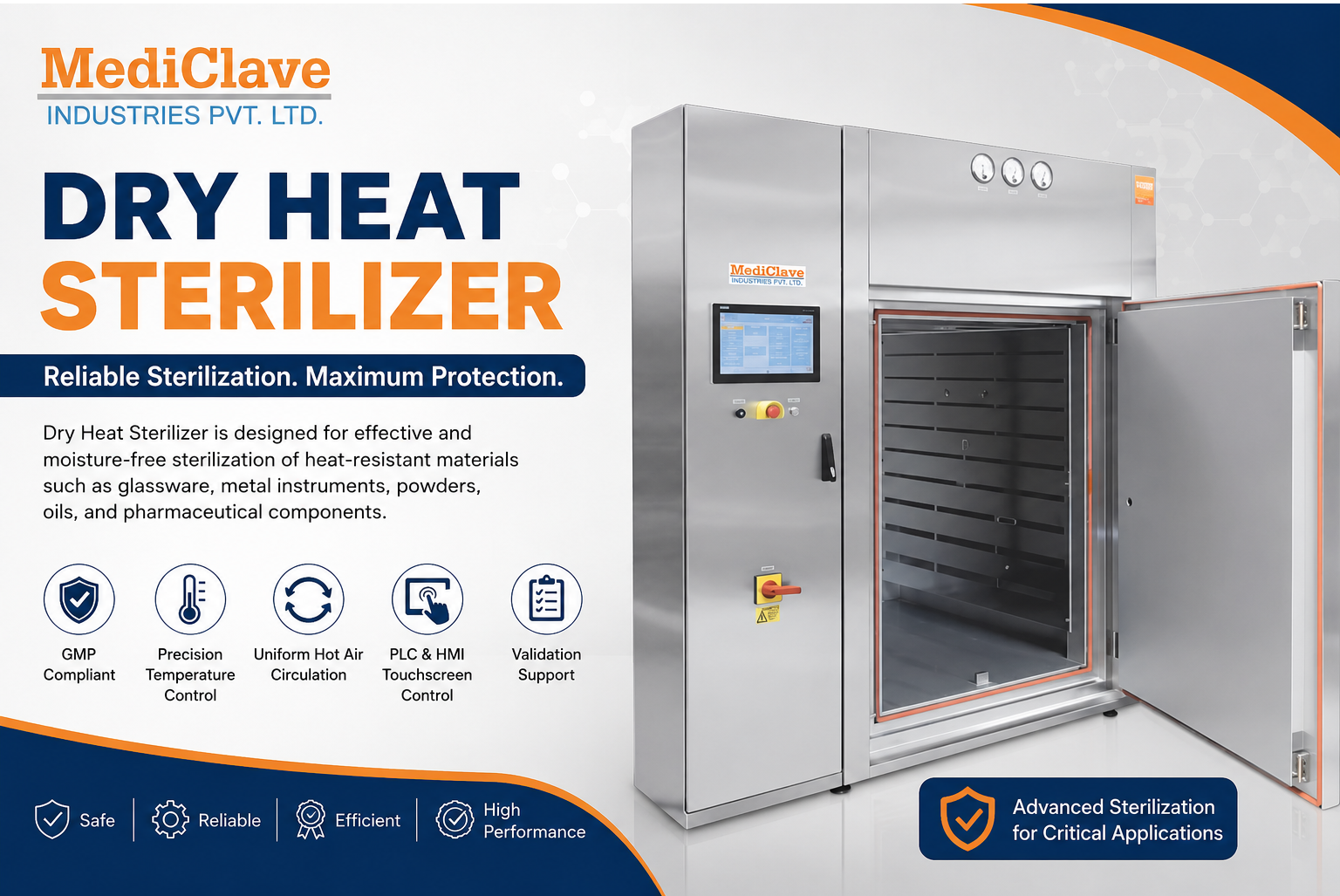
The equipment consists of a heavily insulated stainless steel chamber equipped with precision heating elements, forced hot-air circulation, digital temperature control, programmable PLC systems, safety interlocks, and validation-ready monitoring systems.
Dry Heat Sterilizers are particularly effective for moisture-sensitive products and are commonly used in pharmaceutical manufacturing facilities where contamination control is essential.
How Does a Dry Heat Sterilizer Work?
The sterilization process involves several carefully controlled stages.
1. Loading
Materials are placed uniformly inside the chamber, allowing sufficient airflow around each item.
2. Heating Phase
Powerful heating elements gradually raise the chamber temperature according to the programmed cycle.
3. Temperature Stabilization
Once the desired sterilization temperature is reached, sensors continuously monitor and maintain uniform heat distribution throughout the chamber.
4. Sterilization Hold Time
The load remains at the required temperature for the validated holding period to destroy microorganisms and bacterial spores.
Common sterilization temperatures include:
- 160°C for 120 minutes
- 170°C for 60 minutes
- 180°C for 30 minutes
(The actual cycle depends on validation requirements.)
5. Cooling
After sterilization, the chamber cools under controlled conditions before the load is removed.
Key Features of a Modern Dry Heat Sterilizer
Today's pharmaceutical Dry Heat Sterilizers incorporate advanced technology for improved safety, efficiency, and validation.
Some important features include:
- Stainless Steel SS316/SS304 construction
- PLC-based automation
- HMI touchscreen interface
- Uniform hot air circulation
- High-performance insulation
- Digital temperature control
- Multi-point temperature monitoring
- Automatic sterilization cycles
- Password-protected operation
- Alarm and fault diagnostics
- Data logging
- Batch reporting
- Validation ports
- GMP-compliant design
- FDA-friendly documentation
- Low maintenance design
- Energy-efficient heating system
- Safety door interlocks
- Emergency stop system
- Over-temperature protection
- High-quality chamber finish
Advantages of Dry Heat Sterilization
Moisture-Free Sterilization
Since no steam is used, sensitive materials remain dry throughout the sterilization process.
Excellent for Glassware
Glass bottles, vials, beakers, ampoules, and laboratory containers can be sterilized without moisture residue.
Suitable for Powders and Oils
Many pharmaceutical powders and oils cannot be sterilized using steam because moisture changes their properties.
Reliable Sterility
Uniform hot air circulation ensures effective sterilization across the entire chamber.
Easy Validation
Modern systems include validation ports and comprehensive documentation for regulatory compliance.
Low Operating Costs
Energy-efficient insulation reduces power consumption while maintaining stable temperatures.
Minimal Maintenance
Compared to steam systems, Dry Heat Sterilizers require fewer utility connections and simpler maintenance procedures.
Applications of Dry Heat Sterilizers
Dry Heat Sterilizers serve a wide range of industries.
Pharmaceutical Industry
- Glass vial sterilization
- Ampoule sterilization
- Bottle sterilization
- Stainless steel component sterilization
- Powder sterilization
- Equipment preparation
- Cleanroom support
Biotechnology
- Laboratory glassware
- Research equipment
- Culture containers
- Metal accessories
Hospitals
- Surgical instruments
- Stainless steel trays
- Medical tools
- Laboratory equipment
Research Laboratories
- Test tubes
- Pipettes
- Glass containers
- Metal laboratory tools
Medical Device Manufacturing
- Stainless steel components
- Surgical accessories
- Medical instruments
- Manufacturing fixtures
Food Industry
- Heat-resistant containers
- Metal accessories
- Glass packaging
Industries That Use Dry Heat Sterilizers
- Pharmaceutical Manufacturing
- Biotechnology
- Hospitals
- Healthcare
- Research Institutes
- Medical Device Manufacturing
- Food Processing
- Cosmetic Manufacturing
- Chemical Laboratories
- Quality Control Laboratories
- Universities
- Diagnostic Centers
- Vaccine Manufacturing
- API Manufacturing
- Contract Manufacturing Organizations (CMOs)
Materials Suitable for Dry Heat Sterilization
A Dry Heat Sterilizer is ideal for:
- Glassware
- Stainless steel instruments
- Surgical instruments
- Laboratory tools
- Empty bottles
- Vials
- Ampoules
- Metal trays
- Powders
- Oils
- Heat-resistant chemicals
- Pharmaceutical containers
- Laboratory accessories
Materials Not Suitable for Dry Heat Sterilization
Certain materials should not be processed in a Dry Heat Sterilizer.
These include:
- Rubber products
- Plastic items
- Latex materials
- Moisture-containing products
- Temperature-sensitive components
- Electronic devices
- Certain polymers
Important Technical Features
Although specifications vary by manufacturer, a pharmaceutical-grade Dry Heat Sterilizer generally includes:
- Stainless steel chamber
- Double-wall insulated construction
- High-density insulation
- Precision heating elements
- Forced air circulation blower
- PLC automation
- HMI touchscreen
- Data logger
- Digital recorder
- Temperature sensors
- Validation ports
- Safety interlocks
- Emergency shutdown
- Batch recording
- Alarm system
Compliance with International Standards
Leading pharmaceutical manufacturers require sterilizers that comply with:
- GMP Guidelines
- WHO Recommendations
- FDA Requirements
- ISO Standards
- Good Documentation Practices
- Pharmaceutical Validation Protocols
Compliance ensures product quality, traceability, and regulatory acceptance.
Maintenance Tips
Routine maintenance improves performance and extends equipment life.
Recommended practices include:
- Clean the chamber regularly.
- Inspect door gaskets.
- Verify temperature sensors.
- Calibrate instruments periodically.
- Check blower performance.
- Inspect heating elements.
- Review PLC alarms.
- Validate sterilization cycles.
- Maintain calibration records.
- Replace worn components promptly.
Choosing the Right Dry Heat Sterilizer
When selecting equipment, consider:
Chamber Size
Choose capacity according to production requirements.
Temperature Uniformity
Uniform heat distribution is critical for reliable sterilization.
Automation
PLC-controlled systems reduce operator errors.
Validation Support
Look for IQ, OQ, and PQ documentation.
Material Quality
SS316 contact parts provide superior corrosion resistance.
Energy Efficiency
Well-insulated chambers reduce operating costs.
Service Support
Choose a manufacturer with reliable after-sales service and spare parts availability.
Why Pharmaceutical Companies Prefer Modern Dry Heat Sterilizers
Modern pharmaceutical manufacturing demands precision, repeatability, and compliance. Advanced Dry Heat Sterilizers offer:
- Consistent sterilization performance
- Automated operation
- Reduced contamination risk
- Improved productivity
- Lower operating costs
- Easy documentation
- Regulatory compliance
- Long equipment life
- High process reliability
- Excellent return on investment
These benefits make Dry Heat Sterilizers a valuable asset for facilities focused on quality and efficiency.
Why Choose Mediclave Industries Pvt. Ltd.?
Mediclave Industries Pvt. Ltd. manufactures advanced pharmaceutical sterilization equipment designed to meet the demanding requirements of pharmaceutical, biotechnology, healthcare, laboratory, and research industries.
Key advantages include:
- High-quality stainless steel construction
- Advanced PLC and HMI automation
- GMP-compliant manufacturing
- Uniform hot air circulation
- Reliable temperature control
- Customizable chamber capacities
- Validation-ready systems
- Energy-efficient operation
- Comprehensive documentation
- Dedicated technical support
With a commitment to innovation, quality, and customer satisfaction, Mediclave Industries provides sterilization solutions that help organizations achieve consistent performance and regulatory compliance.
Frequently Asked Questions (FAQs)
What is a Dry Heat Sterilizer used for?
It is used to sterilize heat-resistant and moisture-sensitive materials such as glassware, metal instruments, powders, oils, and pharmaceutical containers.
What temperature is used in dry heat sterilization?
Typical validated cycles operate at 160°C, 170°C, or 180°C, depending on the application and required holding time.
What are the advantages of dry heat sterilization?
It provides moisture-free sterilization, is suitable for heat-resistant materials, supports regulatory compliance, and offers reliable, repeatable performance.
Which industries use Dry Heat Sterilizers?
Pharmaceutical, biotechnology, healthcare, research laboratories, medical device manufacturing, cosmetics, food processing, and quality control laboratories commonly use them.
Is a Dry Heat Sterilizer suitable for plastics?
Most plastics are not suitable because they can deform or melt at the temperatures used for dry heat sterilization.
Conclusion
A Dry Heat Sterilizer is an indispensable solution for industries that require dependable, moisture-free sterilization of heat-resistant materials. Its ability to deliver consistent high-temperature sterilization while preserving the integrity of sensitive products makes it a preferred choice in pharmaceutical manufacturing, laboratories, healthcare facilities, and biotechnology applications. By combining advanced automation, precise temperature control, and compliance with international quality standards, modern Dry Heat Sterilizers help organizations improve product safety, operational efficiency, and regulatory readiness. Investing in a high-quality Dry Heat Sterilizer ensures reliable sterilization performance, reduces contamination risks, and supports long-term productivity in critical manufacturing and research environments.



