Complete Guide for Hospital CSSD & Pharmaceutical Users
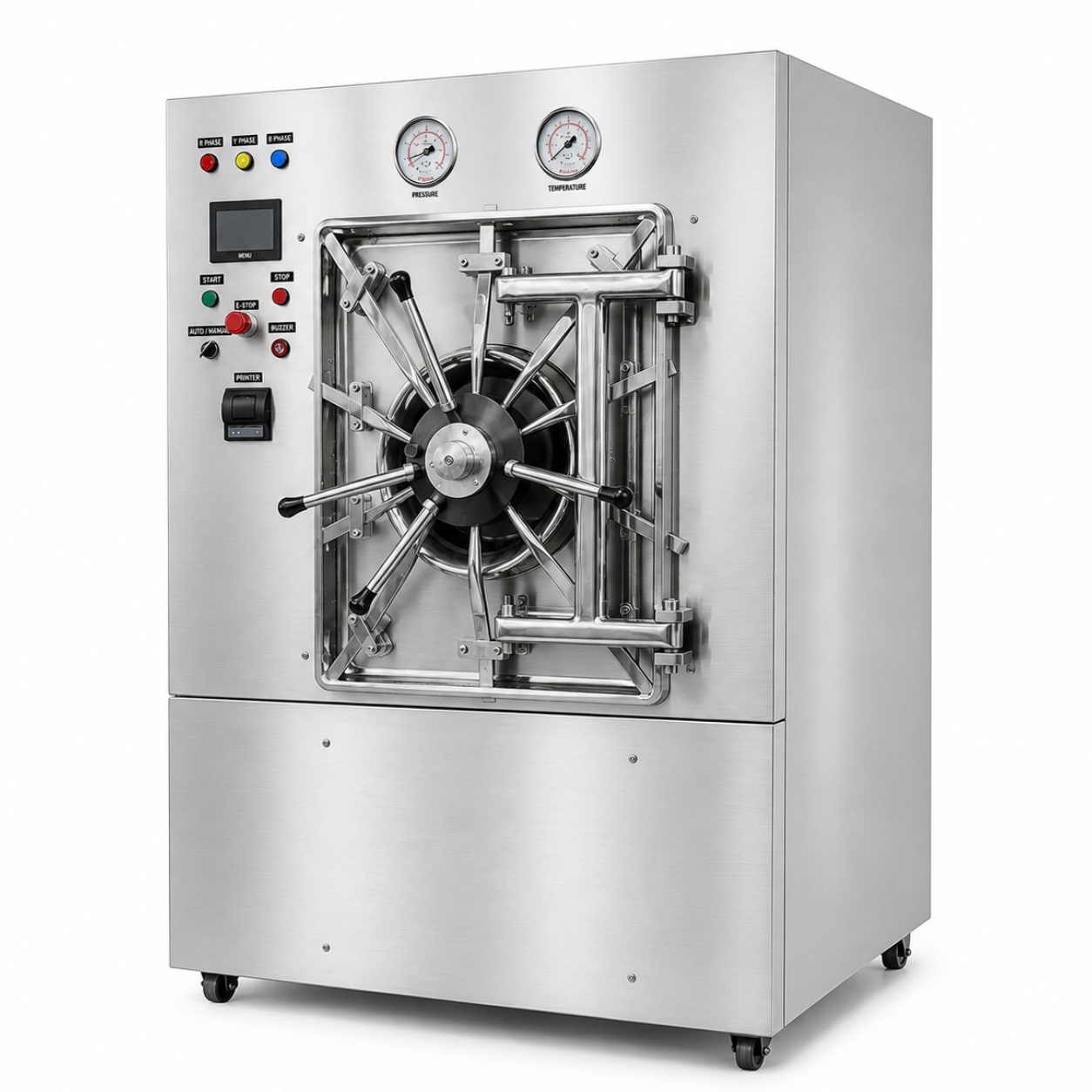
A Horizontal Rectangular Steam Sterilizer is one of the most important sterilization systems used in modern hospitals, pharmaceutical plants, microbiology labs, biotech facilities, and research centers. It is specially designed for high-volume, validated, and reliable sterilization using saturated steam under pressure.
These sterilizers are widely preferred in CSSD departments and pharma production areas because they provide:
-
High loading capacity
-
Better steam penetration
-
Uniform temperature distribution
-
Faster batch processing
-
Reliable sterility assurance
Modern horizontal rectangular sterilizers typically operate at 121°C to 134°C using saturated steam cycles with vacuum-assisted air removal and drying systems.
What is a Horizontal Rectangular Steam Sterilizer?
A Horizontal Rectangular Steam Sterilizer is a front-loading autoclave with a rectangular chamber designed for sterilizing:
-
Surgical instruments
-
Stainless steel utensils
-
Dressing materials
-
Garments
-
Rubber goods
-
Glassware
-
Culture media
-
Pharmaceutical equipment
-
Machine parts
-
Biohazard waste
Unlike vertical autoclaves, rectangular sterilizers provide maximum chamber utilization and support trolley loading systems for heavy-duty operations.
Working Principle
The sterilizer works on the principle of moist heat sterilization using saturated steam under pressure.
Basic Sterilization Process:
-
Loading of material
-
Air removal using vacuum system
-
Steam injection
-
Sterilization holding phase
-
Exhaust phase
-
Vacuum drying
-
Cooling and unloading
Steam condenses on the surface of the load and releases latent heat, which destroys:
-
Bacteria
-
Viruses
-
Fungi
-
Resistant spores
Modern systems use PLC automation to control:
-
Temperature
-
Pressure
-
Sterilization time
-
Drying cycles
-
Safety alarms
-
Data logging
Applications in Hospital CSSD
1. Surgical Instrument Sterilization
Used for:
-
OT instrument sets
-
Orthopedic tools
-
Laparoscopic instruments
-
Stainless steel trays
The sterilizer ensures complete sterilization before reuse.
2. Linen & Dressing Sterilization
Sterilizes:
-
Surgical gowns
-
Drapes
-
Cotton packs
-
Dressing materials
Vacuum drying helps achieve dry packs after sterilization.
3. CSSD Workflow Integration
Double-door pass-through models create separation between:
This supports infection control protocols in hospitals.
4. Biohazard Waste Treatment
Used for sterilization of contaminated hospital waste before disposal.
Applications in Pharmaceutical Industry
1. Sterilization of Machine Parts
Used for:
-
Change parts
-
Filling machine accessories
-
Stainless steel utensils
-
Product contact parts
2. Garment Sterilization
Sterilizes:
-
Cleanroom garments
-
Gloves
-
Goggles
-
Footwear
Essential for GMP compliance.
3. Sterilization of Glassware
Used for:
-
Beakers
-
Bottles
-
Glass containers
-
Laboratory equipment
4. Sterilization of Rubber Components
Suitable for:
-
Rubber stoppers
-
Silicone tubes
-
Gaskets
5. Sterilization in Injectable Manufacturing
Critical for sterile pharma production and aseptic processing areas.
Major Advantages of Horizontal Rectangular Sterilizer
High Loading Capacity
Rectangular chambers maximize usable space and improve throughput compared to cylindrical models.
Better Steam Penetration
Vacuum-assisted systems remove trapped air effectively, ensuring proper sterilization of porous loads and wrapped instruments.
Faster Batch Processing
Jacketed chambers provide:
-
Faster heating
-
Reduced cycle time
-
Energy efficiency
Uniform Temperature Distribution
High-quality sterilizers maintain chamber temperature within ±0.5°C for validated sterilization performance.
GMP & Regulatory Compliance
Advanced systems support:
-
IQ/OQ/PQ validation
-
Audit trails
-
Data logging
-
Printer integration
-
SCADA connectivity
Safe Operation
Modern sterilizers include:
-
Door safety interlocks
-
Pressure safety valves
-
Emergency stop systems
-
Alarm systems
Important Selection Points Before Buying
1. Chamber Size & Capacity
Select according to:
-
Daily load volume
-
Tray/trolley requirement
-
Future expansion plans
2. Single Door vs Double Door
Single Door
Suitable for:
-
Small hospitals
-
Labs
-
Small pharma units
Double Door Pass Box Type
Recommended for:
-
CSSD
-
Sterile pharma areas
-
Cleanroom operations
Maintains sterile barrier separation.
3. Chamber Material
Preferred material:
-
SS 316L chamber
-
SS 304 outer body
SS 316L provides superior corrosion resistance.
4. Vacuum System
Pre-vacuum sterilizers are ideal for:
-
Wrapped instruments
-
Textile loads
-
Porous materials
5. Automation Level
Modern PLC systems provide:
-
Recipe storage
-
HMI touchscreen
-
Automatic cycle control
-
Password protection
-
Batch recording
6. Drying Efficiency
Good drying system is essential for:
-
Instrument packs
-
Garments
-
Dressing materials
Wet packs can compromise sterility.
7. Utility Requirements
Check:
-
Steam source
-
Water quality
-
Electrical load
-
Drain line
-
Space requirement
Common Sterilization Cycles
Cycle Type |
Typical Temperature |
Application |
|---|
| Instruments | 134°C | Surgical instruments |
| Garments | 121°C | Linen & textiles |
| Rubber Goods | 121°C | Rubber items |
| Liquids | 121°C | Media & liquids |
| Bowie Dick Test | 134°C | Steam penetration test |
| Vacuum Leak Test | — | Chamber integrity check |
Why Rectangular Design is Preferred
Compared to cylindrical sterilizers, rectangular chambers offer:
-
Better trolley movement
-
More usable loading space
-
Improved productivity
-
Better workflow handling
Especially beneficial in:
-
Large hospitals
-
Central CSSD
-
Pharma production plants
Common Mistakes Users Should Avoid
Overloading Chamber
Blocks steam circulation and causes sterilization failure.
Improper Packaging
Can trap air and reduce steam penetration.
Poor Water Quality
Leads to:
-
Scaling
-
Corrosion
-
Sensor damage
Ignoring Validation
Routine validation is critical for GMP and hospital safety compliance.
Maintenance Tips
To ensure long machine life:
-
Clean chamber regularly
-
Inspect door gasket
-
Check safety valves
-
Calibrate sensors
-
Perform Bowie Dick tests
-
Maintain vacuum pump
-
Use purified water
Future Trends in Steam Sterilization
Modern sterilizers are moving toward:
-
Fully automatic systems
-
SCADA integration
-
IoT monitoring
-
Energy-efficient steam systems
-
Remote diagnostics
-
Electronic batch records

 Chat with us
 Chat with us