
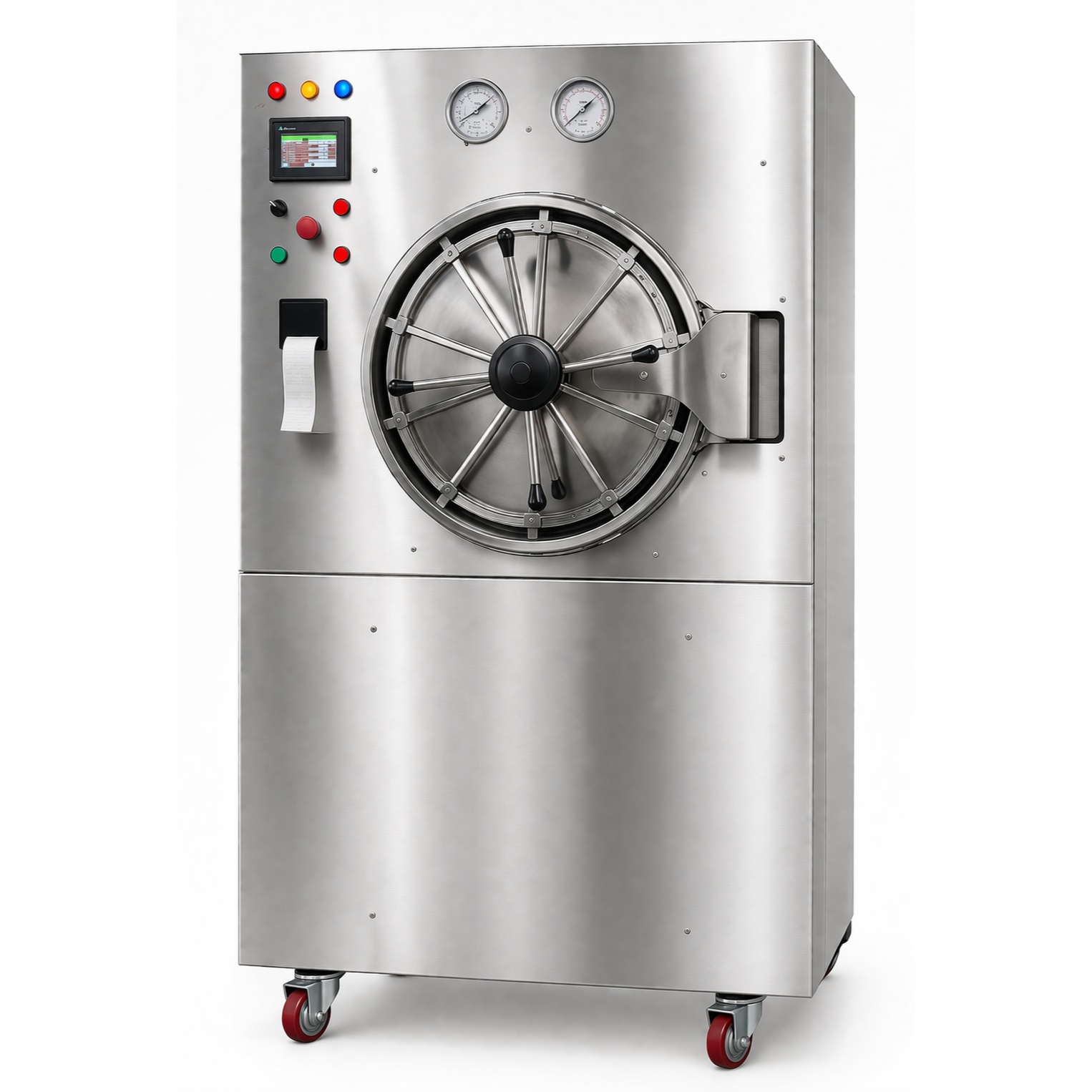
Horizontal Cylindrical Autoclave: The Backbone of Safe & Effective Sterilization in Hospitals and Pharma Industries
In today’s healthcare and pharmaceutical industries, sterilization is one of the most critical processes for maintaining hygiene, safety, and product quality. Every surgical instrument, dressing material, laboratory tool, and pharmaceutical component must be completely free from bacteria, viruses, fungi, and harmful microorganisms before use. Even a small contamination can lead to serious infections, product failures, or health risks.
To ensure reliable sterilization, industries depend on advanced steam sterilization equipment, and among the most trusted machines is the Horizontal
Cylindrical Autoclave.
A Horizontal Cylindrical Autoclave is specially designed for high-capacity and efficient sterilization operations. Due to its strong cylindrical chamber, uniform steam circulation, and durable construction, it is widely used in hospitals, pharmaceutical plants, research laboratories, biotechnology industries, and CSSD departments.
Its powerful sterilization capability, combined with long operational life and easy maintenance, makes it one of the most preferred sterilization systems worldwide.
What is a Horizontal Cylindrical Autoclave?
A Horizontal Cylindrical Autoclave is a high-pressure steam sterilizer with a horizontal cylindrical chamber designed to sterilize various materials using saturated steam under controlled pressure and temperature.
The machine works by generating steam inside a sealed chamber. As pressure increases, the temperature also rises, allowing the steam to penetrate deeply into instruments and materials. This process destroys all forms of microorganisms, including bacterial spores, which are highly resistant to normal cleaning methods.
The cylindrical shape of the chamber plays an important role in maintaining equal pressure distribution and uniform steam penetration, ensuring effective sterilization throughout the chamber.
Horizontal Cylindrical Autoclaves are available in different sizes and capacities depending on industrial requirements, ranging from small hospital units to large pharmaceutical sterilization systems.
Importance of Sterilization in Healthcare & Pharma Industries
Sterilization is not just a cleaning process — it is a critical safety requirement.
In hospitals, improper sterilization can lead to:
- Surgical infections
- Cross-contamination
- Spread of dangerous bacteria and viruses
- Increased patient recovery time
- Serious healthcare complications
In pharmaceutical industries, poor sterilization may result in:
- Product contamination
- Batch rejection
- Regulatory issues
- Financial losses
- Damage to brand reputation
This is why industries prefer advanced sterilization equipment like Horizontal Cylindrical Autoclaves that deliver reliable and repeatable sterilization results.
Working Principle of Horizontal Cylindrical Autoclave
The Horizontal Cylindrical Autoclave operates on the principle of moist heat sterilization using saturated steam under pressure.
When water is heated inside the system, steam is generated and enters the chamber. As the chamber pressure increases, the boiling point of water also rises, producing high-temperature steam capable of killing microorganisms effectively.
The sterilization cycle generally includes the following stages:
1. Loading Stage
Materials to be sterilized are loaded inside the chamber carefully to allow proper steam circulation.
2. Air Removal Stage
Air present inside the chamber is removed because trapped air can reduce sterilization efficiency.
3. Steam Injection Stage
High-pressure saturated steam enters the chamber.
4. Sterilization Holding Time
The chamber maintains a fixed temperature and pressure for a specified duration.
Common sterilization conditions:
- 121°C at 15 PSI
- 134°C for rapid sterilization cycles
5. Exhaust Stage
Steam pressure is released safely after completion.
6. Drying Stage
Materials are dried before unloading to prevent moisture contamination.
Construction of Horizontal Cylindrical Autoclave
The machine is manufactured using heavy-duty stainless steel construction for long-lasting performance and corrosion resistance.
Main Components Include:
Sterilization Chamber
The cylindrical chamber is generally made from SS 304 or SS 316 stainless steel.
Jacket
Helps maintain temperature stability and improves steam efficiency.
Door System
Available with:
- Single door
- Double door
- Radial locking system
- Automatic door operation
Steam Generator
Produces saturated steam for sterilization.
Control Panel
Used to monitor:
- Temperature
- Pressure
- Sterilization cycle
- Safety alarms
Safety Devices
Includes:
- Safety valve
- Pressure gauge
- Vacuum breaker
- Low water cutoff
- Door interlocking system
Key Features of Horizontal Cylindrical Autoclave
Heavy-Duty Construction
Strong stainless steel design ensures durability and corrosion resistance.
Uniform Steam Distribution
The cylindrical design provides equal steam penetration throughout the chamber.
Large Sterilization Capacity
Ideal for bulk sterilization applications.
Energy Efficient Operation
Optimized steam consumption reduces operational cost.
Advanced Automation
Available with PLC and HMI-based automatic controls.
User-Friendly Interface
Easy operation and monitoring for operators.
High Safety Standards
Equipped with multiple protection systems for safe operation.
Reliable Sterilization Results
Ensures complete elimination of microorganisms and spores.
Applications of Horizontal Cylindrical Autoclave
Horizontal Cylindrical Autoclaves are widely used across multiple industries.
Hospitals & Healthcare Centers
Used for sterilizing:
- Surgical instruments
- Linen
- Dressing materials
- OT equipment
- Stainless steel utensils
Pharmaceutical Industries
Used for:
- Sterilizing manufacturing accessories
- Culture media
- Glassware
- Containers
- Machine parts
Laboratories
Suitable for:
- Laboratory glassware
- Research instruments
- Microbiology equipment
Biotechnology Industries
Used in sterile production environments.
Food Industries
Used for sterilization and contamination control.
Types of Horizontal Cylindrical Autoclaves
Steam Operated Autoclave
Operates using an external steam source.
Electrically Heated Autoclave
Uses electric heaters for steam generation.
Fully Automatic Autoclave
PLC-controlled with automatic sterilization cycles.
Semi-Automatic Autoclave
Requires partial manual operation.
Double Door Autoclave
Used in cleanroom and pharmaceutical environments to prevent cross-contamination.
Advantages of Horizontal Cylindrical Autoclave
Faster Sterilization Process
Reduces sterilization cycle time.
Better Infection Control
Helps maintain hygienic environments.
High Productivity
Handles large batches efficiently.
Low Maintenance
Designed for long operational life.
Cost Effective
Reduces contamination losses and operational downtime.
Excellent Heat Distribution
Ensures proper sterilization across all chamber areas.
Why Horizontal Cylindrical Design is Preferred?
The cylindrical chamber shape is one of the biggest advantages of this autoclave.
Benefits include:
- Better pressure handling capability
- Uniform steam flow
- Improved structural strength
- Reduced stress concentration
- Enhanced sterilization efficiency
Compared to other chamber designs, cylindrical chambers provide safer and more efficient operation under high pressure.
Important Safety Features
Modern Horizontal Cylindrical Autoclaves include advanced safety systems such as:
- Automatic pressure control
- Over-temperature protection
- Safety relief valve
- Door locking mechanism
- Low water level protection
- Emergency stop system
- Audio and visual alarms
These features ensure operator safety and machine reliability.
Maintenance Tips for Horizontal Cylindrical Autoclave
Proper maintenance improves machine life and sterilization performance.
Regular Cleaning
Clean chamber and drain lines regularly.
Check Gaskets
Inspect door gaskets for leakage.
Monitor Pressure Gauges
Ensure accurate readings.
Validate Sterilization Cycles
Perform periodic sterilization validation tests.
Preventive Maintenance
Schedule regular servicing for smooth operation.
How to Choose the Right Horizontal Cylindrical Autoclave?
Before selecting an autoclave, consider:
Chamber Capacity
Choose according to workload requirements.
Automation Level
Select manual, semi-automatic, or fully automatic systems.
Material Quality
Prefer SS 304 or SS 316 construction.
Utility Availability
Check steam, water, and power requirements.
Safety Features
Ensure machine complies with safety standards.
After-Sales Support
Reliable technical support is important for long-term performance.
Future of Sterilization Technology
Modern sterilization systems are becoming more advanced with:
- PLC automation
- Touchscreen HMI
- Data recording systems
- Energy-saving technology
- IoT-based monitoring
- Remote diagnostics
These innovations improve efficiency, safety, and process control in healthcare and pharmaceutical industries.
Conclusion
The Horizontal Cylindrical Autoclave is one of the most reliable and efficient sterilization solutions available for hospitals, pharmaceutical industries, laboratories, and healthcare facilities.
Its strong cylindrical construction, uniform steam distribution, large sterilization capacity, and advanced safety features make it ideal for critical sterilization applications.
By investing in a high-quality Horizontal Cylindrical Autoclave, industries can achieve:
- Better infection control
- Reliable sterilization performance
- Improved operational efficiency
- Long-term durability
- Compliance with hygiene and safety standards
As sterilization demands continue to increase globally, Horizontal Cylindrical Autoclaves remain a trusted backbone of modern sterilization systems.
Frequently Asked Questions (FAQ)
Q1. What is the use of a Horizontal Cylindrical Autoclave?
It is used to sterilize medical instruments, laboratory equipment, garments, and pharmaceutical accessories using steam under pressure.
Q2. Why is the chamber cylindrical in shape?
The cylindrical shape provides better pressure handling and uniform steam distribution.
Q3. Which industries use Horizontal Cylindrical Autoclaves?
Hospitals, pharmaceutical industries, laboratories, biotechnology industries, and research centers.
Q4. What temperature is used for sterilization?
Generally 121°C at 15 PSI or 134°C depending on the sterilization requirement.
Q5. What materials can be sterilized?
Surgical tools, linen, glassware, rubber items, laboratory equipment, and pharmaceutical accessories.
Q6. Is a Horizontal Cylindrical Autoclave fully automatic?
It is available in manual, semi-automatic, and fully automatic models.
Q7. Which stainless steel material is preferred?
SS 304 and SS 316 stainless steel are commonly used.
Q8. What are the safety features in an autoclave?
Safety valves, pressure gauges, door interlocks, alarms, and low water protection systems.
Call To Action
Looking for a high-performance Horizontal Cylindrical Autoclave for your hospital, pharmaceutical plant, laboratory, or healthcare facility?
Choose a sterilization solution that delivers reliability, safety, efficiency, and long operational life. Contact us today to get the perfect autoclave system customized according to your industrial requirements.
MEDICLAVE INDUSTRIES PRIVATE LIMITED
AHMEDABAD, GUJARAT, INDIA.