
Discover how to design a modern CSSD department for hospitals in 2026. Learn about CSSD workflow, sterilization equipment, infection control, and efficient hospital sterilization planning.
How to Plan a Modern CSSD Department for Hospitals in 2026
In today’s healthcare industry, infection control and patient safety have become more important than ever. A properly designed CSSD (Central Sterile Supply Department) plays a critical role in ensuring safe, sterile, and contamination-free surgical instruments for hospitals and healthcare facilities.
As hospitals continue to modernize in 2026, planning an advanced CSSD department is no longer optional — it is essential for operational efficiency, international compliance, and patient safety.
At Mediclave Industries, we understand the importance of a smart and efficient sterilization workflow. In this blog, we will explain how hospitals can successfully plan a modern CSSD department for better performance and long-term reliability.
What is CSSD?
CSSD (Central Sterile Supply Department) is the heart of a hospital’s sterilization process. It is responsible for:
- Cleaning surgical instruments
- Disinfection processes
- Packing and sealing
- Sterilization
- Storage and distribution of sterile materials
A well-designed CSSD ensures smooth instrument flow while reducing infection risks inside hospitals.
Importance of Modern CSSD Planning in 2026
Modern hospitals require:
- Faster sterilization cycles
- Better infection control
- Automated workflow systems
- Space optimization
- International sterilization standards compliance
An outdated CSSD setup can create:
- Cross contamination risks
- Delays in operation theatres
- Instrument damage
- Increased maintenance costs
- Higher infection rates
That is why modern CSSD planning has become a top priority for hospitals and healthcare consultants.
Key Areas in a Modern CSSD Department
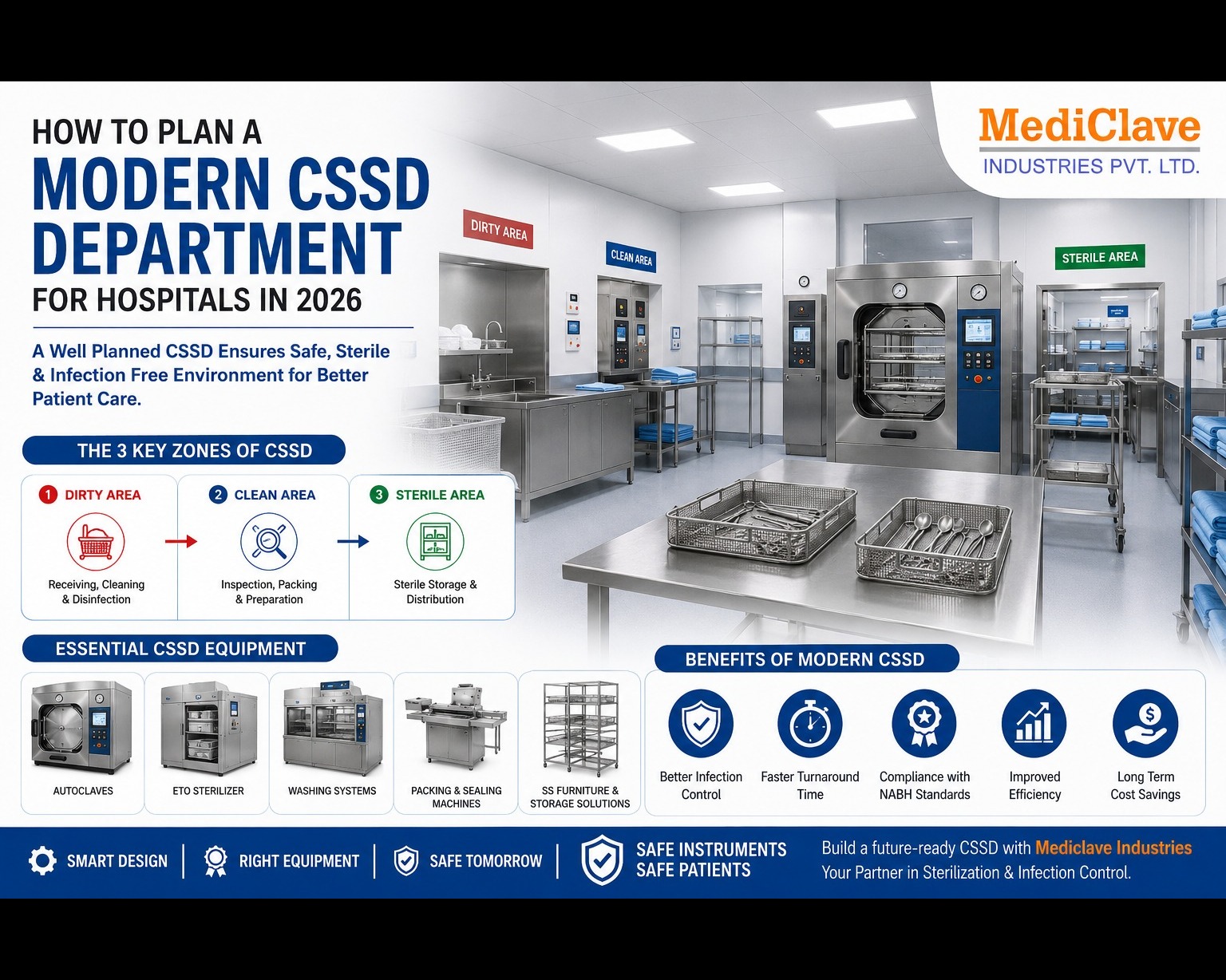
A professionally planned CSSD department is generally divided into three major zones:
1. Dirty Area
This section is used for receiving contaminated instruments from operation theatres and wards.
Main activities include:
- Washing
- Cleaning
- Initial disinfection
Proper segregation is extremely important to avoid contamination.
2. Clean Area
After washing and drying, instruments are inspected and packed in the clean area.
This section includes:
- Inspection tables
- Packing tables
- Sealing machines
- Instrument preparation zones
Efficient workflow in this area improves sterilization quality and productivity.
3. Sterile Area
This is the final sterile storage section where sterilized instruments are safely stored before use.
The sterile area must maintain:
- Controlled environment
- Dust-free storage
- Proper inventory management
Essential Equipment Required for Modern CSSD
A modern CSSD department requires advanced and reliable equipment such as:
- Horizontal Rectangular Autoclave
- Horizontal Cylindrical Autoclave
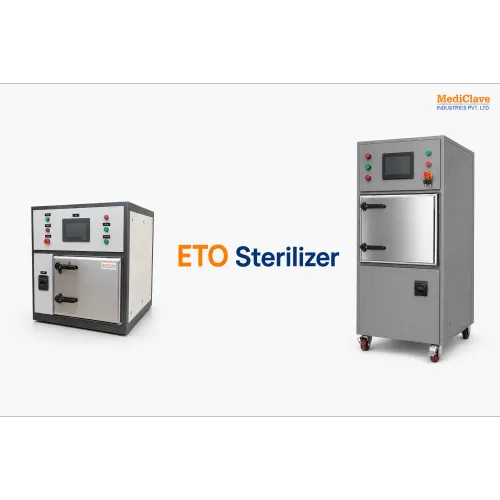
- ETO Sterilizer
- Washing Systems
- Packing & Sealing Machines
- SS Storage Racks
- Instrument Trolleys
- Pass Boxes
- Linen Inspection Tables
- Sterile Storage Solutions
Choosing high-quality sterilization equipment improves operational reliability and reduces downtime.
Workflow Design is the Most Important Factor
One of the biggest mistakes hospitals make is poor workflow planning.
A proper CSSD workflow should always move in one direction:
Dirty → Clean → Sterile
This prevents:
- Cross contamination
- Human errors
- Material mixing
- Infection risks
Modern hospitals now prefer modular CSSD designs that optimize movement, staff efficiency, and equipment placement.
Importance of Infection Control
Hospital-acquired infections (HAIs) are a serious challenge in healthcare facilities.
A modern CSSD helps hospitals:
- Maintain hygiene standards
- Improve sterilization accuracy
- Reduce bacterial contamination
- Increase patient safety
- Comply with NABH and international standards
Proper sterilization directly impacts hospital reputation and patient trust.
Smart Technologies Used in Modern CSSD
In 2026, hospitals are increasingly adopting smart sterilization technologies such as:
- PLC controlled sterilizers
- Touch screen operation systems
- Automatic cycle recording
- Barcode tracking systems
- Digital monitoring
- Energy-efficient sterilization systems
Automation improves consistency, reduces manpower dependency, and increases overall efficiency.
How Mediclave Industries Supports Modern CSSD Projects
At Mediclave Industries, we provide complete sterilization and CSSD solutions designed for modern healthcare requirements.
Our solutions include:
- Advanced sterilization systems
- Custom CSSD planning support
- High-quality stainless steel furniture
- Reliable installation assistance
- Efficient workflow solutions
- Long-term service support
We help hospitals create safe, efficient, and future-ready CSSD departments.
Conclusion
A modern CSSD department is the backbone of hospital sterilization and infection control. Proper planning, workflow management, and advanced equipment selection are essential for building a reliable healthcare infrastructure in 2026.
Hospitals investing in smart CSSD solutions today will achieve:
- Better operational efficiency
- Improved patient safety
- Lower infection risks
- Higher compliance standards
- Long-term cost savings
If you are planning a new hospital project or upgrading your sterilization department, Mediclave Industries can help you build a modern and efficient CSSD solution tailored to your needs.
#CSSD #HospitalSterilization #SterilizationSystem #InfectionControl #HospitalEquipment #ETOsterilizer #Autoclave #HealthcareTechnology #CSSDPlanning #HospitalInfrastructure #SterileSolutions #MediclaveIndustries #HospitalSafety #MedicalEquipment #HealthcareInnovation
@Ahmedabad @Mumbai @Delhi @NewDelhi @Bangalore @Hyderabad @Chennai @Pune @Surat @Vadodara @Rajkot @Gandhinagar @Kolkata @Jaipur @Udaipur @Jodhpur @Indore @Bhopal @Nagpur @Nashik @Aurangabad @Lucknow @Kanpur @Patna @Ranchi @Bhubaneswar @Raipur @Chandigarh @Ludhiana @Amritsar @Jammu @Srinagar @Dehradun @Noida @Gurgaon @Faridabad @Sonipat @Panipat @Visnagar @Mehsana @Anand @Bhavnagar @Jamnagar @Morbi @Vapi @Silvassa @Goa @Kochi @Trivandrum @Coimbatore @Madurai @Vijayawada @Visakhapatnam @Mysore @Hubli @Belgaum @Tirupati @Salem @Tiruppur @Bikaner @Ajmer @Alwar @Haridwar @Shimla @Manali @Agra @Varanasi @Prayagraj @Guwahati @Shillong @Imphal @Aizawl @Itanagar @Gangtok @Dibrugarh @Siliguri @Jabalpur @Gwalior @Kolhapur @Solapur @Thane @NaviMumbai @Kalyan @Palghar @Rewari @Hisar @Rohtak @Karnal @Bhilai @Durg @Cuttack @Jamshedpur @Hosur @Kakinada @Warangal @Nellore @Kota @Sikar @Bharuch @Junagadh @Porbandar @Kutch @Dwarka