
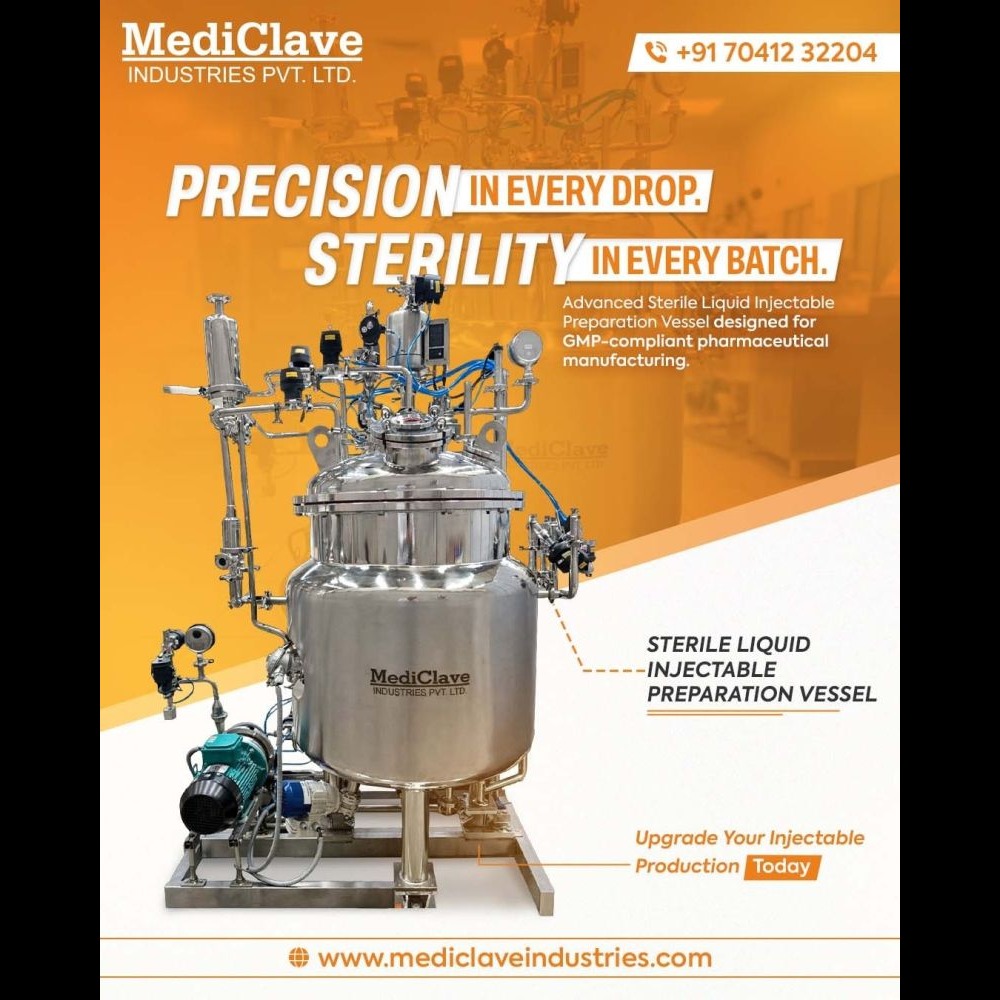
Installing and commissioning an injectable liquid manufacturing vessel is a critical process in pharmaceutical manufacturing. Proper installation ensures smooth production, GMP compliance, operational safety, and long-term equipment reliability.
What is an Injectable Liquid Manufacturing Vessel?
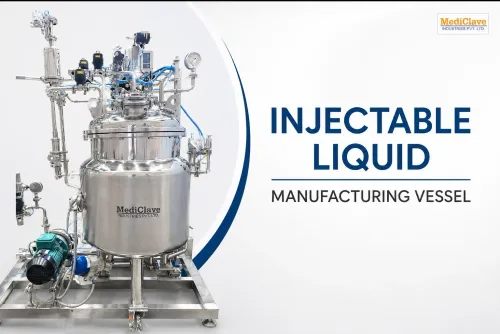
An Injectable Liquid Manufacturing Vessel is a high-precision stainless steel vessel used for the preparation, mixing, heating, cooling, and storage of injectable pharmaceutical solutions under controlled and sterile conditions.
These vessels are widely used in:
- Pharmaceutical industries
- Injectable manufacturing plants
- Sterile formulation units
- Biotechnology facilities
- Vaccine production plants
Key Components of the Manufacturing Vessel
Vessel Construction
- SS 316L contact parts
- SS 304 non-contact structure
- Mirror polished internal surface
- Jacketed or insulated body
Mixing System
- Top-mounted agitator
- Magnetic stirrer or mechanical mixer
- Variable speed drive (VFD)
Sterile Features
- CIP (Clean-In-Place) system
- SIP (Sterilize-In-Place) arrangement
- 0.22-micron vent filter
- Aseptic connections
Instrumentation
- Pressure gauges
- Temperature sensors
- Level indicators
- PLC or HMI control panel
Installation Process of Injectable Liquid Manufacturing Vessel
1. Site Preparation
Before installation:
- Ensure cleanroom readiness
- Verify floor load capacity
-
Check utility availability:
- Purified water
- Clean steam
- Compressed air
- Electrical supply
A proper layout plan helps maintain sterile process flow and GMP compliance.
2. Equipment Positioning
The vessel should be carefully shifted using:
- Hydraulic lifters
- Cranes
- Forklifts
Proper alignment is essential for:
- Piping connections
- Drainability
- Agitator balancing
- Vibration-free operation
3. Utility Connections
Connect all required utilities:
- Steam lines
- Chilled water lines
- WFI lines
- Compressed air
- Electrical control wiring
Leak testing and insulation verification must be completed before operation.
4. Piping & Instrument Integration
All process piping should follow:
- Hygienic design standards
- Tri-clamp fittings
- Orbital welding practices
Instrumentation calibration is performed for:
- Temperature
- Pressure
- Conductivity
- Flow monitoring
Commissioning Process
Mechanical Commissioning
This stage includes:
- Agitator trial run
- Motor rotation check
- Valve operation testing
- Safety interlock verification
Electrical Commissioning
Technicians verify:
- PLC programming
- HMI functionality
- Alarm systems
- Sensor communication
- Emergency stop systems
CIP/SIP Validation
CIP and SIP cycles are tested to ensure:
- Proper cleaning coverage
- Sterilization efficiency
- Temperature holding accuracy
- Sterile integrity
Water Trial & Performance Testing
Water batch trials are conducted to evaluate:
- Mixing efficiency
- Temperature control
- Homogeneity
- Drainability
- Batch cycle timing
Important GMP Considerations
To comply with pharmaceutical regulations:
- All contact parts must be SS 316L
- Surface finish should be Ra < 0.8 µm
- Dead legs should be minimized
- Documentation & IQ/OQ protocols are mandatory
Compliance standards include:
- WHO GMP
- USFDA
- EU GMP
- cGMP guidelines
Common Installation Challenges
| Challenge | Solution |
|---|---|
| Improper leveling | Precision alignment tools |
| Utility pressure fluctuations | Pressure regulating systems |
| Contamination risks | Aseptic installation practices |
| Sensor calibration errors | Routine validation checks |
| Steam leakage | Proper insulation & welding |
Benefits of Proper Installation & Commissioning
- Improved batch consistency
- Reduced contamination risk
- Better operational efficiency
- Longer equipment life
- Faster regulatory approvals
- Reduced downtime
Conclusion
The installation and commissioning of an Injectable Liquid Manufacturing Vessel play a major role in achieving sterile pharmaceutical manufacturing excellence. From utility integration to CIP/SIP validation, every step must follow strict GMP standards to ensure product safety, efficiency, and compliance.
High-quality installation practices help pharmaceutical manufacturers achieve reliable production, reduced maintenance issues, and long-term operational success.
@Ahmedabad @Mumbai @Delhi @NewDelhi @Bangalore @Hyderabad @Chennai @Pune @Surat @Vadodara @Rajkot @Gandhinagar @Kolkata @Jaipur @Udaipur @Jodhpur @Indore @Bhopal @Nagpur @Nashik @Aurangabad @Lucknow @Kanpur @Patna @Ranchi @Bhubaneswar @Raipur @Chandigarh @Ludhiana @Amritsar @Jammu @Srinagar @Dehradun @Noida @Gurgaon @Faridabad @Sonipat @Panipat @Visnagar @Mehsana @Anand @Bhavnagar @Jamnagar @Morbi @Vapi @Silvassa @Goa @Kochi @Trivandrum @Coimbatore @Madurai @Vijayawada @Visakhapatnam @Mysore @Hubli @Belgaum @Tirupati @Salem @Tiruppur @Bikaner @Ajmer @Alwar @Haridwar @Shimla @Manali @Agra @Varanasi @Prayagraj @Guwahati @Shillong @Imphal @Aizawl @Itanagar @Gangtok @Dibrugarh @Siliguri @Jabalpur @Gwalior @Kolhapur @Solapur @Thane @NaviMumbai @Kalyan @Palghar @Rewari @Hisar @Rohtak @Karnal @Bhilai @Durg @Cuttack @Jamshedpur @Hosur @Kakinada @Warangal @Nellore @Kota @Sikar @Bharuch @Junagadh @Porbandar @Kutch @Dwarka