
Multi Column Distillation Plant: Complete Guide
Introduction
Water is one of the most critical raw materials used in the pharmaceutical industry. Whether manufacturing injectable medicines, vaccines, IV fluids, ophthalmic products, or sterile formulations, the quality of water directly affects product safety and regulatory compliance. Ordinary purified water is often insufficient for sterile pharmaceutical applications, making Water for Injection (WFI) an essential requirement.
A Multi Column Distillation Plant (MCDP) is specifically designed to produce high-purity Water for Injection by removing dissolved salts, pyrogens, microorganisms, endotoxins, and other contaminants through a multi-stage distillation process. It is widely used in pharmaceutical manufacturing facilities that follow WHO-GMP, US FDA, EU GMP, and cGMP standards.
At Mediclave Industries, we manufacture advanced pharmaceutical process equipment engineered for reliability, efficiency, and regulatory compliance. If your facility requires a dependable solution for pharmaceutical-grade water generation, a Multi Column Distillation Plant is one of the most critical investments.
What is a Multi Column Distillation Plant?
A Multi Column Distillation Plant is a pharmaceutical water purification system designed to produce Water for Injection (WFI) through multiple stages of evaporation and condensation. Unlike conventional single-stage distillation systems, this plant utilizes several interconnected columns that efficiently reuse thermal energy, resulting in lower steam consumption and higher productivity.
The process removes:
- Pyrogens
- Endotoxins
- Dissolved minerals
- Heavy metals
- Microorganisms
- Organic impurities
- Suspended particles
The final output is pharmaceutical-grade WFI suitable for sterile manufacturing applications.
Why is Water for Injection (WFI) Important?
Water for Injection is one of the highest purity grades of pharmaceutical water. It is required wherever products come into direct contact with the bloodstream or sensitive body tissues.
Common applications include:
- Injectable medicines
- IV Fluids
- Vaccines
- Biotechnology products
- Sterile eye drops
- Ampoules
- Vials
- Infusion products
Using impure water in these products can compromise patient safety and violate pharmaceutical regulations.
Working Principle of a Multi Column Distillation Plant
The Multi Column Distillation Plant operates on the principle of multiple-effect distillation.
The process begins with purified feed water entering the first column. Steam heats the water until evaporation occurs. The generated pure steam moves into the next column, where it transfers heat to evaporate more feed water. This sequence continues across multiple columns, efficiently utilizing thermal energy.
The purified vapor is finally condensed into Water for Injection, while contaminants, salts, endotoxins, and non-volatile impurities remain behind and are safely discharged.
This multi-stage process offers:
- High thermal efficiency
- Low steam consumption
- Consistent WFI quality
- Continuous production
- Reduced operational costs
Main Components of a Multi Column Distillation Plant
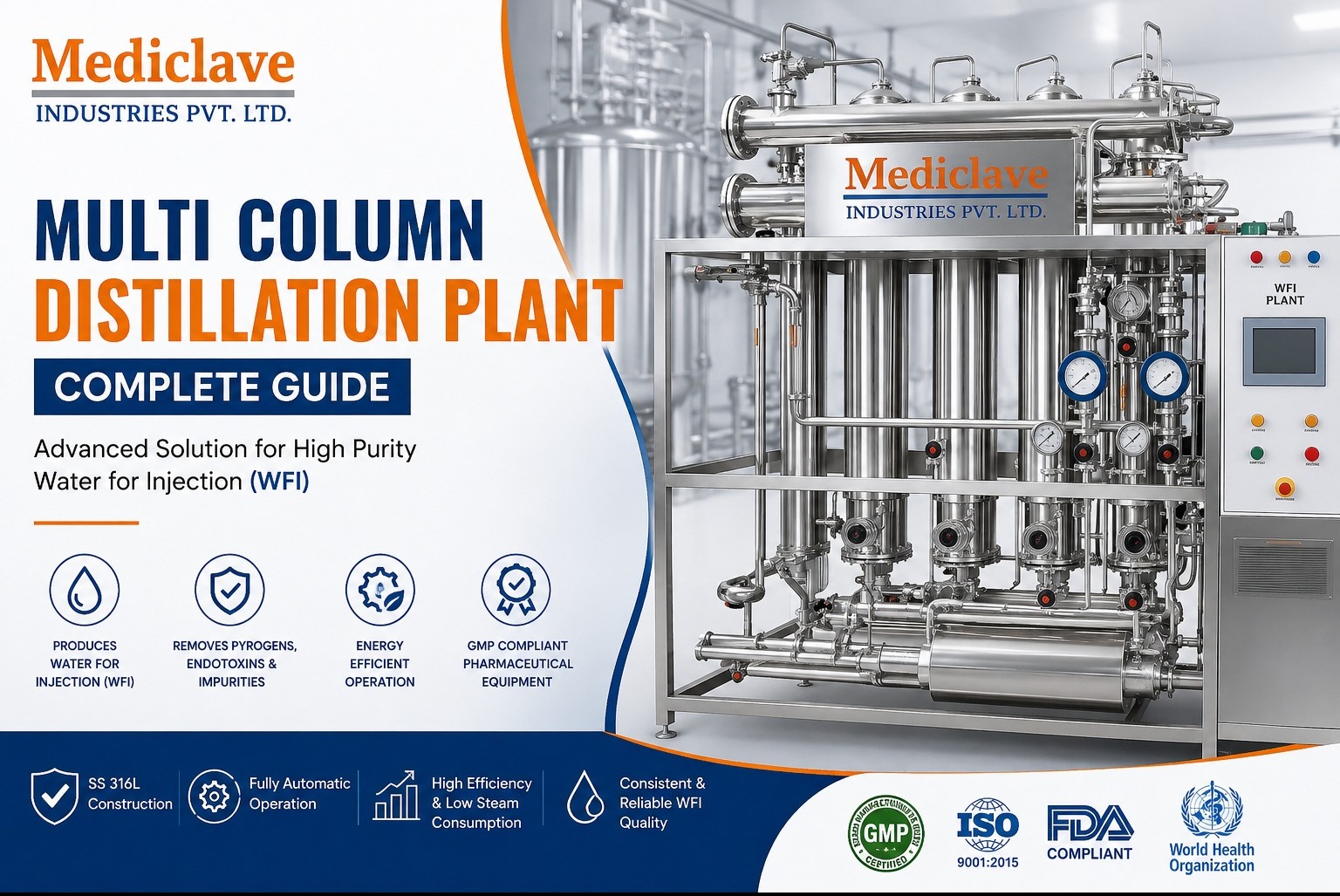
A typical pharmaceutical Multi Column Distillation Plant consists of:
Feed Water Pump
Supplies purified water at a controlled flow rate.
Evaporator Columns
Multiple stainless steel columns where evaporation takes place.
Heat Exchangers
Recover thermal energy and improve overall efficiency.
Separator
Separates droplets and impurities from pure steam.
Condenser
Converts pure steam into Water for Injection.
Control Panel
Monitors temperature, pressure, flow rate, alarms, and operating parameters.
Instrumentation
Includes pressure gauges, sensors, conductivity meters, temperature indicators, and safety controls.
Manufacturing Material
High-quality systems are generally manufactured using:
- SS316L product contact parts
- SS304 supporting structures
- Orbital welding
- Mirror-finished surfaces
- Hygienic piping
- Sanitary valves
- Pharmaceutical-grade gaskets
These materials ensure corrosion resistance, easy cleaning, and GMP compliance.
Distillation Process Explained
The purification process involves several important stages:
Step 1 – Feed Water Supply
Purified water enters the system.
Step 2 – Heating
Clean steam heats the first evaporator.
Step 3 – Evaporation
Pure steam separates from contaminants.
Step 4 – Multiple Effect Distillation
Steam generated from one column heats the next column, maximizing energy recovery.
Step 5 – Condensation
Pure steam condenses into Water for Injection.
Step 6 – Collection
The final WFI is transferred to a storage and distribution system under hygienic conditions.
Applications
Multi Column Distillation Plants are widely used in:
- Pharmaceutical manufacturing
- Vaccine production
- Biotechnology facilities
- Injectable drug manufacturing
- IV fluid manufacturing
- Sterile product manufacturing
- Research laboratories
- Healthcare manufacturing plants
Advantages
Choosing a modern Multi Column Distillation Plant offers numerous benefits:
- High-purity Water for Injection production
- Excellent pyrogen removal
- Low operating cost
- Energy-efficient operation
- Continuous production
- Long equipment life
- Fully automatic operation
- Easy validation
- Low maintenance
- GMP-compliant design
- Reliable performance
- High production capacity
- Consistent water quality
- Reduced utility consumption
- Improved process safety
GMP & Regulatory Compliance
A pharmaceutical Multi Column Distillation Plant should comply with international standards such as:
- WHO-GMP
- US FDA
- EU GMP
- cGMP
- ISPE Guidelines
- GAMP 5 recommendations
- ASME BPE hygienic standards
Compliance ensures reliable production of pharmaceutical-grade Water for Injection while simplifying audits and regulatory inspections.
How to Select the Right Multi Column Distillation Plant
Before investing, evaluate the following factors:
- Required WFI production capacity
- Steam availability
- Feed water quality
- Automation requirements
- Utility consumption
- Validation documentation
- Material of construction
- Future production expansion
- Service support
- Spare parts availability
Selecting the correct system improves productivity while reducing long-term operational costs.
Maintenance Tips
Proper maintenance helps maximize equipment life and maintain WFI quality.
Recommended practices include:
- Regular calibration of instruments
- Periodic inspection of heat exchangers
- Cleaning according to SOPs
- Preventive maintenance schedule
- Routine gasket inspection
- Monitoring conductivity
- Checking steam pressure
- Validation after major maintenance
- Recording maintenance history
Common Industries Using Multi Column Distillation Plants
- Pharmaceutical companies
- Biotechnology manufacturers
- Injectable manufacturing facilities
- Veterinary pharmaceutical plants
- Vaccine manufacturers
- Research institutions
- Healthcare product manufacturers
- Sterile formulation plants
Why Choose Mediclave Industries?
Mediclave Industries specializes in manufacturing high-quality pharmaceutical process equipment designed to meet the demanding requirements of modern pharmaceutical manufacturing facilities.
Our solutions are known for:
- Robust GMP-compliant construction
- SS316L pharmaceutical-grade materials
- Advanced automation
- Energy-efficient operation
- Reliable process control
- Customized capacities
- Comprehensive documentation
- Excellent after-sales support
- Easy validation
- Long operational life
Whether you are establishing a new pharmaceutical manufacturing plant or upgrading an existing facility, Mediclave Industries provides reliable engineering solutions tailored to your production needs.
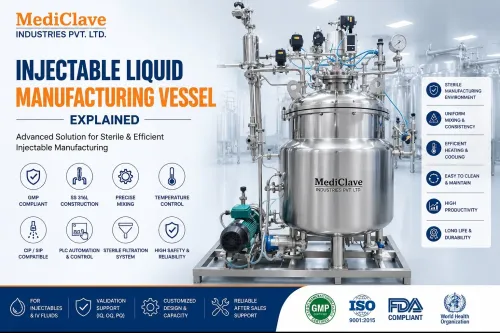
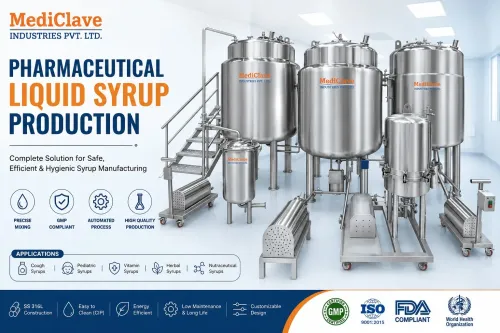
You can also explore our related solutions, including Injectable Liquid Manufacturing Vessel, Liquid Syrup Manufacturing Plant, Pure Steam Generator, Water for Injection (WFI) Systems, and other pharmaceutical process equipment available on our website.
Frequently Asked Questions (FAQs)
What is the purpose of a Multi Column Distillation Plant?
It is used to produce Water for Injection (WFI) by removing impurities, microorganisms, pyrogens, and dissolved contaminants through multiple-stage distillation.
What type of water is required as feed water?
Generally, purified water produced by a pharmaceutical water treatment system is used as the feed.
Why is multiple-effect distillation preferred?
It significantly reduces steam consumption by reusing thermal energy, making the system highly energy-efficient.
Which industries use Multi Column Distillation Plants?
Pharmaceutical, biotechnology, vaccine manufacturing, injectable production, and sterile formulation industries.
What material is commonly used?
SS316L stainless steel is widely used for all product-contact parts due to its corrosion resistance and hygienic properties.
Is validation required?
Yes. IQ, OQ, and PQ validation are essential for pharmaceutical manufacturing facilities.
Conclusion
A Multi Column Distillation Plant plays a vital role in pharmaceutical water purification by producing high-quality Water for Injection that meets stringent international quality standards. Its energy-efficient multiple-effect distillation technology ensures reliable operation, reduced utility consumption, and consistent WFI production for critical pharmaceutical applications.
For manufacturers seeking dependable pharmaceutical water generation systems, investing in a well-designed Multi Column Distillation Plant improves operational efficiency, product quality, and regulatory compliance. With robust engineering, advanced automation, and GMP-focused design, Mediclave Industries delivers solutions that support modern pharmaceutical manufacturing with confidence and long-term reliability.