
Pharmaceutical Liquid Syrup Production Explained
Introduction
Liquid syrups are among the most widely used pharmaceutical dosage forms because they are easy to administer, offer accurate dosing, and are suitable for patients of all ages. From cough syrups and pediatric medicines to vitamin supplements and antacids, pharmaceutical syrups play a vital role in modern healthcare.
Producing a pharmaceutical syrup requires much more than simply mixing ingredients. Every stage—from purified water preparation and sugar dissolution to ingredient mixing, filtration, storage, and filling—must follow strict Good Manufacturing Practices (GMP) to ensure product quality, consistency, and patient safety.
A modern Liquid Syrup Manufacturing Plant is designed to automate and optimize the entire manufacturing process while maintaining hygienic conditions and regulatory compliance. Mediclave Industries manufactures advanced pharmaceutical syrup manufacturing equipment that delivers high efficiency, precision, and reliable performance for pharmaceutical manufacturers worldwide.
Table of Contents
- What is Pharmaceutical Liquid Syrup?
- Importance of Syrup Manufacturing
- Complete Manufacturing Process
- Equipment Used
- Types of Liquid Syrups
- Applications
- Benefits of Automated Syrup Plants
- GMP Requirements
- Quality Control
- Choosing the Right Syrup Manufacturing Plant
- Why Choose Mediclave Industries?
- FAQs
- Conclusion
What is Pharmaceutical Liquid Syrup?
A pharmaceutical liquid syrup is a concentrated aqueous solution containing active pharmaceutical ingredients (API), purified water, sweeteners, preservatives, flavors, colors, and other excipients. These formulations are designed to provide accurate dosage, improved stability, and better patient acceptance.
Liquid syrups are widely prescribed because they are easier to swallow than tablets and capsules, making them ideal for pediatric, geriatric, and special-care patients.
Why Pharmaceutical Syrup Manufacturing is Important
High-quality syrup production ensures:
- Accurate drug concentration
- Uniform mixing
- Better taste
- Longer shelf life
- Easy administration
- Product stability
- Microbial safety
- Regulatory compliance
- Batch-to-batch consistency
Modern pharmaceutical companies rely on automated manufacturing systems to minimize human intervention and improve production efficiency.
Complete Pharmaceutical Liquid Syrup Manufacturing Process
Step 1 – Purified Water Preparation
The process begins with purified water produced using a pharmaceutical water purification system. Water quality directly affects the stability and safety of the final product.
Step 2 – Sugar Syrup Preparation
Sugar or alternative sweeteners are dissolved in purified water using a Liquid Syrup Manufacturing Vessel equipped with heating and agitation systems. Controlled temperature ensures complete dissolution without caramelization.
Step 3 – Active Ingredient Mixing
Active pharmaceutical ingredients (API) are added according to validated manufacturing procedures. Proper agitation ensures complete dispersion and uniform concentration throughout the batch.
Step 4 – Addition of Excipients
Flavoring agents, preservatives, stabilizers, viscosity enhancers, sweeteners, and approved colorants are added carefully while maintaining controlled mixing conditions.
Step 5 – Homogenization
High-speed mixing produces a homogeneous solution, ensuring that every bottle contains the correct dosage and consistent product quality.
Step 6 – Filtration
The syrup passes through pharmaceutical-grade filtration systems to remove undissolved particles and improve clarity while maintaining product purity.
Step 7 – Storage
The finished syrup is transferred to a hygienic stainless steel storage vessel before filling. These tanks are designed with mirror-finished surfaces and sanitary fittings to prevent contamination.
Step 8 – Filling and Packaging
The syrup is transferred to automatic filling machines where bottles are filled, capped, labeled, and packed under GMP-compliant conditions.
Equipment Used in Liquid Syrup Production
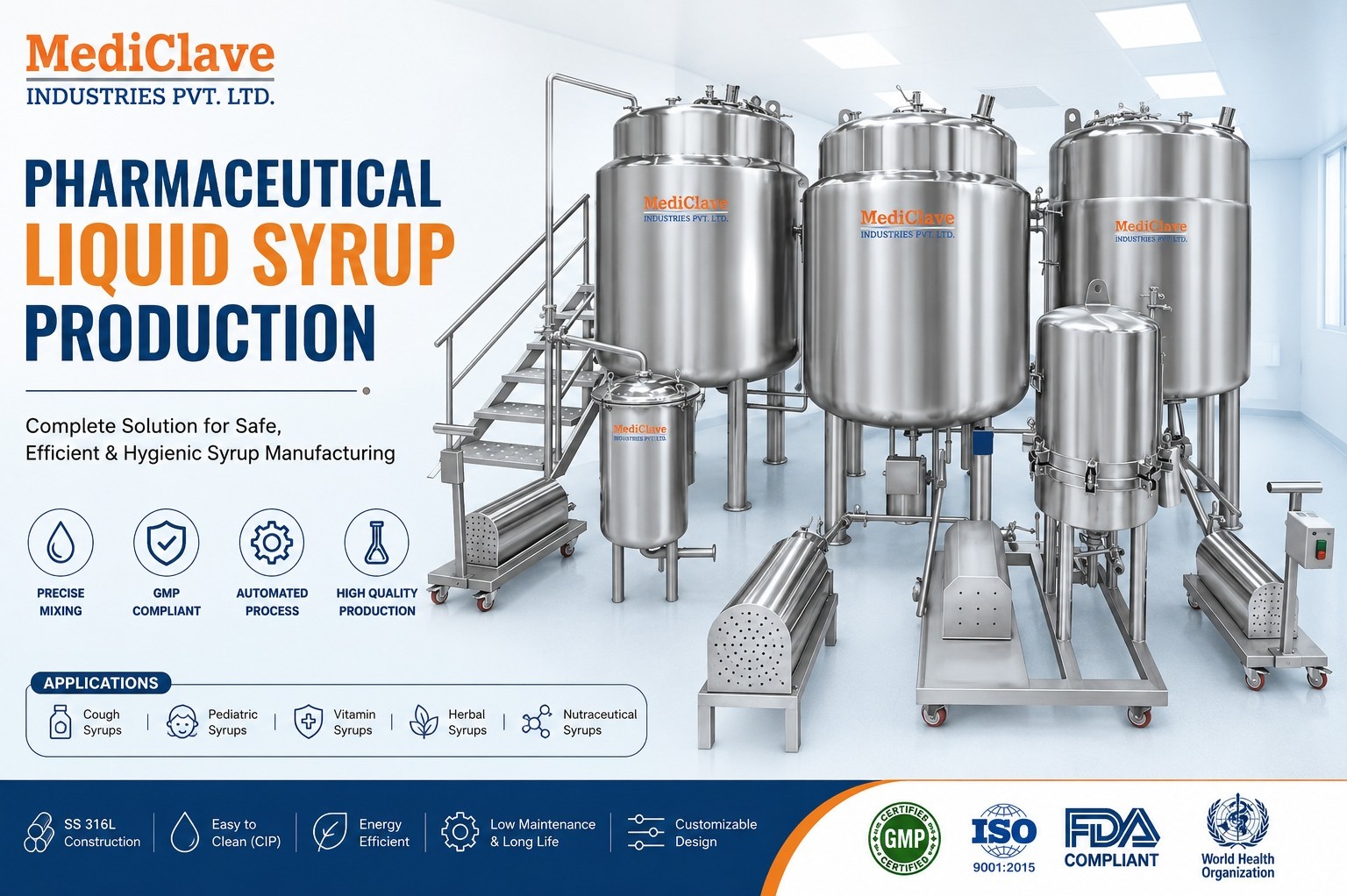
A complete syrup manufacturing facility generally includes:
- Liquid Syrup Manufacturing Vessel
- Sugar Melting Vessel
- Manufacturing Tank
- Storage Vessel
- Transfer Pumps
- Filtration System
- Homogenizer
- CIP System
- PLC Control Panel
- Stainless Steel Piping
- Automatic Filling Machine
- Bottle Capping Machine
- Labeling Machine
These integrated systems ensure efficient production with minimal manual intervention.
Types of Pharmaceutical Liquid Syrups
Different formulations are manufactured depending on therapeutic requirements, including:
- Cough Syrups
- Pediatric Syrups
- Vitamin Syrups
- Iron Syrups
- Calcium Syrups
- Antacid Syrups
- Digestive Syrups
- Herbal Syrups
- Nutraceutical Syrups
- Antibiotic Suspensions
- Liver Tonics
- Protein Syrups
Each formulation requires precise control over mixing speed, temperature, viscosity, and ingredient addition.
Applications
Pharmaceutical Liquid Syrup Manufacturing Plants are widely used in:
- Pharmaceutical companies
- Nutraceutical industries
- Herbal medicine manufacturers
- Veterinary pharmaceutical companies
- Healthcare product manufacturers
- Contract manufacturing organizations (CMOs)
- Research laboratories
Advantages of an Automated Liquid Syrup Manufacturing Plant
Modern automated systems offer several advantages:
- Faster production
- Uniform batch quality
- Accurate ingredient dosing
- Reduced human error
- Easy cleaning
- Hygienic manufacturing
- Lower operating costs
- Improved productivity
- Consistent product quality
- Better process control
- Reduced contamination risk
- Energy-efficient operation
- Easy maintenance
- Long equipment life
- GMP-compliant production
GMP Requirements for Syrup Manufacturing
A pharmaceutical syrup manufacturing plant should comply with international quality standards, including:
- WHO-GMP
- US FDA
- EU GMP
- cGMP
- ISPE Guidelines
- GAMP 5
- ASME BPE Standards
Compliance ensures safe manufacturing practices and facilitates successful regulatory inspections.
Quality Control in Syrup Production
Quality control is essential throughout the manufacturing process. Common tests include:
- Appearance
- pH
- Specific Gravity
- Viscosity
- Assay
- Microbial Limit Test
- Preservative Content
- Sugar Concentration
- Stability Testing
- Fill Volume Accuracy
Routine testing ensures that every batch meets pharmaceutical quality specifications.
Factors to Consider When Choosing a Liquid Syrup Manufacturing Plant
Before purchasing equipment, evaluate:
- Production capacity
- Material of construction (SS316L)
- Automation level
- Mixing efficiency
- Heating system
- Cooling arrangement
- Cleaning system (CIP)
- Validation support
- Energy consumption
- After-sales service
- Spare parts availability
- Future expansion capability
Choosing the right equipment improves operational efficiency and reduces long-term production costs.
Why Choose Mediclave Industries?
Mediclave Industries is a trusted manufacturer of pharmaceutical process equipment designed for modern pharmaceutical manufacturing facilities. Our Liquid Syrup Manufacturing Plants are engineered for precision, hygiene, and long-term performance.
Our solutions feature:
- GMP-compliant design
- SS316L product-contact parts
- Advanced PLC automation
- Efficient mixing technology
- Easy cleaning and maintenance
- Customized capacities
- Comprehensive validation documentation
- Reliable after-sales support
- Energy-efficient operation
- Robust construction
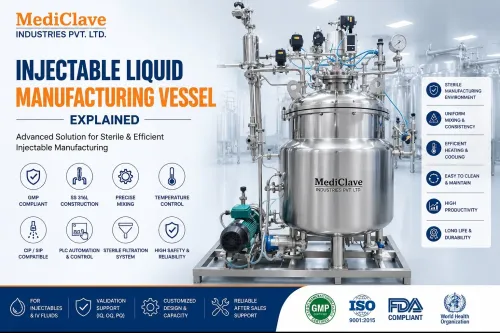
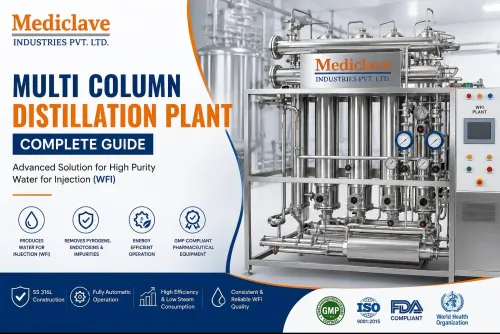
In addition to Liquid Syrup Manufacturing Plants, Mediclave Industries also offers Injectable Liquid Manufacturing Vessels, Multi Column Distillation Plants, Pure Steam Generators, Water for Injection (WFI) Systems, Ointment Manufacturing Plants, and a wide range of pharmaceutical process equipment to support complete pharmaceutical manufacturing operations.
Frequently Asked Questions (FAQs)
What is a Liquid Syrup Manufacturing Plant?
It is a pharmaceutical processing system used to manufacture liquid syrups through controlled mixing, heating, filtration, and storage processes.
Which material is used for pharmaceutical syrup vessels?
SS316L stainless steel is commonly used for all product-contact parts because of its corrosion resistance and hygienic properties.
Why is purified water important?
Purified water prevents contamination, ensures product stability, and complies with pharmaceutical quality standards.
Is automation beneficial?
Yes. Automated plants improve production efficiency, maintain consistent product quality, reduce human error, and simplify process monitoring.
Which industries use syrup manufacturing plants?
Pharmaceutical, nutraceutical, herbal, veterinary, and healthcare product manufacturing industries.
Conclusion
Pharmaceutical liquid syrup production is a carefully controlled process that combines advanced engineering, quality assurance, and regulatory compliance to produce safe and effective liquid medicines. From purified water preparation to final packaging, every manufacturing stage must be optimized to maintain product consistency and patient safety.
A modern Liquid Syrup Manufacturing Plant enables pharmaceutical companies to achieve higher productivity, superior product quality, reduced operational costs, and full GMP compliance. With advanced automation, hygienic construction, and customized engineering solutions, Mediclave Industries provides reliable syrup manufacturing equipment that meets the evolving needs of the pharmaceutical industry while ensuring long-term performance and regulatory excellence.