
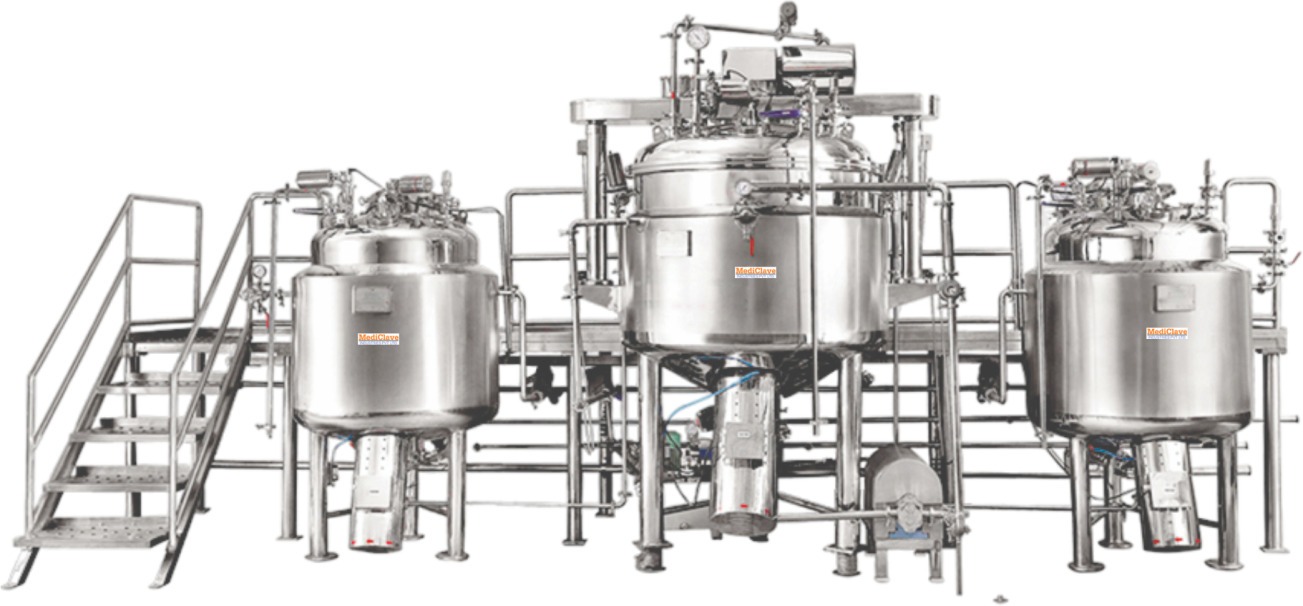
Ointment Manufacturing Plant: Complete Guide for Pharmaceutical Ointment, Cream, Gel & Lotion Production
The pharmaceutical industry requires highly precise, hygienic, and GMP-compliant equipment for the production of ointments, creams, gels, lotions, and other semi-solid formulations. An Ointment Manufacturing Plant is one of the most important systems used in pharmaceutical manufacturing facilities for producing high-quality semi-solid products with consistent texture, stability, and effectiveness.
Whether manufacturing medicated creams, cosmetic creams, dermatological ointments, antiseptic gels, or lotions, a modern ointment manufacturing plant ensures uniform mixing, emulsification, heating, cooling, and product transfer while maintaining strict quality standards.
In this comprehensive guide, we will explore the working principle, components, applications, benefits, and selection criteria of an Ointment Manufacturing Plant.
What is an Ointment Manufacturing Plant?
An Ointment Manufacturing Plant is a complete processing system designed for the production of ointments, creams, gels, lotions, toothpaste, cosmetic products, and other semi-solid pharmaceutical formulations.
The plant integrates multiple processes into one automated system, including:
- Mixing
- Homogenization
- Emulsification
- Heating
- Cooling
- Vacuum processing
- Product transfer
The system is typically manufactured using SS316L stainless steel contact parts to comply with GMP, FDA, and pharmaceutical industry requirements.
Why is an Ointment Manufacturing Plant Important?
Semi-solid pharmaceutical products require a uniform composition and smooth texture. Even minor inconsistencies can affect product performance, stability, and shelf life.
An advanced ointment manufacturing plant helps:
✅ Achieve uniform product consistency
✅ Improve product stability
✅ Eliminate contamination risks
✅ Increase production efficiency
✅ Reduce manual handling
✅ Meet GMP compliance requirements
✅ Improve batch reproducibility
Main Components of an Ointment Manufacturing Plant
A typical pharmaceutical ointment manufacturing plant consists of the following equipment:
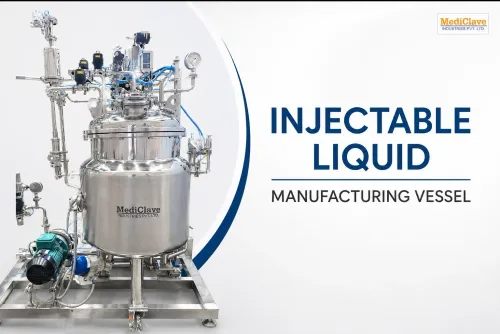
1. Manufacturing Vessel
The manufacturing vessel is the primary processing tank where ingredients are mixed and processed.
Features include:
- SS316L construction
- Jacketed design for heating and cooling
- Vacuum operation
- Agitator system
- CIP compatibility
2. Water Phase Vessel
The water phase vessel is used for preparing aqueous ingredients before transferring them to the main manufacturing vessel.
Functions:
- Water heating
- Ingredient dissolution
- Controlled mixing
- Temperature maintenance
3. Oil Phase Vessel
The oil phase vessel is used for preparing oil-based ingredients.
Functions:
- Oil heating
- Wax melting
- Active ingredient preparation
- Emulsifier mixing
4. Vacuum Homogenizer
The vacuum homogenizer is the heart of the system.
Its purpose is to:
- Reduce particle size
- Create stable emulsions
- Improve texture
- Enhance product appearance
- Prevent phase separation
5. Transfer System
The transfer system moves materials between vessels and filling equipment.
Options include:
- Vacuum transfer
- Positive displacement pumps
- Sanitary piping systems
Working Principle of an Ointment Manufacturing Plant
Step 1: Preparation of Water Phase
Water-soluble ingredients are charged into the water phase vessel and heated to the required temperature.
Step 2: Preparation of Oil Phase
Oil-soluble ingredients are prepared separately in the oil phase vessel.
Ingredients such as:
- Oils
- Waxes
- Emulsifiers
- Active pharmaceutical ingredients
are heated and mixed thoroughly.
Step 3: Transfer to Main Vessel
Both phases are transferred into the manufacturing vessel under controlled conditions.
Step 4: Emulsification Process
The homogenizer creates a fine emulsion by breaking down particles into microscopic sizes.
This ensures:
- Uniform texture
- Smooth consistency
- Enhanced stability
Step 5: Vacuum Processing
Vacuum removes trapped air bubbles from the product.
Benefits include:
- Improved appearance
- Better shelf life
- Accurate filling
- Reduced oxidation
Step 6: Cooling and Final Mixing
The batch is cooled while continuous mixing maintains uniformity.
Step 7: Product Transfer to Filling Machine
The finished ointment, cream, or gel is transferred directly to the filling machine for packaging.
Applications of Ointment Manufacturing Plants
Pharmaceutical Industry
Used for manufacturing:
- Antibiotic ointments
- Dermatological creams
- Antifungal creams
- Pain relief gels
- Medicated lotions
- Antiseptic creams
Cosmetic Industry
Suitable for producing:
- Face creams
- Beauty creams
- Moisturizers
- Sunscreens
- Body lotions
- Anti-aging creams
Personal Care Industry
Manufactures:
- Toothpaste
- Hair creams
- Shaving creams
- Hand sanitizing gels
- Herbal formulations
Veterinary Industry
Used for:
- Animal care ointments
- Veterinary creams
- Veterinary gels
Advantages of an Ointment Manufacturing Plant
High Product Quality
Provides superior product consistency and stability.
Vacuum Processing
Eliminates air entrapment and improves product appearance.
GMP Compliance
Designed according to pharmaceutical manufacturing standards.
Faster Production
Automation significantly reduces production time.
Reduced Human Intervention
Minimizes contamination risks and operational errors.
Flexible Production
Suitable for creams, lotions, gels, and ointments using the same system.
Energy Efficient
Modern systems consume less energy while maintaining productivity.
GMP Requirements for Ointment Manufacturing Plants
A pharmaceutical ointment manufacturing system should comply with:
- GMP Guidelines
- WHO Standards
- FDA Requirements
- USFDA Expectations
- EU GMP Regulations
Important features include:
- SS316L contact parts
- Sanitary piping
- CIP system
- Surface finish compliance
- Validation documentation
- Batch recording capabilities
How to Choose the Best Ointment Manufacturing Plant?
Before purchasing, consider the following:
Production Capacity
Select a plant according to your batch size requirements.
Common capacities:
- 50 Liters
- 100 Liters
- 250 Liters
- 500 Liters
- 1000 Liters
- 2000 Liters
- Custom capacities
Material of Construction
Choose SS316L for all product contact parts.
Homogenizer Quality
A high-performance homogenizer ensures better product consistency.
Automation Level
Look for PLC and HMI-based automation systems.
Validation Support
Ensure the manufacturer provides:
- DQ
- IQ
- OQ
- PQ documentation
Why Choose Mediclave Industries for Ointment Manufacturing Plants?
At Mediclave Industries Private Limited, we manufacture advanced pharmaceutical processing equipment designed for GMP-compliant production facilities.
Our Ointment Manufacturing Plants offer:
✔ Robust SS316L construction
✔ Advanced vacuum homogenization technology
✔ Customized batch capacities
✔ PLC-based automation
✔ Energy-efficient operation
✔ GMP-compliant design
✔ Reliable after-sales support
✔ Complete validation documentation support
We provide customized solutions for pharmaceutical, cosmetic, personal care, and healthcare manufacturing industries.
Frequently Asked Questions (FAQs)
What is an Ointment Manufacturing Plant used for?
It is used for manufacturing pharmaceutical ointments, creams, gels, lotions, and semi-solid formulations.
What is the benefit of vacuum homogenization?
Vacuum homogenization improves product texture, removes air bubbles, and creates stable emulsions.
Which material is used in pharmaceutical ointment plants?
SS316L stainless steel is commonly used for all product contact parts.
Can the same plant manufacture creams and gels?
Yes. Modern ointment manufacturing plants are designed to manufacture creams, gels, lotions, and ointments using the same system.
Is an Ointment Manufacturing Plant GMP compliant?
Yes. Pharmaceutical-grade plants are designed according to GMP, WHO, FDA, and international regulatory standards.
Conclusion
An Ointment Manufacturing Plant plays a crucial role in the pharmaceutical, cosmetic, and personal care industries by ensuring efficient, hygienic, and consistent production of semi-solid formulations. With advanced vacuum homogenization, automated controls, and GMP-compliant construction, modern ointment manufacturing systems help manufacturers achieve superior product quality and regulatory compliance.
If you are looking for a reliable Ointment Manufacturing Plant Manufacturer in India, Mediclave Industries offers customized, high-performance solutions tailored to your production requirements.
Contact Mediclave Industries
🌐 Website: www.mediclaveindustries.in
📧 Email: info@mediclaveindustries.com
📞 Phone: +91 8042755106
📍 Ahmedabad, Gujarat, India