
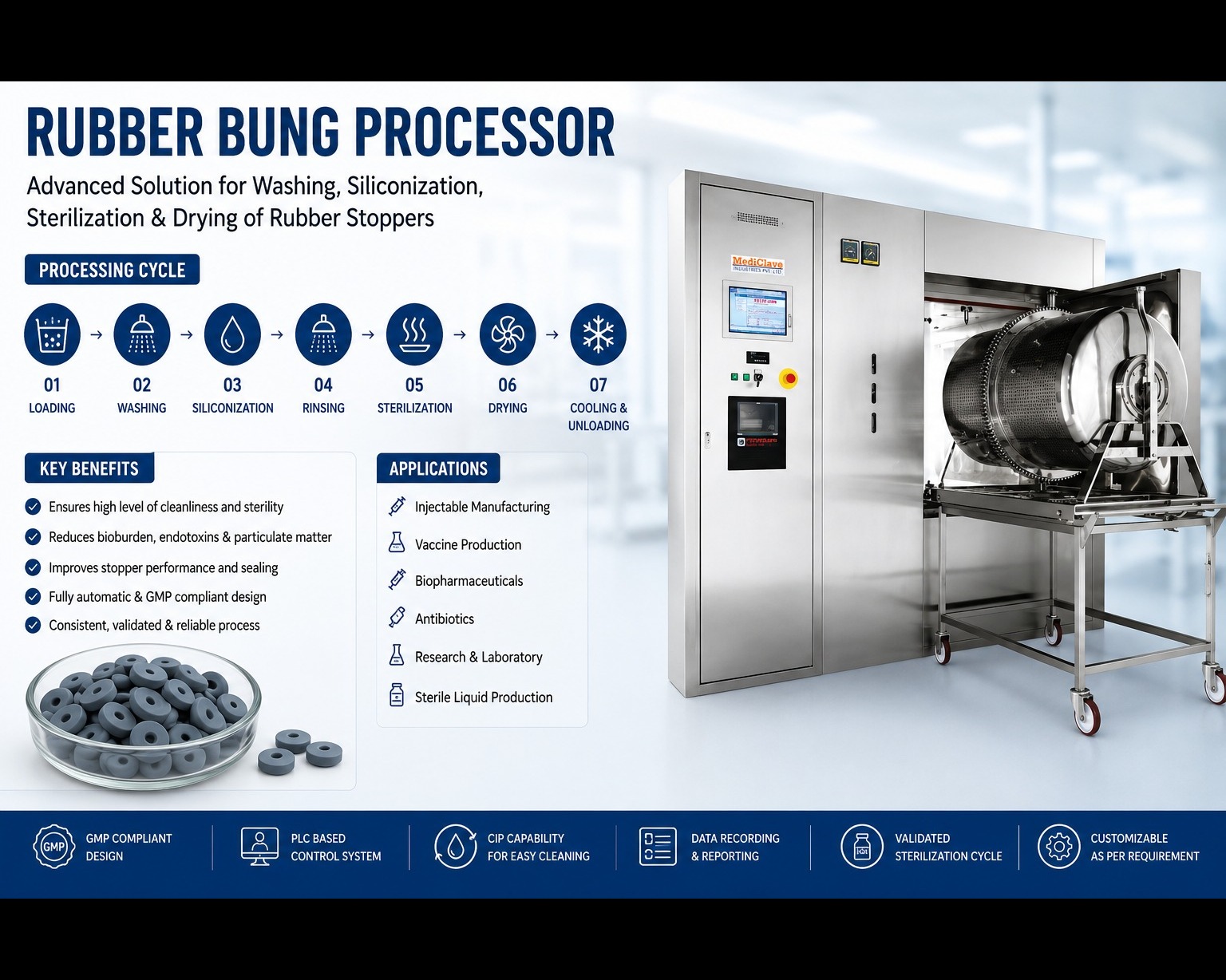
Rubber Bung Processor: Complete Guide for Pharmaceutical Rubber
Stopper Washing, Siliconization & Sterilization
What is a Rubber Bung Processor?
A Rubber Bung Processor is a specialized pharmaceutical machine designed for the automatic washing, cleaning, siliconization, sterilization, and drying of rubber stoppers (bungs) used in injectable pharmaceutical products.
Rubber stoppers play a critical role in maintaining the sterility and integrity of injectable drugs. Before being used in vial filling lines, these stoppers must undergo a validated cleaning and sterilization process to remove particulate matter, contaminants, endotoxins, and microbial contamination.
A Rubber Bung Processor ensures that pharmaceutical manufacturers comply with GMP requirements while maintaining product quality and patient safety.
Why Rubber Stopper Processing is Important
Rubber stoppers directly come into contact with injectable medicines. Any contamination on the stopper surface can compromise the entire batch.
Proper processing helps:
- Remove dust and particulate contamination
- Reduce bioburden levels
- Eliminate pyrogens and endotoxins
- Improve stopper lubrication through siliconization
- Ensure aseptic compatibility
- Meet regulatory requirements
- Improve vial sealing performance
Without proper stopper processing, pharmaceutical manufacturers face significant quality and compliance risks.
Applications of Rubber Bung Processors
Rubber Bung Processors are widely used in:
Pharmaceutical Industry
- Injectable drug manufacturing
- Vaccine production
- Antibiotic manufacturing
- Biologics production
- Oncology drugs
- Sterile liquid manufacturing
Biotechnology Industry
- Recombinant products
- Cell culture products
- Biopharmaceutical manufacturing
Research Facilities
- Clinical trial manufacturing
- Research laboratories
- Pilot-scale production facilities
Types of Rubber Stoppers Processed
A modern Rubber Bung Processor can handle:
- Lyophilization stoppers
- Serum vial stoppers
- Injection vial stoppers
- Infusion bottle stoppers
- Antibiotic vial stoppers
- Vaccine vial stoppers
- Specialty pharmaceutical closures
Different stopper designs may require customized processing parameters depending on their material and application.
Working Principle of a Rubber Bung Processor
The processing cycle generally consists of several stages:
1. Loading
Rubber stoppers are loaded into a processing chamber or basket system.
The machine is designed to ensure uniform exposure of all stoppers to washing and sterilization media.
2. Washing Process
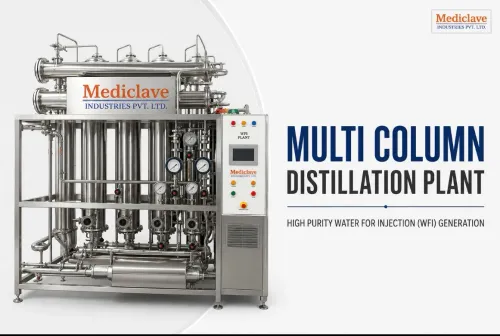
Purified Water (PW) or Water for Injection (WFI) is used to wash the rubber stoppers.
The washing process removes:
https://www.mediclaveindustries.in/products/multi-column-distillation-plant/15
- Surface contaminants
- Manufacturing residues
- Dust particles
- Rubber fragments
- Foreign matter
Multiple washing cycles may be programmed depending on process requirements.
3. Siliconization
A controlled quantity of pharmaceutical-grade silicone is applied to the stoppers.
Benefits include:
- Improved machinability
- Better stopper movement during vial filling
- Reduced friction
- Enhanced sealing characteristics
- Improved performance in high-speed filling lines
4. Final Rinsing
The stoppers undergo final rinsing using highly purified water.
This step ensures removal of any residual contaminants.
5. Sterilization
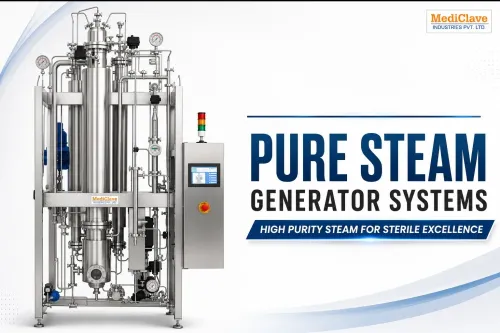
The machine performs sterilization using validated steam cycles.
The sterilization process destroys:
https://www.mediclaveindustries.in/products/saturated-steam-sterilizer-autoclave/9
- Bacteria
- Fungi
- Spores
- Microorganisms
The sterilization cycle is developed according to pharmaceutical validation requirements.
6. Drying
Following sterilization, controlled drying removes excess moisture from the stoppers.
This step prepares the stoppers for aseptic transfer and filling operations.
7. Cooling and Unloading
After completion of the cycle, processed stoppers are cooled and transferred to sterile production areas.
Major Components of a Rubber Bung Processor
Processing Chamber
The chamber is typically manufactured from pharmaceutical-grade stainless steel and designed to withstand pressure and temperature conditions.
Spray System
Provides uniform washing and rinsing coverage.
Siliconization System
Ensures accurate silicone dosing and distribution.
Steam Sterilization System
Performs validated sterilization cycles.
Drying System
Removes moisture efficiently after processing.
Control System
Modern processors utilize PLC and HMI-based control systems for automated operation.
Key Features of Modern Rubber Bung Processors
Fully Automatic Operation
Minimizes manual intervention and improves process consistency.
GMP-Compliant Design
Designed according to pharmaceutical manufacturing requirements.
CIP Capability
Supports automated cleaning of internal surfaces.
Data Recording
Provides electronic batch records and process documentation.
Recipe Management
Stores multiple validated process recipes.
User Access Control
Enhances data security and regulatory compliance.
Alarm and Safety Features
Ensures safe operation and protects product quality.
Benefits of Using a Rubber Bung Processor
Improved Product Safety
Reduces contamination risks during injectable manufacturing.
Consistent Processing
Ensures uniform treatment of every stopper.
Regulatory Compliance
Supports GMP, FDA, and international pharmaceutical standards.
Reduced Human Error
Automation improves reliability and reproducibility.
Higher Production Efficiency
Processes large quantities of stoppers in a single batch.
Better Sterility Assurance
Validated cycles provide consistent sterilization performance.
https://www.mediclaveindustries.in/products/pure-steam-generator/16
Regulatory and GMP Requirements
Pharmaceutical manufacturers must comply with stringent regulations for component processing.
A Rubber Bung Processor helps support:
- GMP Guidelines
- Sterile Manufacturing Requirements
- Data Integrity Practices
- Process Validation Requirements
- Equipment Qualification Protocols
- Cleaning Validation Programs
Proper documentation and validation are essential for regulatory inspections and audits.
https://www.mediclaveindustries.in/latest-update/mediclave-industries-pvt-ltd-trusted-pharmaceutical-machinery-manufacturer-in-india/53
Validation Requirements
Validation typically includes:
https://www.mediclaveindustries.in/products/multi-column-distillation-plant/15
Design Qualification (DQ)
Verification that the design meets process requirements.
Installation Qualification (IQ)
Confirmation of correct installation.
Operational Qualification (OQ)
Verification of operational performance.
Performance Qualification (PQ)
Demonstration of consistent production performance.
Validation helps ensure repeatable and reliable processing results.
Common Challenges in Rubber Stopper Processing
Incomplete Washing
Can lead to particulate contamination.
Uneven Siliconization
May affect stopper performance during filling.
Improper Drying
Can create moisture-related issues.
Inadequate Sterilization
May compromise product sterility.
Poor Process Monitoring
Can result in batch deviations.
A properly designed processor helps eliminate these risks.
How to Choose the Right Rubber Bung Processor
Before investing in a system, pharmaceutical manufacturers should evaluate:
Batch Capacity
Choose a machine that matches production requirements.
Automation Level
Higher automation improves productivity and consistency.
Validation Support
Ensure the manufacturer provides qualification documentation.
Utility Requirements
Verify compatibility with plant utilities such as steam, compressed air, and purified water systems.
Regulatory Compliance
Select equipment designed for GMP pharmaceutical environments.
Service Support
Reliable technical support reduces downtime and improves long-term performance.
Future Trends in Rubber Stopper Processing
The pharmaceutical industry is moving toward:
- Industry 4.0 integration
- Advanced process monitoring
- Electronic batch records
- Remote diagnostics
- Smart validation systems
- Energy-efficient sterilization technologies
Modern Rubber Bung Processors are increasingly designed to support digital pharmaceutical manufacturing environments.
https://www.mediclaveindustries.in/products/cip-sip-system/14
Why Pharmaceutical Manufacturers Need a Reliable Rubber Bung Processor
In sterile pharmaceutical manufacturing Ahmedabad, every component that comes into contact with a drug product must meet the highest quality standards.
A properly designed Rubber Bung Processor ensures:
- Clean rubber stoppers
- Consistent siliconization
- Reliable sterilization
- Regulatory compliance
- Enhanced product quality
- Improved patient safety
For manufacturers producing injectable medicines, vaccines, biologics, and sterile pharmaceutical products, investing in a high-quality Rubber Bung Processor is essential for maintaining operational excellence and compliance.
https://www.mediclaveindustries.in/products/rubber-bung-processor-cum-steam-sterilizer/10
Frequently Asked Questions (FAQs)
What is a Rubber Bung Processor used for?
A Rubber Bung Processor is used for washing, siliconization, sterilization, drying, and processing rubber stoppers used in pharmaceutical injectable manufacturing.
Why are rubber stoppers sterilized?
Rubber stoppers are sterilized to eliminate microorganisms and ensure product sterility.
What water is used in Rubber Bung Processing?
Purified Water (PW) and Water for Injection (WFI) are commonly used depending on process requirements.
What is siliconization in stopper processing?
Siliconization is the application of pharmaceutical-grade silicone to improve stopper performance and reduce friction.
Can a Rubber Bung Processor be validated?
Yes. The equipment can undergo DQ, IQ, OQ, and PQ validation according to GMP requirements.
Which industries use Rubber Bung Processors?
Pharmaceutical, biotechnology, vaccine manufacturing, injectable production, and research industries commonly use these systems.