

Introduction
Sterilization is an essential
process in hospitals, pharmaceutical industries, laboratories, and medical
device manufacturing facilities. It helps eliminate microorganisms, including
bacteria, viruses, fungi, and resistant bacterial spores, when performed using
a properly validated process. A Saturated Steam Sterilizer (Autoclave)
is one of the most widely used solutions for sterilizing heat-resistant medical
instruments, laboratory equipment, and compatible materials.
MediClave Industries Pvt. Ltd.
provides sterilization equipment designed to support the needs of healthcare
and pharmaceutical facilities. A saturated steam sterilizer uses steam under
controlled pressure and temperature to transfer heat efficiently and achieve
the required sterilization conditions.
What
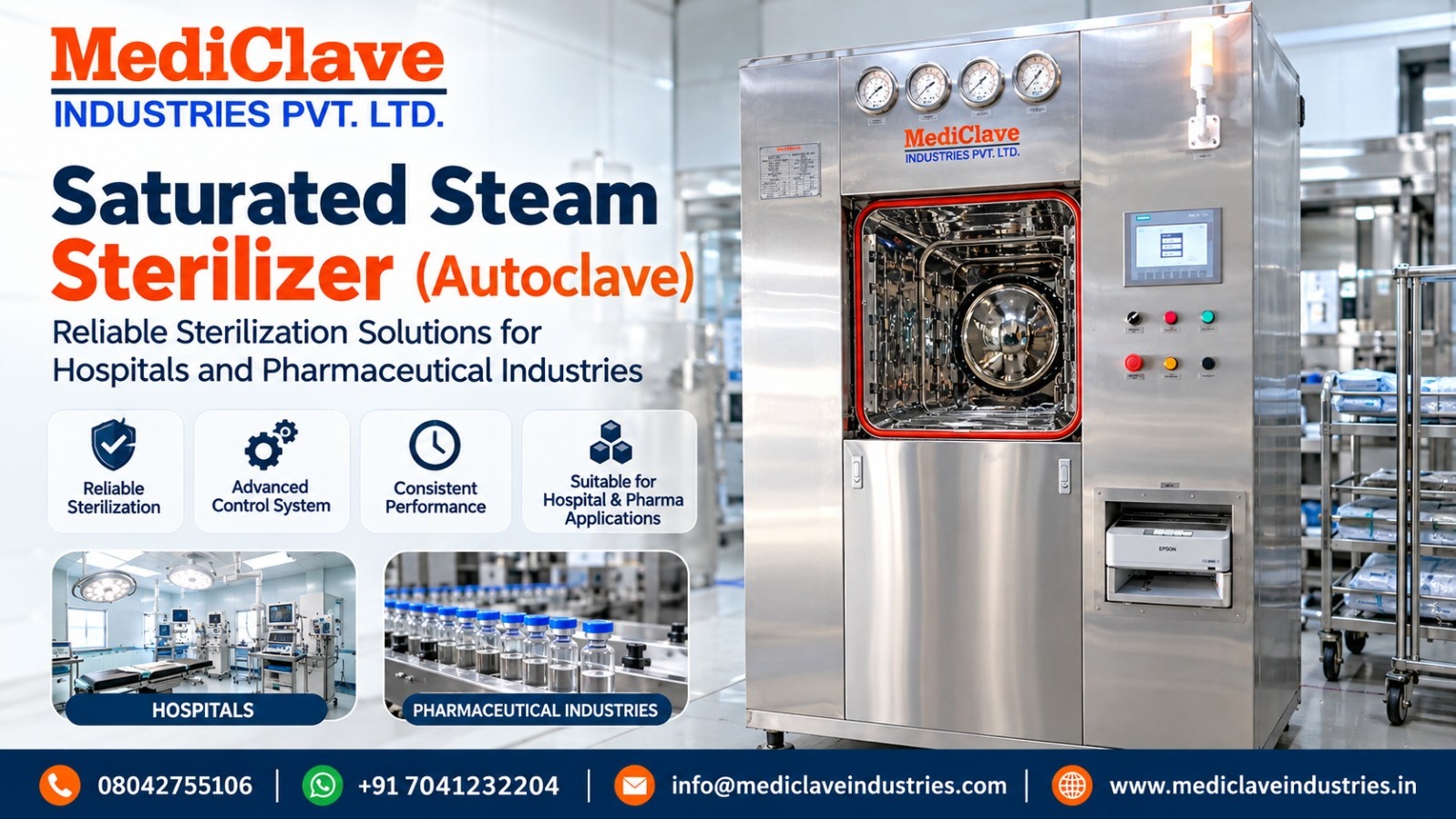
Is a Saturated Steam Sterilizer (Autoclave)?
A saturated steam sterilizer,
commonly known as an autoclave, is equipment that uses saturated steam under
pressure to sterilize suitable products and materials. The steam transfers heat
to the load, helping destroy microorganisms when the required temperature,
exposure time, and other process conditions are achieved.
Autoclaves are commonly used for
surgical instruments, laboratory glassware, reusable medical equipment, certain
pharmaceutical materials, and other heat- and moisture-resistant products.
The equipment is available in
different chamber sizes and configurations to meet the requirements of
hospitals, laboratories, research centres, and pharmaceutical manufacturing
facilities.
Key
Features of a Saturated Steam Sterilizer
A well-designed saturated steam
sterilizer may include the following features, depending on the model and
configuration:
1.
Stainless Steel Construction
Stainless steel chamber construction
can provide durability, corrosion resistance, and ease of cleaning when
suitable materials and finishing are used.
2.
Digital Control System
A digital control system helps
operators monitor and manage sterilization cycle parameters, such as
temperature, pressure, and exposure time.
3.
Controlled Steam Sterilization
The system is designed to deliver
steam under controlled conditions to support effective heat transfer and
consistent sterilization.
4.
Safety Mechanisms
Depending on the design, safety
features may include door interlocks, pressure protection devices, alarms, and
temperature monitoring systems.
5.
Automatic Cycle Operation
Programmable controls may allow
operators to select validated cycles and monitor process progress with less
manual intervention.
6.
Multiple Chamber Capacities
Different chamber capacities can
accommodate the processing requirements of small laboratories, hospitals, and
industrial facilities.
Actual features and available
configurations should be confirmed against the manufacturer's technical
specifications.
How
Does a Saturated Steam Sterilizer Work?
The autoclave sterilization process
generally involves the following stages.
Step
1: Loading the Chamber
Cleaned and prepared items are
arranged inside the chamber in accordance with the validated loading pattern.
Proper loading allows steam to contact the surfaces requiring sterilization.
Step
2: Air Removal
Air is removed from the chamber and
load as required by the sterilizer design and selected cycle. Removing trapped
air is important because air pockets can prevent effective steam contact.
Step
3: Steam Introduction
Saturated steam enters the chamber
and establishes the required sterilization conditions.
Step
4: Sterilization Exposure
The load is maintained at the
validated temperature and exposure time. Moist heat damages essential cellular
structures of microorganisms, including resistant spores, when the complete
process requirements are achieved.
Step
5: Exhaust and Drying
At the end of the exposure phase,
steam is exhausted in a controlled manner. Where required, a drying phase helps
remove moisture from the processed load.
Step
6: Cycle Review and Unloading
The operator reviews the cycle
records and required monitoring results. Items are unloaded only after the
cycle has completed successfully and the load can be handled safely.
The appropriate cycle depends on the
type of product, packaging, load configuration, and applicable standards.
Applications
of a Saturated Steam Sterilizer
Saturated steam autoclaves are used
across various industries where products can tolerate moist heat.
Common applications include:
- Hospitals:
Reusable surgical instruments, suitable medical equipment, and selected
reusable supplies.
- Pharmaceutical Industries: Compatible production components, utensils, and
materials requiring validated moist-heat sterilization.
- Laboratories:
Suitable laboratory glassware, instruments, and reusable equipment.
- Research Centres:
Compatible laboratory materials used in scientific and research
activities.
- Medical Device Manufacturing: Selected reusable or heat-resistant medical devices.
- Biotechnology Facilities: Compatible equipment and materials used in controlled
production processes.
- Educational Institutions: Laboratory instruments and reusable items that require
sterilization.
Not every medical device or
pharmaceutical product is suitable for steam sterilization. Product
compatibility and the required sterilization method must be established before
processing.
Benefits
of Using a Saturated Steam Sterilizer
Effective
Microbial Inactivation
Saturated steam provides moist heat
that can effectively inactivate microorganisms, including resistant bacterial
spores, when the validated cycle conditions are achieved.
Efficient
Heat Transfer
Steam transfers heat efficiently to
compatible loads, supporting reliable sterilization when air removal and steam
penetration are adequate.
Wide
Range of Applications
Autoclaves can be used for many
heat- and moisture-resistant instruments, laboratory materials, and industrial
components.
Repeatable
Processing
Programmable controls and documented
cycle parameters can help facilities maintain repeatable processing conditions.
No
Ethylene Oxide Gas Required
Steam sterilization does not require
ethylene oxide gas, although the facility must still follow appropriate
pressure, heat, steam, and operational safety procedures.
Support
for Quality Management
Cycle documentation, routine
monitoring, maintenance, and validation help organizations maintain process
control and demonstrate compliance with applicable requirements.
Importance
of Safety and Sterilization Validation
Safe autoclave operation requires
appropriate training, maintenance, and validated operating procedures.
Operators must follow the manufacturer's instructions and applicable regulatory
requirements.
Important considerations include:
- Regular inspection of chamber seals, valves, and safety
devices.
- Proper monitoring of temperature, pressure, and
exposure time.
- Appropriate air removal and steam penetration.
- Routine maintenance and calibration of relevant
instruments.
- Use of suitable physical, chemical, and biological
monitoring methods as required.
- Verification that the selected cycle is suitable for
the load.
- Safe handling of hot materials and pressurized
equipment.
For pharmaceutical applications, the
sterilization process should be validated according to the relevant product
requirements and applicable standards. A completed cycle alone does not
automatically establish that every item in the load is sterile.
How
to Choose the Right Autoclave
Selecting the appropriate saturated
steam sterilizer depends on your facility's processing requirements.
Chamber
Capacity
Choose a chamber size that matches
the quantity, dimensions, and arrangement of the materials to be sterilized.
Product
Compatibility
Confirm that the products,
packaging, and materials can withstand the selected steam sterilization
conditions.
Control
and Monitoring System
Evaluate the available controls,
cycle monitoring, alarms, and documentation functions.
Steam
Supply and Utilities
Check steam quality, supply
capacity, water requirements, drainage, and other installation needs.
Safety
Features
Review door interlocks, pressure
protection, alarms, and other safety systems appropriate to the equipment.
Validation
and Compliance
Confirm that the equipment can
support the required installation, operational, and performance qualification
activities and applicable sterilization standards.
After-Sales
Support
Consider installation assistance,
operator training, preventive maintenance, spare parts, and technical service.
Careful equipment selection helps
improve operational efficiency and supports consistent sterilization results.
Why
Choose MediClave Industries Pvt. Ltd.?
MediClave Industries Pvt. Ltd.
focuses on sterilization equipment for healthcare, pharmaceutical, and
industrial applications. When evaluating a saturated steam sterilizer,
customers should consider the suitability of the equipment, chamber
configuration, control system, safety provisions, documentation, and technical
support available.
MediClave Industries can provide
product-specific information to help customers evaluate equipment according to
their operational requirements. Contact the company to discuss available
configurations, technical specifications, chamber capacity, installation
requirements, and application suitability.
Conclusion
A Saturated Steam Sterilizer
(Autoclave) is an essential solution for hospitals, laboratories,
pharmaceutical facilities, and manufacturing environments that need to
sterilize heat- and moisture-resistant products. By using controlled saturated
steam, the equipment supports effective microbial inactivation when the
complete sterilization process is properly designed, validated, and monitored.
Choosing suitable equipment and
following established operating procedures can help organizations maintain
product quality, operational safety, and consistent sterilization
Contact
Mediclave Industries Private Limited
08042755106
| +91 7041232204
info@mediclaveindustries.com
Gujarat, India
Contact MediClave Industries Pvt.
Ltd. to learn more about saturated steam
sterilizers and identify a suitable solution for your facility.



