
Introduction
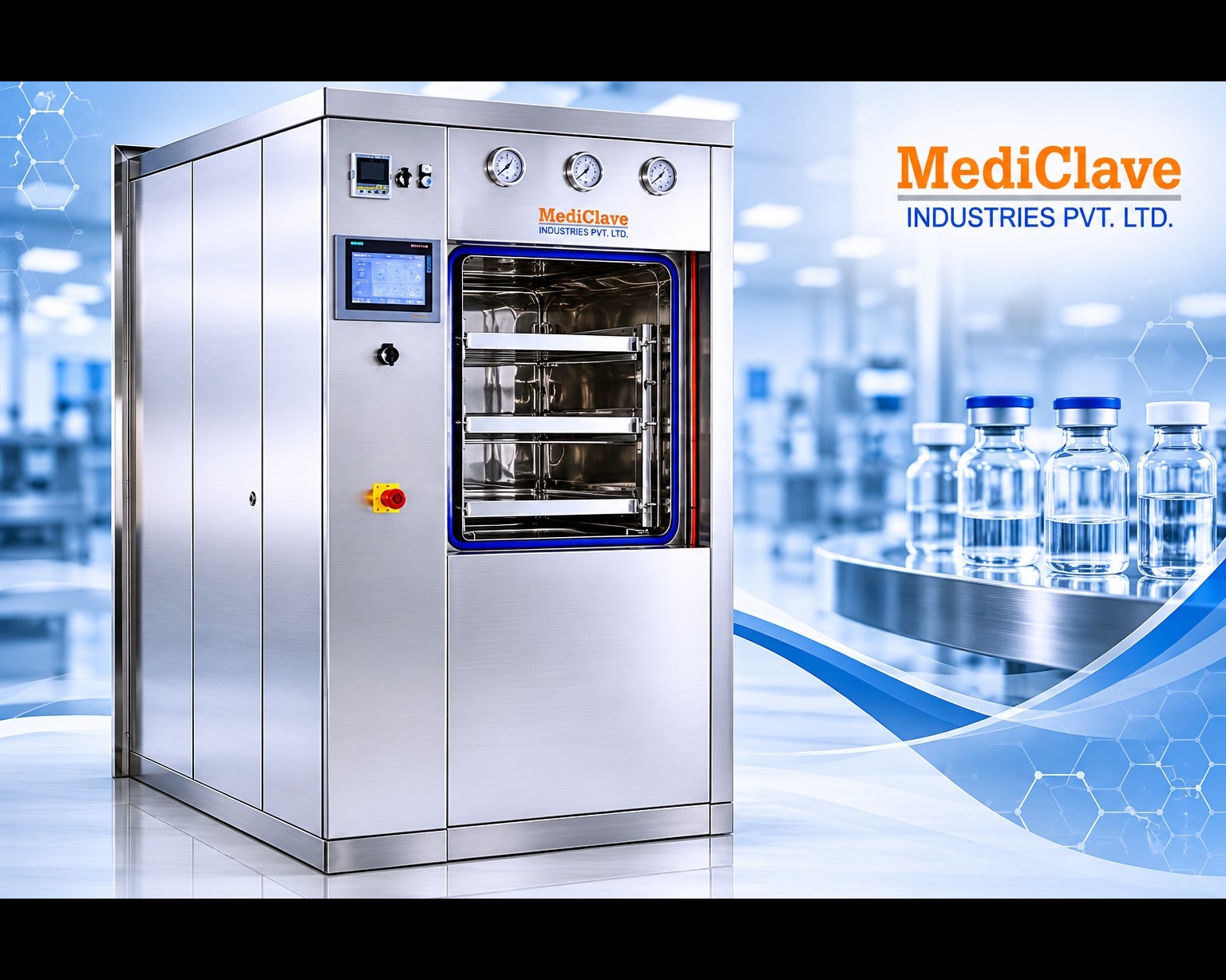
In pharmaceutical manufacturing, sterility is a critical requirement that directly impacts product quality, regulatory compliance, and patient safety. Among the various sterilization technologies available today, the Saturated Steam Sterilizer Ahmedabad remains one of the most trusted and widely used solutions for achieving reliable sterilization.
Saturated steam sterilization has been used for decades because of its proven effectiveness, uniform heat transfer, and ability to eliminate microorganisms efficiently. Pharmaceutical manufacturers, biotechnology facilities, research laboratories, and healthcare industries rely on saturated steam sterilizers to maintain the highest standards of sterility assurance.
This article explores the working principle, advantages, applications, and importance of Saturated Steam Sterilizers in modern pharmaceutical manufacturing.
What is a Saturated Steam Sterilizer?
A Saturated Steam Sterilizer is a sterilization system that uses pure saturated steam under controlled temperature and pressure conditions to destroy microorganisms, bacterial spores, fungi, and other contaminants.
The sterilization process relies on steam's excellent heat transfer capability. When saturated steam comes into contact with a cooler surface, it condenses and releases a large amount of latent heat, rapidly transferring energy to the product being sterilized.
This efficient heat transfer makes saturated steam one of the most effective sterilization media available for pharmaceutical applications.
Understanding Saturated Steam
Saturated steam is steam that exists in equilibrium with water at the same temperature and pressure.
Unlike superheated steam, saturated steam contains the ideal moisture content required for efficient heat transfer.
Key characteristics include:
- Excellent heat penetration
- Uniform temperature distribution
- High sterilization efficiency
- Consistent process performance
- Reliable microbial destruction
These properties make saturated steam the preferred choice for pharmaceutical sterilization processes.
Working Principle of a Saturated Steam Sterilizer
The sterilization cycle generally consists of several carefully controlled stages.
1. Air Removal
Air is removed from the chamber using vacuum systems or steam displacement methods.
Effective air removal is essential because trapped air can prevent proper steam penetration.
2. Steam Admission
Pure saturated steam is introduced into the chamber.
The steam surrounds the load and begins transferring heat to all surfaces.
3. Exposure Phase
The load is maintained at the required sterilization temperature for a specified period.
This stage ensures complete microbial destruction.
4. Exhaust Phase
After sterilization, steam is exhausted from the chamber.
5. Drying Phase
The load is dried under controlled conditions before unloading.
This process ensures sterile and ready-to-use products.
Advantages of Saturated Steam Sterilizers
Superior Sterilization Efficiency
Saturated steam provides highly effective microbial destruction, including bacterial spores.
Rapid Heat Transfer
Steam transfers heat significantly faster than dry air, reducing cycle times.
Uniform Temperature Distribution
Proper steam circulation ensures consistent sterilization throughout the chamber.
Environmentally Friendly
Steam sterilization does not require harmful chemicals, making it an environmentally responsible solution.
Cost-Effective Operation
Compared to many alternative sterilization methods, steam sterilization offers lower operating costs.
Regulatory Acceptance
Steam sterilization is widely accepted by pharmaceutical regulatory authorities worldwide.
Key Features of Modern Saturated Steam Sterilizers
Modern pharmaceutical sterilizers include advanced features such as:
- PLC-based automation
- Touchscreen HMI controls
- Automatic cycle management
- Data logging and reporting
- Recipe management
- Vacuum systems
- High-quality stainless steel construction
- GMP-compliant design
- Validation-friendly architecture
- Integrated safety systems
These features help manufacturers achieve reliable and repeatable sterilization results.
Applications in Pharmaceutical Industries
Saturated Steam Sterilizers are commonly used for:
Sterilization of Equipment
Manufacturing equipment components requiring sterile conditions.
Glassware Sterilization
Laboratory and pharmaceutical glassware preparation.
Stainless Steel Parts
Sterilization of production accessories and machine parts.
Production Components
Sterile preparation of manufacturing materials.
Research Facilities
Sterilization of laboratory tools and research equipment.
Biotechnology Applications
Processing of components used in biotech production environments.
Importance of Validation
Validation ensures that the sterilization process consistently achieves the desired sterility assurance level.
Typical validation activities include:
- Installation Qualification (IQ)
- Operational Qualification (OQ)
- Performance Qualification (PQ)
- Heat Distribution Studies
- Heat Penetration Studies
- Biological Indicator Validation
A properly designed Saturated Steam Sterilizer simplifies these validation requirements and supports regulatory compliance.
GMP Compliance and Regulatory Requirements
Pharmaceutical manufacturing facilities operate under strict regulatory guidelines.
Modern Saturated Steam Sterilizers are designed to support:
- GMP Compliance
- FDA Requirements
- EU GMP Standards
- Data Integrity Requirements
- Sterility Assurance Programs
- Validation Documentation
Compliance with these standards is essential for pharmaceutical product quality and patient safety.
Why Pharmaceutical Companies Prefer Saturated Steam Sterilization
Pharmaceutical manufacturers continue to choose saturated steam because it offers:
- Proven technology
- Reliable performance
- Regulatory acceptance
- Lower operating costs
- Consistent sterility assurance
- Easy validation
- Long-term operational reliability
These advantages make saturated steam sterilization the benchmark technology for many pharmaceutical sterilization processes.
Choosing the Right Saturated Steam Sterilizer Ahmedabad
Before investing in a sterilizer, manufacturers should evaluate:
- Chamber capacity
- Utility requirements
- Automation level
- Validation support
- Process flexibility
- Documentation capabilities
- Service support
- Regulatory compliance
Selecting the right equipment partner can significantly impact long-term productivity and compliance.
Conclusion
A Saturated Steam Sterilizer Ahmedabad remains one of the most effective, reliable, and widely accepted sterilization technologies in the pharmaceutical industry. Its superior heat transfer capability, proven sterilization efficiency, and regulatory acceptance make it the preferred choice for numerous pharmaceutical applications.
As pharmaceutical manufacturing standards continue to evolve, investing in advanced saturated steam sterilization systems helps organizations maintain product quality, regulatory compliance, and operational excellence.