
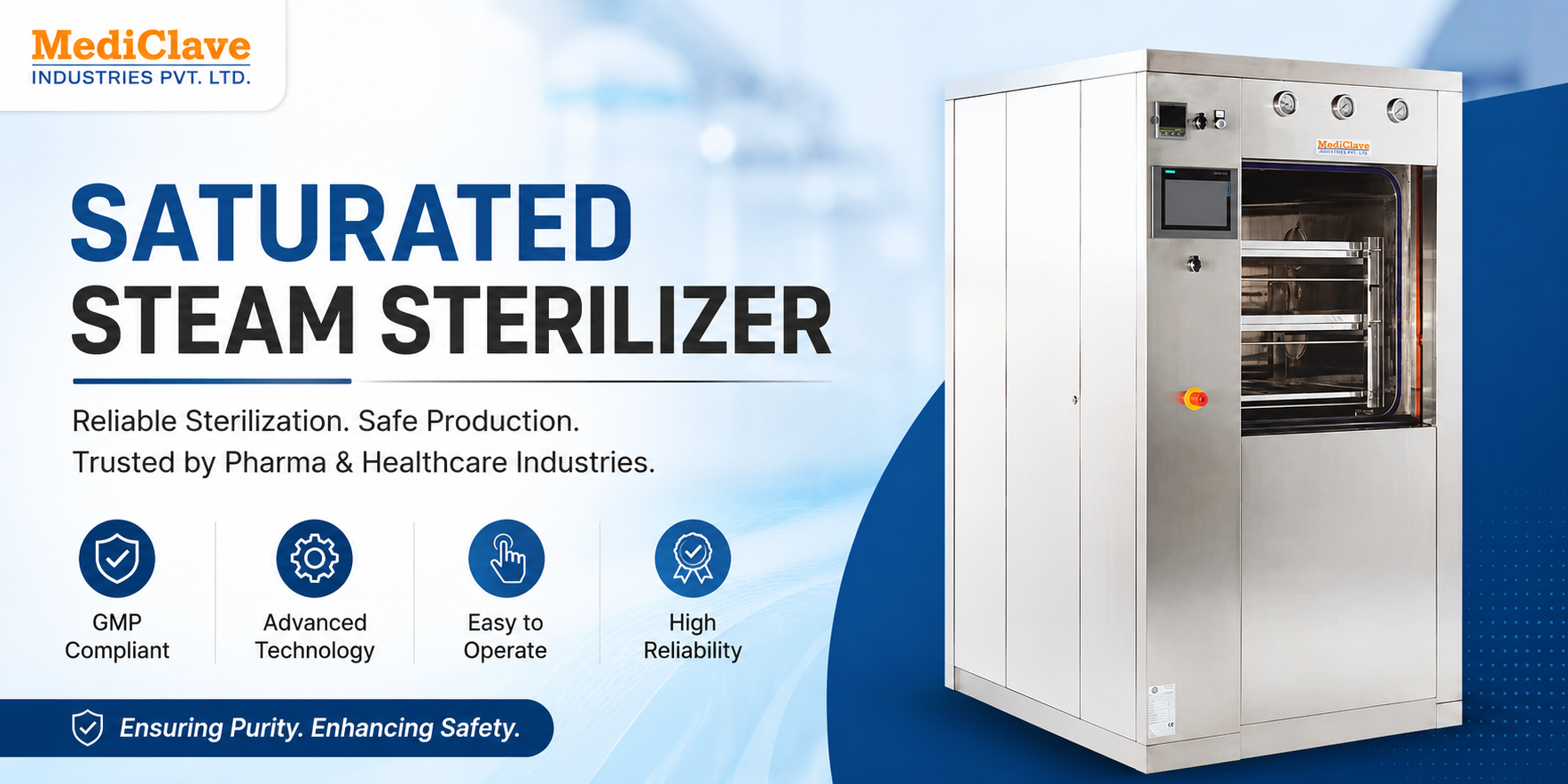
Saturated Steam Sterilizer Complete Guide – Features, Working Principle, Applications, Benefits & Buying Guide
Sterilization is one of the most important processes in the pharmaceutical, biotechnology, healthcare, and research industries. Every product that comes into contact with medicines, medical devices, or laboratory materials must be completely free from microorganisms before it reaches the end user. A single contamination incident can lead to product rejection, financial losses, regulatory issues, and risks to human health. This is why choosing the right sterilization equipment is critical.
Among all sterilization technologies available today, the Saturated Steam Sterilizer is considered one of the most reliable, economical, and effective solutions for sterilizing pharmaceutical equipment, production components, machine parts, stainless steel vessels, utensils, garments, filters, and various heat-resistant materials.
In this complete guide, we will explain everything you need to know about Saturated Steam Sterilizers, including how they work, where they are used, their advantages, validation requirements, selection criteria, maintenance practices, and why Mediclave Industries is a trusted manufacturing partner.
What is a Saturated Steam Sterilizer?
A Saturated Steam Sterilizer is a pharmaceutical-grade sterilization system that uses saturated steam under controlled temperature and pressure to destroy bacteria, viruses, fungi, spores, and other harmful microorganisms.
Unlike dry heat sterilization, saturated steam transfers heat much faster because of its excellent thermal conductivity. When steam comes into contact with a cooler surface, it condenses into water and releases a large amount of latent heat. This rapid heat transfer makes sterilization highly efficient and ensures complete microbial destruction.
These sterilizers are widely used in pharmaceutical manufacturing facilities, biotechnology laboratories, vaccine production plants, research institutions, hospitals, and medical device manufacturing units.
Why Saturated Steam Sterilization is Preferred
Many industries choose saturated steam sterilization because it offers consistent and repeatable results while complying with international pharmaceutical standards.
Some of the major reasons include:
High sterilization efficiency
Short sterilization cycle
Uniform heat distribution
Excellent penetration into porous loads
Environmentally friendly process
No harmful chemical residue
Lower operating cost
Easy validation
Compliance with GMP and regulatory standards
These benefits make saturated steam one of the most trusted sterilization methods across the pharmaceutical industry.
Working Principle of a Saturated Steam Sterilizer
The operating principle is based on saturated steam generated at controlled pressure.
The sterilization cycle generally consists of the following stages:
Loading
Products are arranged inside the sterilization chamber while maintaining sufficient space for proper steam circulation.
Air Removal
Air inside the chamber is removed using vacuum pumps or steam displacement methods. Eliminating trapped air ensures better steam penetration throughout the load.
Steam Injection
Pure saturated steam enters the chamber and surrounds every surface of the load.
Sterilization Hold Time
The chamber maintains the required temperature and pressure for a predetermined period. Common sterilization temperatures include:
121°C
124°C
126°C
134°C
The holding time depends upon the load characteristics and validation requirements.
Cooling Phase
After sterilization, the chamber is cooled gradually while maintaining product integrity.
Drying
Vacuum drying removes residual moisture, leaving products dry and ready for further processing or packaging.
This fully automated sequence ensures reliable and repeatable sterilization every cycle.
Major Components of a Saturated Steam Sterilizer
A pharmaceutical saturated steam sterilizer consists of several precision-engineered components.
These include:
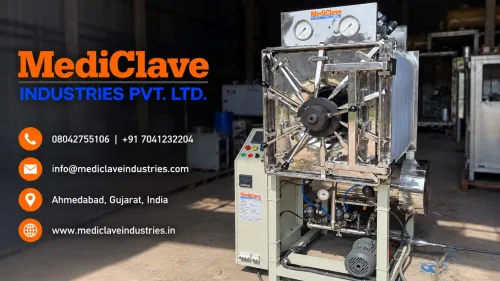
Stainless Steel Sterilization Chamber
Steam Jacket
High-performance Insulation
Automatic Door Locking System
PLC Control System
HMI Touch Screen
Temperature Sensors
Pressure Transmitters
Safety Valves
Steam Trap
Vacuum Pump
Pure Steam Connection
Cooling Water System
Validation Ports
Data Recording System
Each component contributes to maintaining consistent sterilization performance.
Applications of Saturated Steam Sterilizers
Saturated Steam Sterilizers are suitable for a wide range of pharmaceutical and healthcare applications.
Common applications include:
Stainless steel vessels
Machine parts
Glassware
Laboratory equipment
Garments
Rubber components
Stainless steel utensils
Filters
Production accessories
Change parts
Mixing tools
Filling machine components
Transfer containers
Pharmaceutical accessories
Heat-resistant medical devices
Their versatility makes them an essential part of modern manufacturing facilities.
Industries Using Saturated Steam Sterilizers
These systems are widely installed in:
Pharmaceutical Manufacturing Plants
Biotechnology Companies
Vaccine Manufacturing Facilities
Injectable Manufacturing Units
API Plants
Research Laboratories
Medical Device Industries
Food Processing Industries
Cosmetic Manufacturing Plants
Chemical Industries
Hospitals
Universities
Government Research Centers
Why Steam is More Effective Than Hot Air
Many customers ask why saturated steam sterilization is preferred over dry heat.
The answer lies in heat transfer.
Steam transfers energy much faster than dry air. When saturated steam condenses, it releases latent heat instantly, resulting in rapid microbial destruction.
Compared to dry heat sterilization, steam sterilization generally provides:
Faster heating
Better heat penetration
Lower sterilization temperatures
Reduced cycle time
Lower operating cost
Better energy efficiency
However, dry heat remains suitable for moisture-sensitive materials.
Types of Loads Suitable for Saturated Steam Sterilization
Typical sterilization loads include:
Stainless steel utensils
Process vessels
Pharmaceutical tools
Rubber articles
Surgical instruments
Stainless steel trays
Glass bottles
Machine change parts
Metal containers
Laboratory accessories
Products sensitive to moisture may require alternative sterilization methods.
Pharmaceutical Validation Requirements
Modern pharmaceutical facilities require validation before equipment enters commercial production.
A Saturated Steam Sterilizer generally undergoes:
Installation Qualification (IQ)
Operational Qualification (OQ)
Performance Qualification (PQ)
Validation demonstrates that the sterilizer consistently performs according to design specifications and regulatory expectations.
Regulatory Compliance
High-quality saturated steam sterilizers are designed to comply with industry expectations such as:
GMP
cGMP
FDA Guidelines
WHO Guidelines
GAMP Principles
21 CFR Part 11 (where applicable)
Data Integrity Requirements
Compliance helps pharmaceutical manufacturers meet audit and quality requirements.
Features to Look for Before Buying
Choosing the right sterilizer requires careful evaluation.
Consider the following:
Chamber capacity
Chamber material
PLC automation
HMI interface
Automatic process recording
Recipe management
Vacuum efficiency
Steam quality
Energy efficiency
Validation support
Safety systems
Service availability
Spare parts support
Customization options
Investing in the right equipment improves long-term productivity.
Common Challenges and Solutions
Uneven Sterilization
Usually caused by improper loading or trapped air.
Solution: Follow validated loading patterns and ensure efficient air removal.
Wet Loads
Often caused by inadequate drying.
Solution: Optimize vacuum drying parameters.
Long Cycle Time
Can result from poor steam quality or incorrect programming.
Solution: Use properly validated cycles and maintain steam quality.
Temperature Variation
Typically linked to sensor calibration.
Solution: Schedule routine calibration and preventive maintenance.
Preventive Maintenance Tips
Regular maintenance extends equipment life.
Recommended practices include:
Clean the chamber regularly
Inspect door gaskets
Calibrate sensors
Verify safety valves
Check steam quality
Test vacuum performance
Inspect drain systems
Maintain PLC backups
Review cycle reports
Replace worn components promptly
Preventive maintenance reduces downtime and ensures reliable operation.
Integration with Other Pharmaceutical Equipment
A complete pharmaceutical production facility typically includes multiple process systems working together.
A Saturated Steam Sterilizer is often used alongside a Pure Steam Generator to supply high-quality clean steam for sterilization. For facilities requiring Water for Injection production, a Multi Column Distillation Plant is another essential system.
Manufacturers producing creams, ointments, and gels frequently combine sterilization equipment with an Ointment Manufacturing Plant, ensuring production vessels and accessories are sterilized before use.
Similarly, syrup manufacturers often integrate the sterilization process with a Liquid Syrup Manufacturing Process Plant to maintain product quality throughout manufacturing.
Facilities handling injectable products also benefit from pairing sterilization systems with an Injectable Liquid Manufacturing Vessel with Magnetic Stirrer, helping maintain sterile processing conditions from preparation through filling.
For specialized pharmaceutical packaging components, a Rubber Bung Processor Cum Steam Sterilizer provides an effective solution for sterilizing rubber closures before filling operations.
Where moisture-sensitive materials must be sterilized, a Dry Heat Sterilizer serves as an excellent complementary system.
Why Choose Mediclave Industries?
Selecting a reliable equipment manufacturer is as important as selecting the right sterilization technology.
Mediclave Industries focuses on delivering pharmaceutical sterilization solutions designed for performance, durability, and regulatory compliance.
Customers choose Mediclave Industries because of:
Advanced engineering
High-quality stainless steel construction
Custom-built designs
User-friendly automation
Reliable PLC control
Energy-efficient operation
Strong after-sales support
Validation assistance
Competitive pricing
Experienced technical team
Whether your project involves a new pharmaceutical facility or an expansion of an existing production line, Mediclave Industries provides solutions tailored to your process requirements.
Future of Saturated Steam Sterilization
Automation and digital monitoring continue to transform pharmaceutical manufacturing.
Modern sterilizers increasingly feature:
Remote monitoring
Batch data recording
Electronic audit trails
Recipe management
Predictive maintenance
SCADA integration
Industry 4.0 compatibility
Energy optimization
Enhanced validation reporting
These advancements help manufacturers improve productivity while maintaining the highest quality standards.
Frequently Asked Questions
What is a Saturated Steam Sterilizer used for?
It is used to sterilize pharmaceutical equipment, stainless steel components, laboratory accessories, garments, filters, and other heat-resistant materials using saturated steam.
What temperature is commonly used?
Typical sterilization temperatures are 121°C and 134°C, depending on the application and validation requirements.
Can it sterilize rubber components?
Yes. Many pharmaceutical rubber parts can be effectively sterilized using validated saturated steam cycles.
Is steam sterilization better than dry heat?
For most moisture-resistant materials, steam sterilization is faster, more energy-efficient, and provides better heat penetration.
How often should maintenance be performed?
Routine inspection should be carried out regularly, with preventive maintenance scheduled according to the manufacturer's recommendations.
Conclusion
A Saturated Steam Sterilizer remains one of the most dependable and widely accepted sterilization solutions for pharmaceutical, biotechnology, and healthcare industries. Its ability to provide rapid, reliable, and repeatable sterilization makes it an indispensable part of modern manufacturing facilities.
When combined with complementary equipment such as a Pure Steam Generator, Multi Column Distillation Plant, Ointment Manufacturing Plant, Liquid Syrup Manufacturing Process Plant, Injectable Liquid Manufacturing Vessel with Magnetic Stirrer, Rubber Bung Processor Cum Steam Sterilizer, and Dry Heat Sterilizer, manufacturers can establish a comprehensive and compliant production environment.
If you are planning to upgrade your pharmaceutical manufacturing facility or invest in a new sterilization system, choosing a high-quality Saturated Steam Sterilizer from Mediclave Industries can help improve operational efficiency, maintain regulatory compliance, protect product quality, and generate long-term value for your business. Contact the Mediclave Industries team to discuss your application and receive a customized solution that matches your production requirements.