

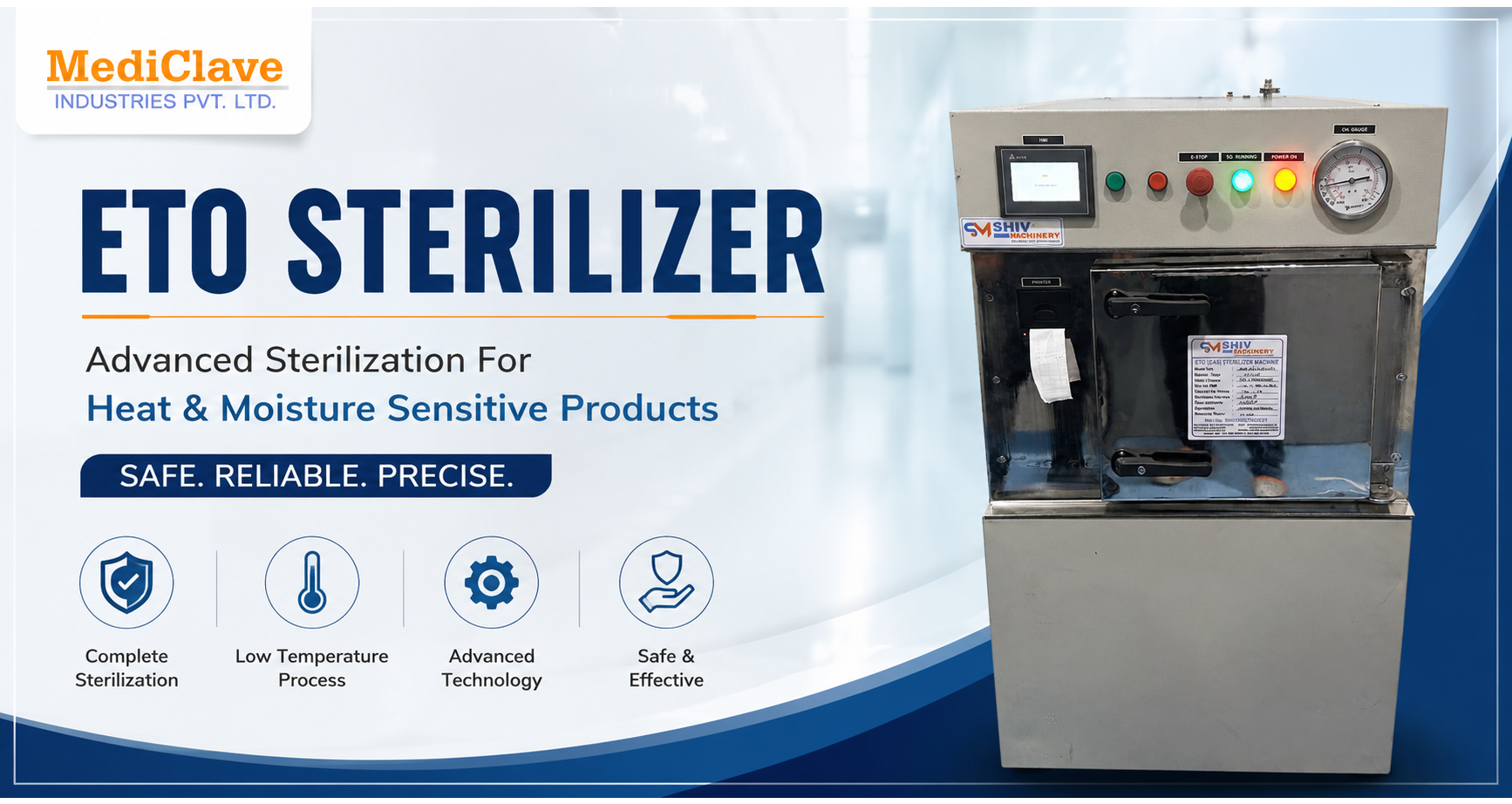
What Is an ETO Sterilizer and Why Is It the Best Choice for Heat- and Moisture-Sensitive Medical Devices?
Sterilization is one of the most important processes in the healthcare, pharmaceutical, biotechnology, and medical device manufacturing industries. Every product that comes into contact with patients or pharmaceutical formulations must be completely free from bacteria, viruses, fungi, and other harmful microorganisms. Effective sterilization not only protects patients but also ensures product quality, regulatory compliance, and operational reliability.
While steam sterilization is widely used for metal instruments and heat-resistant equipment, many modern medical devices cannot withstand high temperatures or moisture. Products made from plastics, rubber, electronic components, optical instruments, catheters, syringes, surgical kits, and implantable medical devices require a different sterilization method. This is where an ETO Sterilizer (Ethylene Oxide Sterilizer) becomes the preferred solution.
An ETO Sterilizer uses ethylene oxide gas to sterilize delicate and temperature-sensitive products without damaging their physical or functional properties. It provides deep penetration into complex devices, ensuring complete sterilization even in hard-to-reach areas.
In this comprehensive guide, you will learn everything about ETO Sterilizers, including how they work, their applications, benefits, features, safety measures, maintenance requirements, and how to choose the right system for your facility.
Understanding an ETO Sterilizer
An ETO Sterilizer, also known as an Ethylene Oxide Sterilizer, is a low-temperature sterilization system that uses ethylene oxide gas to destroy microorganisms on medical devices, pharmaceutical products, laboratory equipment, and other heat-sensitive materials.
Unlike steam sterilization, which uses high-temperature saturated steam, ETO sterilization operates at relatively low temperatures, making it suitable for products that could be damaged by heat or moisture.
Ethylene oxide gas penetrates packaging materials, narrow lumens, plastic components, rubber seals, electronic assemblies, and complex medical devices, ensuring complete sterilization without compromising product quality.
This capability makes ETO sterilization one of the most trusted methods in modern healthcare and pharmaceutical industries.
Why Is ETO Sterilization Important?
Many medical products cannot be sterilized using conventional steam autoclaves because excessive heat can deform plastic components, damage electronics, reduce material strength, or affect product performance.
ETO sterilization solves these challenges by providing reliable sterilization at low temperatures while maintaining the integrity of sensitive materials.
It is widely accepted across hospitals, pharmaceutical companies, medical device manufacturing plants, research laboratories, and biotechnology industries due to its effectiveness and compatibility with a wide range of materials.
How Does an ETO Sterilizer Work?
The ETO sterilization process consists of several carefully controlled stages that ensure safe and effective sterilization.
1. Preconditioning
Products are placed in a controlled environment where temperature and humidity are adjusted to optimize the sterilization process.
Proper humidity improves the effectiveness of ethylene oxide gas by making microorganisms more susceptible to sterilization.
2. Vacuum Creation
Air inside the sterilization chamber is removed using a vacuum system. Removing air allows the gas to penetrate every surface of the load.
3. Gas Injection
Ethylene oxide gas is introduced into the chamber under controlled pressure.
The gas spreads throughout the chamber and reaches even the smallest openings and internal channels of medical devices.
4. Exposure Phase
The products remain exposed to ethylene oxide gas for a specific duration based on validated sterilization cycles.
During this phase, microorganisms, bacterial spores, fungi, and viruses are destroyed.
5. Gas Removal
After sterilization, the gas is evacuated safely using vacuum cycles.
6. Aeration
Products are transferred to an aeration chamber where any residual ethylene oxide gas is removed completely.
This step ensures that sterilized products are safe for handling and use.
Key Features of an ETO Sterilizer
Modern ETO Sterilizers are designed with advanced automation and safety features that improve efficiency and ensure reliable sterilization.
Some common features include:
- Fully automatic operation
- PLC-based control system
- Touchscreen HMI
- Stainless steel chamber
- Automatic vacuum system
- Precise temperature control
- Humidity control system
- Automatic gas injection
- Automatic aeration cycle
- Leak-proof chamber construction
- Safety interlock doors
- Cycle data recording
- Batch documentation
- Alarm and fault diagnostics
- Energy-efficient operation
- User-friendly interface
- GMP-compliant design
- Low maintenance requirements
These features help deliver consistent sterilization results while ensuring operator safety.
Applications of ETO Sterilizers
ETO Sterilizers are used across multiple industries where low-temperature sterilization is essential.
Hospitals
Hospitals use ETO sterilizers for delicate medical devices that cannot tolerate steam sterilization.
Examples include:
- Catheters
- Endoscopes
- Plastic instruments
- Surgical kits
- Respiratory equipment
- Electrical medical devices
Medical Device Manufacturing
Medical device manufacturers rely on ETO sterilization before packaging products for distribution.
Common products include:
- Disposable syringes
- IV sets
- Surgical gloves
- Implants
- Dialysis components
- Tubing assemblies
- Diagnostic devices
Pharmaceutical Industry
Pharmaceutical companies sterilize packaging materials, production accessories, laboratory equipment, and temperature-sensitive components using ETO systems.
Biotechnology Laboratories
Research laboratories sterilize sophisticated laboratory instruments and experimental devices without affecting sensitive materials.
Research Institutes
ETO sterilization is used for research equipment, polymer materials, laboratory accessories, and biological research tools.
Advantages of ETO Sterilization
There are several reasons why ETO sterilization remains one of the most widely accepted sterilization technologies.
Low Temperature Process
The process protects products that cannot withstand high temperatures.
Excellent Gas Penetration
ETO gas reaches areas inaccessible to steam, making it ideal for complex devices.
Material Compatibility
Suitable for plastics, rubber, electronics, polymers, textiles, and composite materials.
Sterilization Inside Packaging
Products can be sterilized after final packaging, reducing contamination risks.
Reliable Performance
Validated sterilization cycles ensure consistent microbial destruction.
High Productivity
Large-capacity chambers allow multiple products to be sterilized simultaneously.
Industries That Benefit from ETO Sterilizers
ETO sterilizers are widely used in:
- Hospitals
- Medical colleges
- Pharmaceutical companies
- Biotechnology industries
- Medical device manufacturers
- Diagnostic laboratories
- Research organizations
- Healthcare product manufacturers
- Surgical equipment manufacturers
- Disposable medical product manufacturers
Important Safety Features
Ethylene oxide is a highly effective sterilizing agent but requires proper handling.
Modern ETO sterilizers incorporate multiple safety systems, including:
- Gas leak detection
- Automatic gas evacuation
- Explosion-proof electrical systems
- Safety interlock doors
- Automatic emergency shutdown
- Pressure monitoring
- Temperature monitoring
- Vacuum monitoring
- Alarm systems
- Controlled aeration process
These features ensure safe operation and compliance with industrial safety standards.
Importance of Validation
Validation confirms that every sterilization cycle consistently achieves the required sterility assurance level.
Typical validation activities include:
- Installation Qualification (IQ)
- Operational Qualification (OQ)
- Performance Qualification (PQ)
- Biological Indicator Testing
- Chemical Indicator Testing
- Leak Testing
- Temperature Mapping
- Humidity Validation
- Gas Concentration Verification
Validation is essential for GMP-compliant pharmaceutical and medical device manufacturing.
Maintenance Tips
Routine maintenance improves reliability and extends equipment life.
Daily maintenance:
- Clean chamber surfaces
- Inspect door seals
- Check gas connections
- Verify vacuum performance
Weekly maintenance:
- Inspect filters
- Check pressure gauges
- Examine valves and piping
Monthly maintenance:
- Calibrate sensors
- Test safety systems
- Verify leak detection equipment
- Perform preventive servicing
Following a preventive maintenance schedule minimizes downtime and ensures consistent performance.
Factors to Consider Before Buying an ETO Sterilizer
Before selecting an ETO sterilizer, evaluate your operational requirements carefully.
Consider:
- Chamber size
- Product load capacity
- Automation level
- Safety systems
- PLC and HMI controls
- Compliance with GMP and international standards
- Aeration capacity
- Energy efficiency
- Maintenance support
- Availability of spare parts
- Manufacturer experience
- Installation requirements
- Validation support
Choosing the right system improves productivity while ensuring regulatory compliance.
Complementary Equipment for Complete Sterilization Solutions
Many healthcare and pharmaceutical facilities use ETO Sterilizers alongside other sterilization and process equipment to create a comprehensive workflow.
For heat-resistant instruments and surgical equipment, a Horizontal Rectangular High Pressure Steam Sterilizer (Autoclave) is commonly used for rapid steam sterilization. Vertical Autoclaves are ideal for laboratories and smaller healthcare facilities, while Dry Heat Sterilizers are preferred for sterilizing glassware, powders, and metal instruments that require dry heat.
In pharmaceutical manufacturing, Pure Steam Generators provide high-quality steam for sterile processes, Multi Column Distillation Plants produce Water for Injection (WFI), and CIP & SIP Systems help clean and sterilize processing equipment automatically. Hospitals also benefit from well-designed CSSD Furniture, including stainless steel workstations, washing sinks, storage racks, and packing tables, to maintain an organized and efficient sterile processing environment.
Integrating the right equipment enhances productivity, improves infection control, and supports compliance with healthcare and pharmaceutical standards.
Common Mistakes to Avoid
To achieve effective ETO sterilization, avoid these common errors:
- Overloading the chamber
- Incorrect humidity settings
- Using unvalidated sterilization cycles
- Skipping aeration
- Ignoring preventive maintenance
- Inadequate operator training
- Poor packaging practices
- Failure to monitor gas concentration
- Ignoring safety alarms
Proper procedures ensure reliable sterilization and operator safety.
Why Choose a High-Quality ETO Sterilizer?
A high-quality ETO Sterilizer offers long-term value through reliable performance, advanced automation, and superior safety.
Benefits include:
- Consistent sterilization
- Better product protection
- Reduced contamination risk
- Compliance with international standards
- Lower maintenance costs
- Increased productivity
- Improved operational efficiency
- Long equipment life
- Better return on investment
Partnering with an experienced manufacturer also ensures dependable installation, validation support, technical assistance, and after-sales service.
The Future of ETO Sterilization
Advancements in automation, digital monitoring, and process control are making ETO sterilization more efficient than ever. Modern systems now feature PLC-based controls, touchscreen HMIs, electronic batch records, remote monitoring, predictive maintenance, and enhanced safety systems to meet the evolving needs of healthcare and pharmaceutical industries.
As medical devices become more advanced and complex, the demand for reliable low-temperature sterilization will continue to grow. ETO Sterilizers will remain an essential technology for ensuring product safety, quality, and regulatory compliance.
Conclusion
An ETO Sterilizer (Ethylene Oxide Sterilizer) is an indispensable solution for sterilizing heat- and moisture-sensitive medical devices, pharmaceutical products, and laboratory equipment. Its ability to sterilize delicate materials at low temperatures while penetrating complex product designs makes it one of the most reliable sterilization technologies available today.
From hospitals and pharmaceutical manufacturing plants to biotechnology laboratories and medical device production facilities, ETO Sterilizers help maintain the highest standards of sterility, patient safety, and product quality. With advanced automation, robust safety features, validated sterilization cycles, and compatibility with a wide range of materials, they are a smart investment for organizations seeking dependable and compliant sterilization solutions.
Choosing a high-quality ETO Sterilizer from a trusted manufacturer ensures long-term operational efficiency, regulatory compliance, and confidence that every sterilization cycle delivers safe, sterile, and reliable results.



