
Introduction
In pharmaceutical manufacturing, biotechnology laboratories, hospitals, medical device production, and research facilities, maintaining sterility is not just a quality requirement—it is essential for patient safety, regulatory compliance, and product integrity. Every vial, surgical instrument, laboratory tool, and pharmaceutical component must be sterilized before use to eliminate microorganisms that could compromise safety.
Among the many sterilization methods available today, Saturated Steam Sterilization remains the global gold standard. Its effectiveness, speed, reliability, and ability to destroy even the most resistant bacterial spores make it the preferred choice for pharmaceutical companies and healthcare institutions worldwide.
Unlike dry heat or chemical sterilization, saturated steam sterilization uses pressurized saturated steam to transfer heat efficiently into the load, ensuring deep penetration and complete microbial destruction. Modern sterilizers are equipped with PLC automation, HMI controls, advanced sensors, validation features, and GMP-compliant designs, making them indispensable in sterile manufacturing environments.
Whether you're building a new pharmaceutical facility or upgrading your existing sterilization process, understanding why saturated steam sterilization matters will help you make informed decisions that improve productivity, compliance, and product quality.
What is Saturated Steam Sterilization?
Saturated Steam Sterilization is a thermal sterilization process that uses pure saturated steam under pressure to destroy bacteria, fungi, viruses, spores, and other harmful microorganisms.
Unlike superheated steam, saturated steam contains the maximum amount of water vapor possible at a given pressure. When it comes into contact with cooler surfaces, it condenses instantly and releases a large amount of latent heat. This rapid heat transfer makes saturated steam one of the most efficient sterilization methods available.
The process is widely used for sterilizing:
- Pharmaceutical equipment
- Surgical instruments
- Stainless steel utensils
- Glassware
- Rubber components
- Laboratory equipment
- Medical devices
- Culture media
- Production accessories
Why is Saturated Steam Sterilization Important?
Sterility is the foundation of pharmaceutical and medical manufacturing. Even microscopic contamination can result in product recalls, failed audits, compromised patient safety, and significant financial losses.
Saturated steam sterilization provides:
- Reliable microbial destruction
- Uniform heat penetration
- Fast sterilization cycles
- Excellent repeatability
- High sterility assurance
- Regulatory compliance
- Environmentally friendly operation
Because of these advantages, regulatory agencies such as WHO, USFDA, and EU GMP recognize saturated steam sterilization as one of the most validated sterilization methods for pharmaceutical production.
How Does Saturated Steam Sterilization Work?
The sterilization cycle consists of several carefully controlled stages.
1. Loading
Products are arranged inside the sterilization chamber to allow proper steam circulation.
Correct loading is critical because overcrowding can prevent steam penetration.
2. Air Removal
Before sterilization begins, air must be completely removed from the chamber.
Residual air creates cold spots that prevent proper sterilization.
Modern sterilizers use:
- Vacuum pumps
- Steam flushing
- Pulsed vacuum systems
3. Steam Admission
Pure saturated steam enters the chamber.
Steam surrounds every surface of the load.
As steam condenses, it releases latent heat, rapidly increasing product temperature.
4. Holding Time
Once the required temperature is reached, the chamber maintains it for a validated holding period.
Common operating temperatures include:
- 121°C
- 124°C
- 126°C
- 134°C
These temperatures effectively destroy bacteria, viruses, fungi, and bacterial spores.
5. Drying
After sterilization, vacuum drying removes residual moisture from the load.
Proper drying prevents recontamination during storage.
What Makes Saturated Steam Different?
Many people assume all steam is the same.
However, saturated steam is unique because it provides:
- Maximum heat transfer
- Uniform energy distribution
- Rapid condensation
- Faster sterilization
- Better penetration
Superheated steam, in comparison, transfers heat less efficiently and is generally unsuitable for pharmaceutical sterilization.
Advantages of Saturated Steam Sterilization
Excellent Heat Transfer
Steam transfers energy much faster than dry air, reducing sterilization time.
High Sterility Assurance
Properly validated cycles achieve consistent microbial destruction.
Fast Processing
Shorter cycle times improve production efficiency.
Eco-Friendly
Steam sterilization does not require toxic chemicals or harmful gases.
Cost Effective
Water and steam are inexpensive compared to chemical sterilization methods.
GMP Compliance
Widely accepted by pharmaceutical regulatory authorities worldwide.
Easy Validation
Temperature, pressure, and exposure time can be accurately monitored and documented.
Applications of Saturated Steam Sterilizers
Modern saturated steam sterilizers are used in numerous industries.
Pharmaceutical Industry
- Injectable manufacturing
- Sterile production
- Component sterilization
- Equipment sterilization
Hospitals
- Surgical instruments
- Stainless steel trays
- Medical equipment
Biotechnology
- Laboratory tools
- Culture media
- Glassware
Research Laboratories
- Laboratory equipment
- Microbiology accessories
Medical Device Manufacturing
- Surgical devices
- Stainless steel components
Materials Suitable for Steam Sterilization
Saturated steam is ideal for:
- Stainless steel instruments
- Surgical equipment
- Rubber stoppers
- Laboratory glassware
- Culture media
- Textiles
- Production utensils
- Pharmaceutical accessories
Materials that are moisture-sensitive may require Dry Heat Sterilization instead.
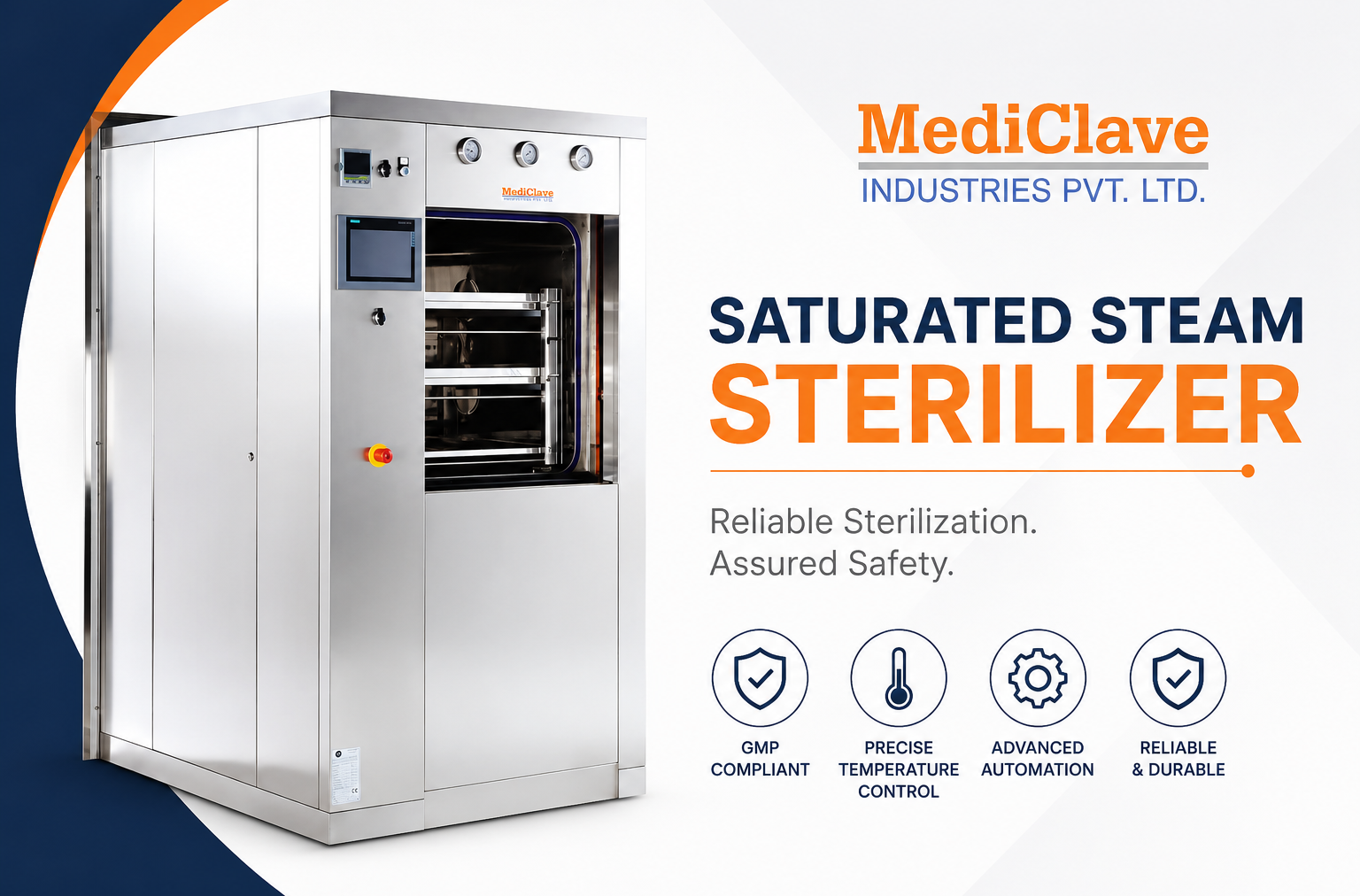
Major Components of a Modern Saturated Steam Sterilizer
Today's pharmaceutical sterilizers include:
- Stainless Steel Chamber
- PLC Control Panel
- Touch Screen HMI
- Vacuum Pump
- Steam Generator Connection
- Pressure Gauges
- Temperature Sensors
- Safety Valves
- Door Interlocks
- HEPA Air Filters
- Data Logger
- Automatic Control System
These features ensure precise operation, operator safety, and complete validation support.
Validation Requirements
Every pharmaceutical steam sterilizer must undergo proper qualification.
Installation Qualification (IQ)
Verifies equipment installation.
Operational Qualification (OQ)
Confirms operating parameters.
Performance Qualification (PQ)
Demonstrates successful sterilization under actual production conditions.
Additional studies include:
- Temperature Mapping
- Heat Distribution Testing
- Biological Indicator Testing
- Leak Testing
- Bowie-Dick Test (for pre-vacuum sterilizers)
Regulatory Standards
A pharmaceutical steam sterilizer should comply with:
- WHO GMP
- USFDA Guidelines
- EU GMP
- ISO Standards
- Pharmaceutical Validation Requirements
Complete documentation ensures successful inspections and audits.
Common Mistakes During Steam Sterilization
Avoid these common errors:
- Overloading the chamber
- Improper packaging
- Incomplete air removal
- Incorrect temperature settings
- Poor maintenance
- Ignoring validation schedules
Following SOPs and preventive maintenance helps maintain consistent sterilization performance.
Choosing the Right Saturated Steam Sterilizer
Before purchasing, evaluate:
- Chamber size
- Load capacity
- Steam quality
- PLC automation
- HMI interface
- Validation support
- Energy efficiency
- After-sales service
- Spare part availability
- GMP compliance
Why Choose Mediclave Industries?
Mediclave Industries designs and manufactures advanced Saturated Steam Sterilizers engineered for pharmaceutical, biotechnology, healthcare, and research applications.
Key features include:
- GMP-compliant construction
- SS 316L contact parts
- Uniform saturated steam distribution
- PLC-based automation
- Touchscreen HMI
- Validation-ready design
- IQ/OQ/PQ documentation support
- Reliable after-sales service
- Custom chamber capacities
- Energy-efficient operation
These systems are built to deliver consistent sterilization performance while meeting the stringent requirements of regulated industries.
Related Products You May Like
To build a complete pharmaceutical sterilization setup, explore these solutions from Mediclave Industries:
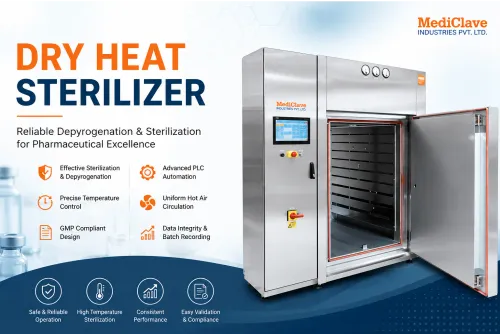
- Dry Heat Sterilizer
- Steam Air Mixture Sterilizer
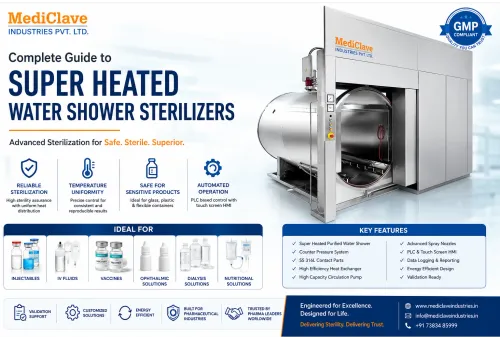
- Super Heated Water Shower Sterilizer
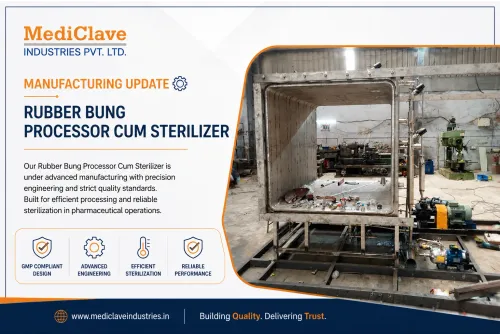
- Rubber Bung Processor Cum Steam Sterilizer
- ETO Sterilizer
- Pharmaceutical Washing Equipment
These complementary systems help manufacturers address a wide range of sterilization and processing requirements.
Frequently Asked Questions (FAQs)
What is saturated steam sterilization?
It is a sterilization process that uses pure saturated steam under pressure to eliminate microorganisms effectively.
Why is saturated steam better than dry heat?
Steam transfers heat more efficiently, resulting in faster and more reliable sterilization for moisture-resistant materials.
What temperature is commonly used?
The most common sterilization temperatures are 121°C and 134°C, depending on the load and validation requirements.
Which industries use saturated steam sterilizers?
Pharmaceutical companies, hospitals, biotechnology firms, research laboratories, medical device manufacturers, and healthcare institutions.
Can saturated steam sterilization destroy bacterial spores?
Yes. Properly validated saturated steam cycles are highly effective against bacterial spores and are considered one of the most reliable sterilization methods available.
Internal Links (Use in Your Website)
Add these internal links naturally throughout the blog:
- Home: https://www.mediclaveindustries.in/
- Saturated Steam Sterilizer: https://www.mediclaveindustries.in/product/saturated-steam-sterilizer
- Dry Heat Sterilizer: https://www.mediclaveindustries.in/product/dry-heat-sterilizer
- Steam Air Mixture Sterilizer: https://www.mediclaveindustries.in/product/steam-air-mixture-sterilizer
- Super Heated Water Shower Sterilizer: https://www.mediclaveindustries.in/product/super-heated-water-shower-sterilizer
- Rubber Bung Processor Cum Steam Sterilizer: https://www.mediclaveindustries.in/product/rubber-bung-processor-cum-steam-sterilizer
Conclusion
Saturated Steam Sterilization continues to be the benchmark for sterile processing across pharmaceutical, healthcare, biotechnology, and laboratory industries. Its exceptional heat transfer, reliable microbial destruction, ease of validation, and compliance with international regulatory standards make it the preferred sterilization method for critical applications. By investing in a GMP-compliant, validation-ready saturated steam sterilizer, manufacturers can enhance product safety, improve operational efficiency, reduce contamination risks, and ensure long-term regulatory compliance. Choosing a trusted manufacturer like Mediclave Industries further ensures dependable performance, advanced automation, and comprehensive support for modern sterile manufacturing facilities.