

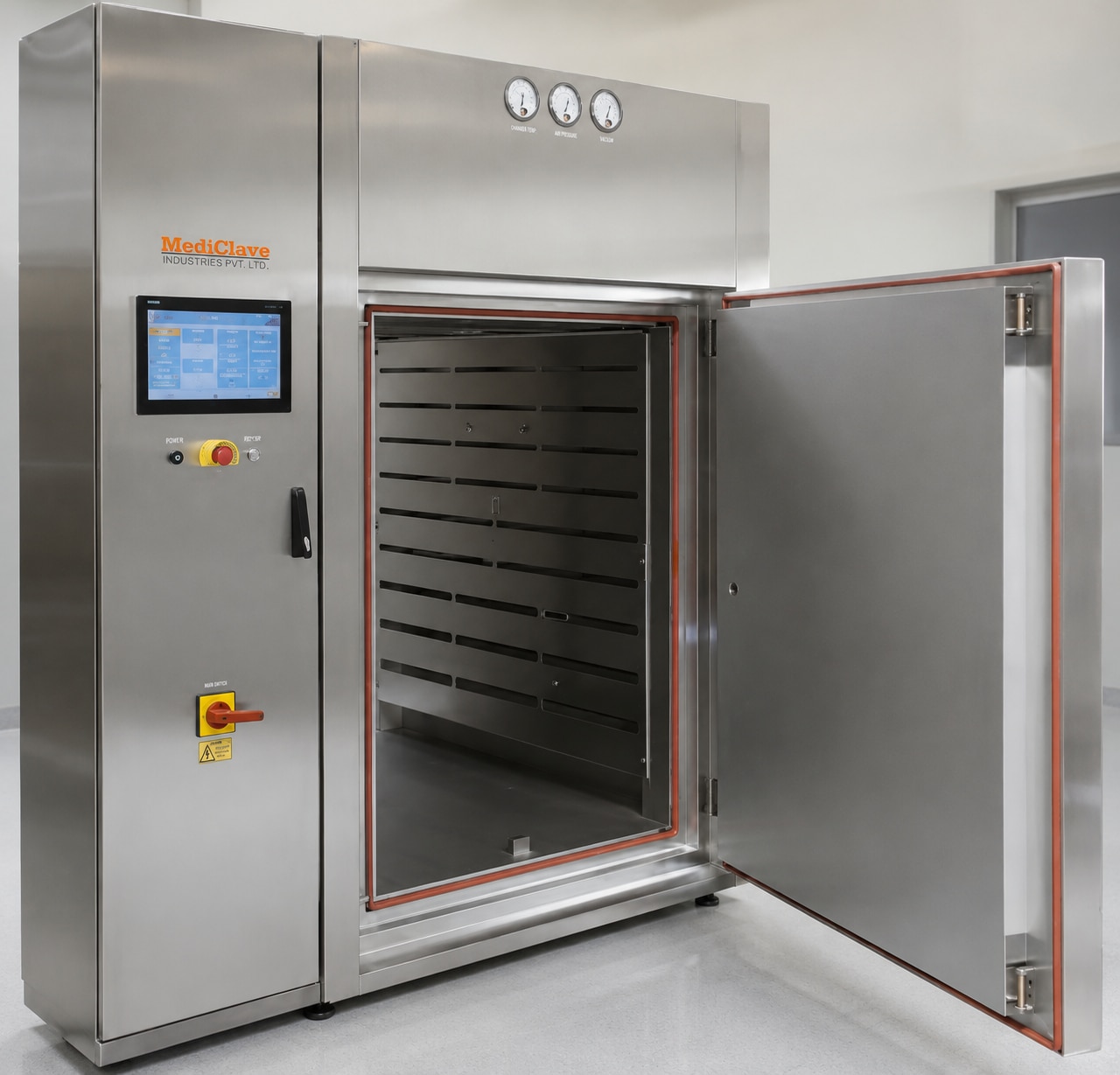
How Dry Heat Sterilizers Improve Product Safety in Pharmaceutical Manufacturing
In the pharmaceutical industry, product safety is one of the most critical factors affecting quality, regulatory compliance, and patient health. Every pharmaceutical manufacturer must ensure that products, containers, and equipment remain free from harmful microorganisms and contaminants.
A Dry Heat Sterilizer plays a vital role in achieving these objectives by providing reliable sterilization and depyrogenation for heat-resistant materials used in pharmaceutical production.
What is a Dry Heat Sterilizer?
A Dry Heat Sterilizer is a specialized piece of equipment that uses high temperatures and controlled airflow to eliminate microorganisms without the use of moisture or steam.
Unlike steam sterilization, dry heat sterilization is particularly suitable for:
- Glassware
- Metal instruments
- Pharmaceutical containers
- Vials and ampoules
- Heat-resistant materials
This method is widely used in pharmaceutical manufacturing facilities where moisture-sensitive products and components require effective sterilization.
Why Product Safety Matters in Pharmaceutical Manufacturing
Product contamination can result in:
- Product recalls
- Regulatory observations
- Production losses
- Patient safety risks
- Damage to company reputation
To avoid these issues, pharmaceutical companies invest in validated sterilization systems that consistently meet GMP requirements.
How Dry Heat Sterilizers Enhance Product Safety
1. Effective Microbial Elimination
Dry heat sterilization destroys bacteria, fungi, spores, and other microorganisms through controlled high-temperature exposure.
This helps ensure that pharmaceutical products are manufactured in a contamination-free environment.
2. Depyrogenation Capability
One of the major advantages of a Dry Heat Sterilizer is its ability to remove pyrogens.
Pyrogens are fever-causing substances that can compromise injectable pharmaceutical products.
Depyrogenation is particularly important for:
- Injectable drugs
- Glass vials
- Ampoules
- Pharmaceutical containers
3. Moisture-Free Sterilization
Certain pharmaceutical materials cannot tolerate moisture.
Dry heat sterilizers provide an ideal solution by sterilizing materials without introducing steam or humidity.
4. Consistent Temperature Distribution
Modern dry heat sterilizers are designed with advanced airflow systems that ensure uniform heat distribution throughout the chamber.
This helps achieve reliable sterilization results across every batch.
5. Support for GMP Compliance
Pharmaceutical manufacturers must comply with strict GMP regulations.
Validated Dry Heat Sterilizers support compliance by providing:
- Controlled sterilization cycles
- Process documentation
- Repeatable performance
- Reliable validation support
Applications of Dry Heat Sterilizers in Pharmaceutical Plants
Dry Heat Sterilizers are commonly used for:
- Sterilization of glass bottles
- Vial sterilization
- Ampoule sterilization
- Stainless steel components
- Laboratory glassware
- Pharmaceutical containers
- Metal tools and accessories
These applications help maintain product quality and manufacturing safety.
Key Features of Modern Dry Heat Sterilizers
Modern systems often include:
- PLC-based control systems
- HMI touchscreen interface
- Stainless steel construction
- Uniform air circulation
- Data logging capabilities
- GMP-compliant design
- Validation-ready architecture
These features improve operational efficiency and ensure regulatory compliance.
Benefits for Pharmaceutical Manufacturers
Using a high-quality Dry Heat Sterilizer offers several advantages:
- Enhanced product safety
- Reduced contamination risks
- Reliable depyrogenation
- Consistent batch quality
- Improved GMP compliance
- Better process control
- Increased operational reliability
Why Choose Mediclave Industries?
Mediclave Industries Private Limited manufactures advanced Dry Heat Sterilizers designed for pharmaceutical, healthcare, and laboratory applications.
Our systems offer:
- GMP-compliant construction
- Uniform temperature distribution
- Reliable depyrogenation performance
- User-friendly automation
- Customized capacity options
- Long-term operational reliability
Conclusion
A Dry Heat Sterilizer is an essential component of modern pharmaceutical manufacturing. By providing effective sterilization, reliable depyrogenation, and GMP-compliant performance, it helps manufacturers improve product safety, maintain regulatory compliance, and protect patient health.
Investing in the right Dry Heat Sterilizer is not only a quality decision but also a strategic step toward building a safer and more efficient pharmaceutical production environment.
FAQs
What is a Dry Heat Sterilizer used for?
A Dry Heat Sterilizer is used to sterilize heat-resistant materials such as glassware, metal instruments, vials, and pharmaceutical containers.
Can a Dry Heat Sterilizer remove pyrogens?
Yes, Dry Heat Sterilizers are widely used for depyrogenation and pyrogen removal in pharmaceutical applications.
Why is dry heat sterilization important in pharmaceutical manufacturing?
It provides moisture-free sterilization and supports product safety, quality, and GMP compliance.
What industries use Dry Heat Sterilizers?
Pharmaceutical, healthcare, biotechnology, research laboratories, and medical device manufacturing industries commonly use Dry Heat Sterilizers.
How does a Dry Heat Sterilizer improve product safety?
It eliminates microorganisms and pyrogens, reducing contamination risks and helping ensure safe pharmaceutical products.
