
CIP & SIP Systems Ahmedabad | Hygienic Pharmaceutical Manufacturing | Ahmedabad
In today's pharmaceutical, biotechnology, healthcare, and food processing industries, maintaining a clean and sterile production environment is not just important—it is essential. Every batch of medicine, injectable product, vaccine, cosmetic, or food item depends on manufacturing equipment that is thoroughly cleaned and sterilized before production begins. Even a small amount of contamination can affect product quality, reduce shelf life, create regulatory issues, and put consumer safety at risk.
This is why pharmaceutical manufacturers across the world are investing in advanced Clean-In-Place (CIP) and Sterilize-In-Place (SIP) systems. These automated solutions eliminate the need for manual cleaning, improve productivity, reduce downtime, and help companies comply with GMP and international quality standards.
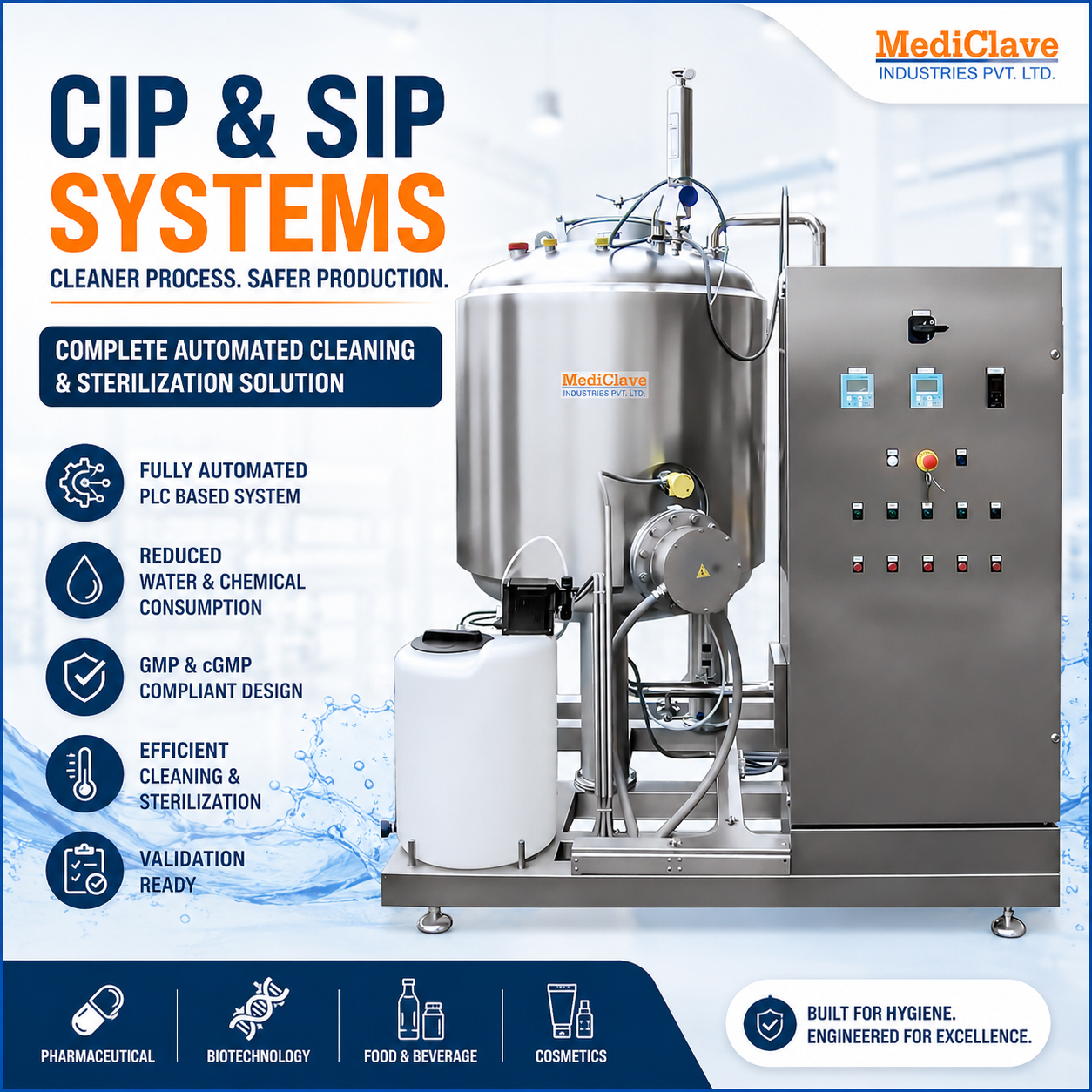
As a trusted CIP & SIP Systems Manufacturer, Mediclave Industries designs and manufactures advanced automated cleaning and sterilization systems that help industries achieve consistent hygiene, operational efficiency, and reliable manufacturing performance. Modern CIP & SIP systems are designed to clean tanks, pipelines, reactors, vessels, mixers, heat exchangers, and process equipment without dismantling the production line, making them one of the most valuable investments for any pharmaceutical facility.
What is a CIP & SIP System?
CIP stands for Clean-In-Place, while SIP stands for Sterilize-In-Place. Together, these technologies provide a complete solution for cleaning and sterilizing process equipment without taking it apart.
A CIP system removes product residues, dirt, chemicals, microorganisms, and contaminants from the internal surfaces of equipment by circulating cleaning solutions through pipelines and vessels. Once the cleaning process is complete, the SIP system sterilizes the same equipment using clean steam or pure steam at controlled temperatures to destroy microorganisms before production begins.
The result is a completely hygienic manufacturing environment that supports consistent product quality and regulatory compliance. These systems are widely used in pharmaceutical manufacturing, biotechnology plants, injectable production, vaccine manufacturing, dairy processing, beverage production, cosmetics, and healthcare industries.
Why Modern Manufacturing Depends on CIP & SIP Systems
Traditional cleaning methods require operators to dismantle equipment, clean individual parts manually, inspect every component, reassemble the machinery, and validate the process. This consumes valuable production time and increases the possibility of human error.
Automated CIP & SIP systems solve these challenges by performing validated cleaning and sterilization cycles automatically.
Some of the biggest advantages include:
Reduced contamination risk
Faster production turnaround
Less manual labor
Lower operating costs
Improved product consistency
Repeatable cleaning validation
Compliance with GMP, cGMP, FDA, and pharmaceutical standards
Better equipment utilization
Enhanced operator safety
Lower water and chemical consumption
These benefits make automated cleaning systems a necessity rather than a luxury for modern pharmaceutical manufacturers.
Understanding the CIP Cleaning Process
A Clean-In-Place cycle follows carefully controlled stages designed to remove every trace of residue from production equipment.
The process generally begins with a pre-rinse using purified water to remove loose product particles. Cleaning chemicals are then circulated throughout tanks, pipelines, valves, and process equipment to dissolve residues. Depending on the product being manufactured, alkaline or acidic cleaning solutions may be used.
Intermediate rinsing removes remaining cleaning chemicals before a final rinse with purified water or Water for Injection (WFI). Throughout the cleaning cycle, parameters such as flow rate, temperature, pressure, chemical concentration, and cleaning duration are automatically monitored and controlled using PLC-based automation.
Because every cycle follows validated parameters, manufacturers achieve consistent cleaning quality from batch to batch.
Understanding the SIP Sterilization Process
Cleaning alone cannot eliminate every microorganism. This is where Sterilize-In-Place technology becomes essential.
After the cleaning cycle, clean steam is introduced into the equipment. The system maintains sterilization temperatures—typically between 121°C and 135°C—for a predetermined holding time to destroy bacteria, fungi, viruses, and other microorganisms.
Following sterilization, the equipment cools under controlled conditions and remains ready for sterile manufacturing operations.
The entire process is automated, monitored, and documented for validation purposes, ensuring consistent sterilization across every production cycle.
Major Components of a CIP & SIP System
A modern CIP & SIP installation consists of multiple integrated components working together.
Typical components include:
CIP tanks for storing cleaning solutions
Hot water tanks
Acid and caustic tanks
WFI rinse tanks
Sanitary centrifugal pumps
PLC and HMI control panels
Automated sanitary valves
Flow meters
Temperature sensors
Pressure transmitters
Conductivity sensors
Heat exchangers
Steam supply connections
SS316L hygienic pipelines
Spray balls or rotary spray devices
Each component is designed to maintain hygienic conditions while ensuring reliable cleaning and sterilization performance.
Industries That Benefit from CIP & SIP Systems
Although pharmaceutical manufacturing is the largest application, CIP & SIP technology serves many industries where hygiene is critical.
These include:
Pharmaceutical manufacturing plants
Injectable medicine production
Biotechnology facilities
Vaccine manufacturing
Food processing plants
Dairy industries
Beverage manufacturers
Cosmetic manufacturing
Herbal product manufacturers
Chemical processing
Research laboratories
Healthcare facilities
Every industry handling sensitive products benefits from automated cleaning and sterilization solutions.
Integration with Other Pharmaceutical Equipment
One of the biggest advantages of modern CIP & SIP systems is their compatibility with a wide range of pharmaceutical process equipment.
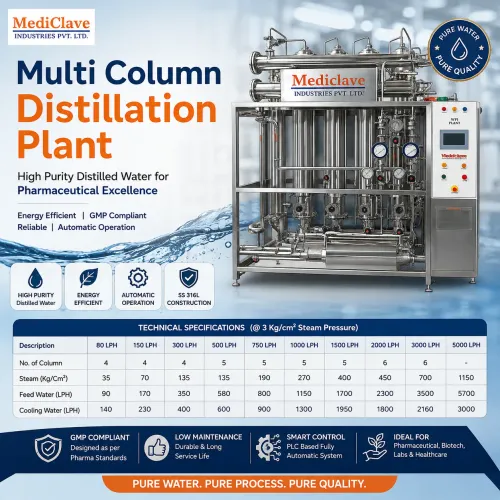
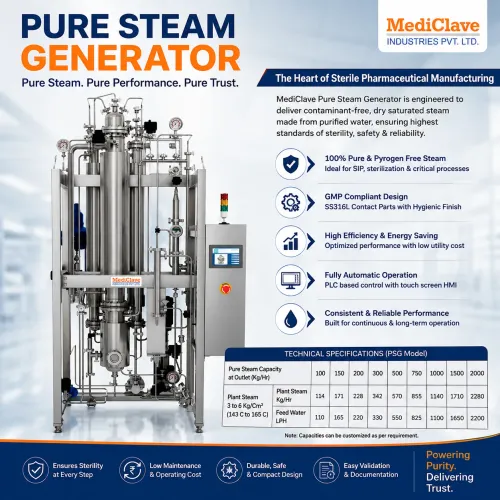
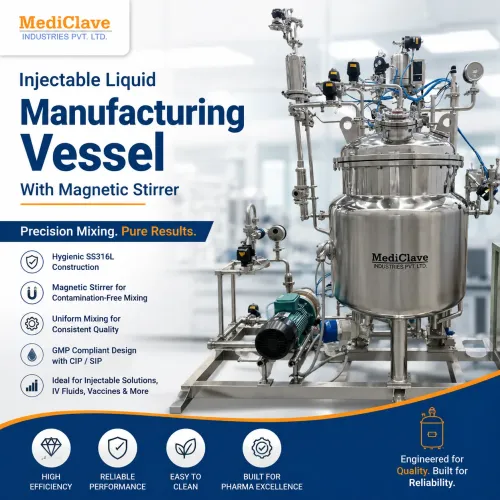
For example, they work efficiently alongside the Injectable Liquid Manufacturing Vessel, ensuring sterile preparation of injectable formulations while minimizing contamination risk. They are equally valuable when integrated with the Pure Steam Generator, which supplies the clean steam required for SIP operations, and the Multi Column Distillation Plant, which produces Water for Injection (WFI) used during pharmaceutical cleaning and rinsing processes. These integrated systems create a seamless, GMP-compliant manufacturing environment.
For more details about these complementary solutions, visit:
Features to Look for in a High-Quality CIP & SIP System
Selecting the right manufacturer is just as important as selecting the right system.
An advanced solution should offer:
Fully automatic PLC-based operation
HMI touchscreen interface
Recipe-based cleaning programs
SS316L product contact parts
Hygienic sanitary design
Validation-ready documentation
Energy-efficient operation
Low water consumption
Intelligent chemical dosing
Temperature monitoring
Pressure monitoring
Conductivity monitoring
Data logging capability
Customizable tank capacities
Easy maintenance
These features improve operational reliability while supporting regulatory compliance and long-term production efficiency.
How Automation Improves Manufacturing
Automation has transformed pharmaceutical manufacturing.
Instead of depending on operator experience, modern CIP & SIP systems automatically execute every cleaning and sterilization step according to validated process parameters.
Automation provides:
Consistent cleaning quality
Reduced operator intervention
Better process control
Improved traceability
Faster production scheduling
Lower maintenance costs
Better audit readiness
Higher equipment availability
Digital monitoring also simplifies validation and documentation, making inspections easier for pharmaceutical manufacturers.
Choosing the Right CIP & SIP Systems Manufacturer
Not every manufacturer offers the same level of engineering expertise.
Before selecting a supplier, companies should evaluate several factors, including production capacity, plant layout, automation requirements, steam availability, future expansion plans, validation support, after-sales service, spare parts availability, and compliance with GMP guidelines.
Mediclave Industries develops customized solutions according to individual customer requirements, ensuring every installation matches the production process instead of forcing customers to adapt to standard equipment.
Why Mediclave Industries?
Mediclave Industries has established itself as a reliable engineering partner for pharmaceutical process equipment and sterilization solutions. The company combines precision engineering with modern automation to deliver high-quality systems that improve manufacturing efficiency and maintain hygienic processing conditions. Its portfolio includes advanced CIP & SIP systems, sterilizers, water systems, pharmaceutical process equipment, and CSSD solutions designed for hospitals and pharmaceutical facilities.
Frequently Asked Questions
What does CIP stand for?
CIP means Clean-In-Place, an automated cleaning process that removes residues from equipment without dismantling it.
What does SIP stand for?
SIP means Sterilize-In-Place, where clean steam sterilizes manufacturing equipment after cleaning.
Which industries use CIP & SIP systems?
Pharmaceutical, biotech, healthcare, food, dairy, beverage, cosmetic, and research industries all rely on these systems.
Are CIP & SIP systems fully automatic?
Most modern systems use PLC and HMI controls to automate cleaning and sterilization cycles while monitoring every important process parameter.
Can these systems reduce production downtime?
Yes. Automated cleaning and sterilization significantly reduce downtime compared to manual cleaning methods while improving consistency and validation.
Conclusion
As pharmaceutical manufacturing standards continue to become more demanding, hygienic production has become one of the most important factors influencing product quality, regulatory compliance, and operational efficiency. Investing in a reliable CIP & SIP system helps manufacturers reduce contamination risks, automate cleaning, improve productivity, and maintain consistent quality across every production batch.
Whether your facility manufactures injectable medicines, vaccines, biotechnology products, cosmetics, dairy products, or food ingredients, an advanced automated cleaning and sterilization solution is essential for long-term success.
As a trusted CIP & SIP Systems Manufacturer, Mediclave Industries delivers engineered solutions that combine automation, precision, reliability, and GMP compliance. With advanced technology, robust stainless-steel construction, customizable configurations, and dependable after-sales support, the company helps manufacturers build safer, cleaner, and more efficient production facilities prepared for the future of pharmaceutical manufacturing.