

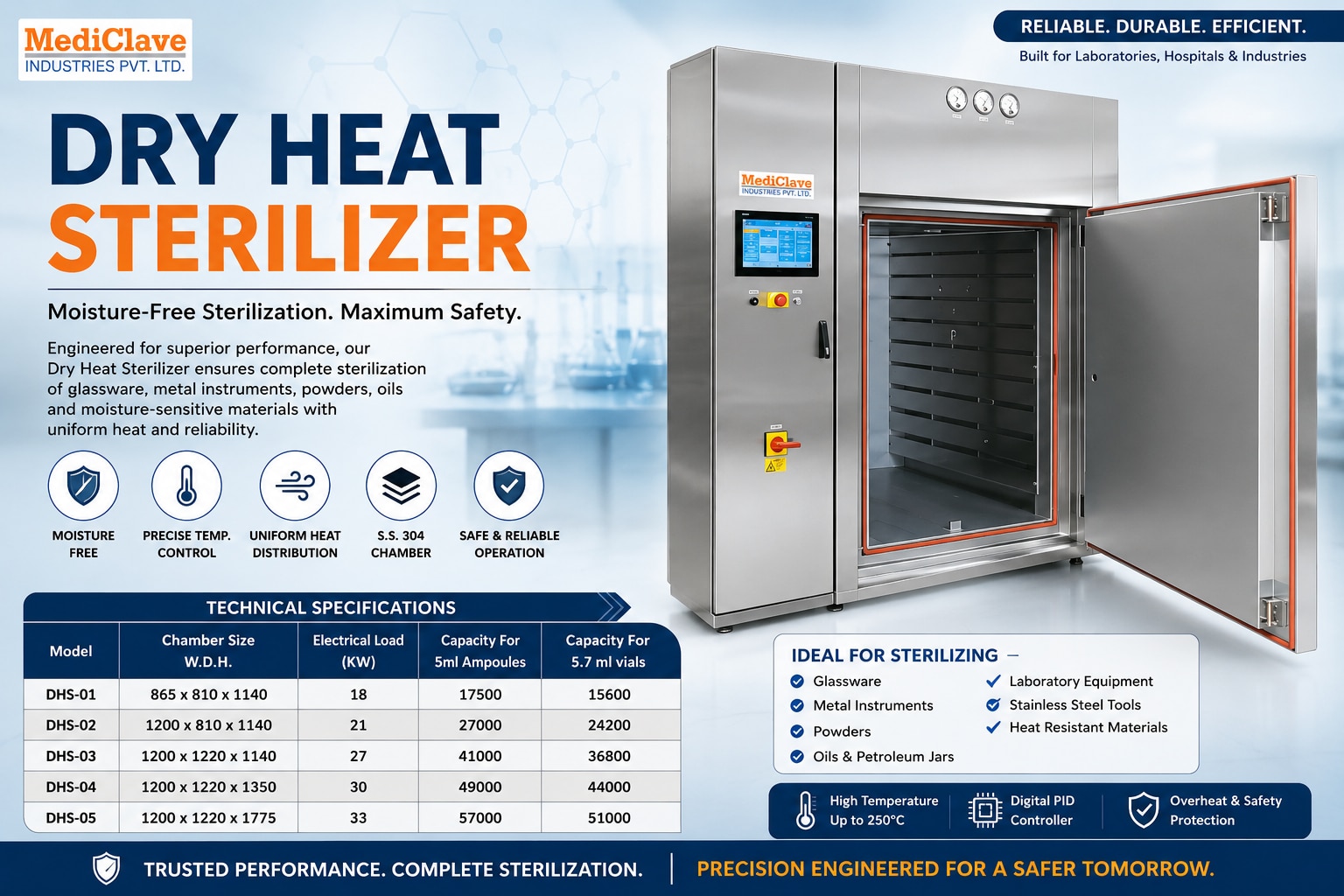
Dry Heat Sterilizer: The Complete Guide to Safe, Reliable, and Moisture-Free
Sterilization for Laboratories and Healthcare
Sterilization is the backbone of safety in healthcare, pharmaceutical manufacturing, research laboratories, and industrial quality control. While steam sterilization is widely recognized, there are many applications where moisture simply cannot be used. This is where a Dry Heat Sterilizer becomes the ideal solution.
Designed to eliminate microorganisms using high-temperature dry air instead of steam, a dry heat sterilizer offers exceptional reliability for sterilizing glassware, metal instruments, powders, oils, and moisture-sensitive materials. As industries continue to demand higher standards of hygiene, contamination control, and regulatory compliance, dry heat sterilization has become an indispensable part of modern laboratories and manufacturing facilities.
This guide explores everything you need to know about dry heat sterilizers—from their working principle and advantages to industry applications, selection criteria, maintenance tips, and future innovations. Whether you are setting up a new laboratory, upgrading pharmaceutical equipment, or searching for a dependable sterilization solution, this article will help you make an informed decision.
What is a Dry Heat Sterilizer?
A Dry Heat Sterilizer is a laboratory and industrial sterilization equipment that destroys microorganisms by exposing materials to high temperatures in a controlled hot-air environment without the use of moisture or pressure.
Unlike steam sterilizers that rely on saturated steam, dry heat sterilizers circulate heated air uniformly throughout the chamber. The process gradually oxidizes microbial proteins and cellular components, effectively destroying bacteria, fungi, spores, and other harmful microorganisms.
Because no moisture is involved, dry heat sterilization is particularly suitable for materials that may corrode, rust, or become damaged when exposed to steam.
Why Dry Heat Sterilization Matters
Every industry handling sensitive materials faces one common challenge—maintaining complete sterility without compromising product integrity.
Moisture can damage many items, including:
Glass laboratory equipment
Stainless steel surgical instruments
Pharmaceutical powders
Oils and petroleum products
Metal tools
Sharp cutting instruments
Laboratory containers
Heat-resistant chemicals
Dry heat sterilization solves this challenge by delivering consistent sterilization without introducing water, humidity, or pressure into the process.
How Does a Dry Heat Sterilizer Work?
The sterilization cycle follows a carefully controlled process.
1. Heating
Powerful electric heaters raise the chamber temperature to the required sterilization level.
2. Air Circulation
An advanced airflow system distributes heated air evenly across the chamber, eliminating cold spots.
3. Sterilization Hold Time
Materials remain at the required temperature for a predetermined duration, ensuring complete microbial destruction.
Typical sterilization cycles include:
160°C for 2 hours
170°C for 1 hour
180°C for 30 minutes
The required cycle depends on the application and regulatory requirements.
4. Cooling
After sterilization, the chamber cools safely before materials are removed.
Key Features of a Modern Dry Heat Sterilizer
Today's advanced dry heat sterilizers offer significantly improved efficiency and process control.
Important features include:
Stainless steel chamber construction
Double-wall insulated design
Digital temperature controller
PID temperature regulation
Uniform hot-air circulation
High-temperature insulation
Over-temperature safety protection
Timer-controlled sterilization cycles
Energy-efficient heating system
Low maintenance requirements
Durable industrial-grade construction
Long equipment lifespan
Premium models also include programmable PLC controls, touch-screen interfaces, data logging, and password-protected operating systems for GMP-compliant environments.
Major Advantages of Dry Heat Sterilization
1. Moisture-Free Sterilization
No steam means no corrosion, rust, or moisture damage.
2. Excellent for Glassware
Glass pipettes, bottles, flasks, petri dishes, and laboratory containers remain perfectly dry after sterilization.
3. Suitable for Powders and Oils
Steam cannot effectively sterilize oils or powders.
Dry heat performs exceptionally well for:
Mineral oils
Pharmaceutical powders
Petroleum jelly
Paraffin
Grease
4. Longer Equipment Life
Since no moisture is present, instruments experience significantly less corrosion.
5. Cost-Effective Operation
Dry heat sterilizers require:
No steam generator
No boiler
Lower maintenance
Fewer moving components
6. Consistent Sterilization
Modern airflow systems maintain uniform chamber temperatures, ensuring reliable sterilization results.
Industries That Use Dry Heat Sterilizers
Dry heat sterilizers support numerous industries.
Healthcare
Hospitals use them for:
Surgical instruments
Metal trays
Stainless steel tools
Glass syringes
Pharmaceutical Manufacturing
Essential for:
Glass vials
Powder sterilization
Stability testing
Quality control laboratories
Biotechnology
Used for sterile laboratory equipment during research and development.
Food Industry
Suitable for laboratory testing equipment used in food quality assurance.
Educational Institutions
Universities and research laboratories use dry heat sterilizers for microbiology and analytical laboratories.
Chemical Laboratories
Ideal for sterilizing containers, glass apparatus, and analytical instruments.
Materials Suitable for Dry Heat Sterilization
Dry heat sterilization is ideal for:
Glass bottles
Test tubes
Laboratory glassware
Stainless steel instruments
Forceps
Scissors
Needles
Powders
Oils
Petroleum products
Metal equipment
Ceramic materials
Materials That Should Not Be Sterilized
Avoid using dry heat sterilizers for:
Rubber
Plastic instruments
Latex products
Fabric materials
Paper
Moisture-containing products
Heat-sensitive chemicals
Dry Heat Sterilizer vs Steam Sterilizer
| Feature | Dry Heat Sterilizer | Steam Sterilizer |
|---|---|---|
| Sterilization Medium | Hot Air | Steam |
| Moisture | None | High |
| Corrosion Risk | Very Low | Moderate |
| Suitable for Oils | Yes | No |
| Suitable for Powders | Yes | No |
| Suitable for Glassware | Excellent | Good |
| Cycle Speed | Slower | Faster |
| Maintenance | Low | Moderate |
Both technologies have their place. Choosing the correct method depends entirely on the application.
Choosing the Right Dry Heat Sterilizer
Before purchasing, consider the following factors:
Chamber Capacity
Select a chamber size based on daily workload.
Small laboratories may require compact units, while pharmaceutical facilities often require high-capacity chambers.
Temperature Range
Look for equipment capable of maintaining temperatures up to 250°C or higher.
Temperature Uniformity
Uniform airflow ensures complete sterilization.
Control System
Digital PID controllers improve accuracy and reduce temperature fluctuations.
Safety Features
Important safety functions include:
Overheat protection
Door safety mechanisms
Alarm systems
Automatic shutdown
Construction Quality
Choose heavy-duty stainless steel construction for durability and long service life.
Best Practices for Effective Sterilization
To maximize sterilization efficiency:
Clean instruments thoroughly before sterilization.
Avoid overcrowding the chamber.
Leave adequate airflow around items.
Follow recommended temperature and holding times.
Regularly calibrate temperature sensors.
Keep door seals clean.
Record sterilization cycles for quality assurance.
Maintenance Tips
Routine maintenance improves equipment reliability.
Recommended maintenance includes:
Cleaning the chamber regularly
Inspecting heating elements
Checking temperature calibration
Verifying airflow performance
Inspecting electrical connections
Replacing worn door gaskets
Keeping ventilation openings clean
Preventive maintenance significantly extends equipment life.
Regulatory Standards
Reliable dry heat sterilizers should comply with applicable laboratory and pharmaceutical quality standards, including:
GMP Guidelines
ISO Quality Standards
GLP Practices
Laboratory Safety Standards
Compliance ensures consistent sterilization performance and documentation.
Why Quality Manufacturing Matters
Sterilization equipment directly impacts patient safety, research accuracy, and pharmaceutical quality. Investing in a professionally engineered dry heat sterilizer ensures:
Reliable temperature control
Uniform heat distribution
Long operational life
Reduced maintenance costs
Better energy efficiency
Consistent sterilization performance
Organizations should always source equipment from an experienced manufacturer that understands healthcare, laboratory, and pharmaceutical sterilization requirements.
To explore professionally engineered sterilization solutions, visit Mediclave Industries at https://www.mediclaveindustries.in/, where you can find advanced sterilization equipment designed for hospitals, laboratories, pharmaceutical facilities, and research institutions.
Emerging Trends in Dry Heat Sterilization
The next generation of dry heat sterilizers is becoming smarter and more efficient. Modern systems increasingly include:
PLC-based automation
Touch-screen HMI controls
Remote monitoring
Data logging for validation
IoT-enabled diagnostics
Energy-efficient insulation
Automated reporting for GMP documentation
Predictive maintenance features
These innovations reduce human error while improving process consistency and regulatory compliance.
Frequently Asked Questions (FAQs)
1. What is a Dry Heat Sterilizer used for?
It is used to sterilize glassware, metal instruments, powders, oils, laboratory equipment, and moisture-sensitive materials without using steam.
2. How does dry heat sterilization kill microorganisms?
It destroys microorganisms through oxidation and protein denaturation caused by sustained exposure to high temperatures.
3. What temperature is used in a dry heat sterilizer?
Common sterilization temperatures include 160°C, 170°C, and 180°C, depending on the required sterilization cycle.
4. Is dry heat better than steam sterilization?
Neither method is universally better. Dry heat is preferred for moisture-sensitive materials, while steam sterilization is generally faster for compatible instruments.
5. Can glassware be sterilized using dry heat?
Yes. Dry heat sterilizers are among the best options for laboratory glassware.
6. Can powders and oils be sterilized?
Yes. Dry heat sterilization is highly effective for powders, oils, petroleum jelly, and similar materials.
7. How long does a sterilization cycle take?
Cycle duration depends on temperature and application, typically ranging from 30 minutes to 2 hours after reaching the target temperature.
8. Does dry heat cause corrosion?
No. Since no moisture is involved, corrosion risk is minimal.
9. Which industries commonly use dry heat sterilizers?
Healthcare, pharmaceuticals, biotechnology, research laboratories, educational institutions, food testing laboratories, and chemical industries.
10. What should I consider before purchasing a dry heat sterilizer?
Evaluate chamber capacity, temperature range, airflow uniformity, digital controls, safety features, build quality, and after-sales support.
Conclusion
A dry heat sterilizer is far more than a heating chamber—it is a critical investment in safety, product quality, and regulatory compliance. Its ability to sterilize moisture-sensitive materials while preserving their integrity makes it indispensable across healthcare, pharmaceutical, research, and industrial environments.
By choosing a high-quality system with precise temperature control, uniform heat distribution, and dependable construction, organizations can improve operational efficiency, reduce contamination risks, and maintain consistent sterilization standards. As technology advances, modern dry heat sterilizers continue to deliver smarter, more energy-efficient, and highly reliable performance for the industries that depend on uncompromising cleanliness.
Contact Mediclave Industries
Looking for a reliable, high-performance Dry Heat Sterilizer for your laboratory, hospital, pharmaceutical facility, or industrial application? Our team is ready to help you select the right solution tailored to your requirements.
Email: info@mediclaveindustries.com
Phone: 08042755106
Visit https://www.mediclaveindustries.in/ to learn more about our complete range of sterilization and laboratory equipment or to request a customized quotation today.
