

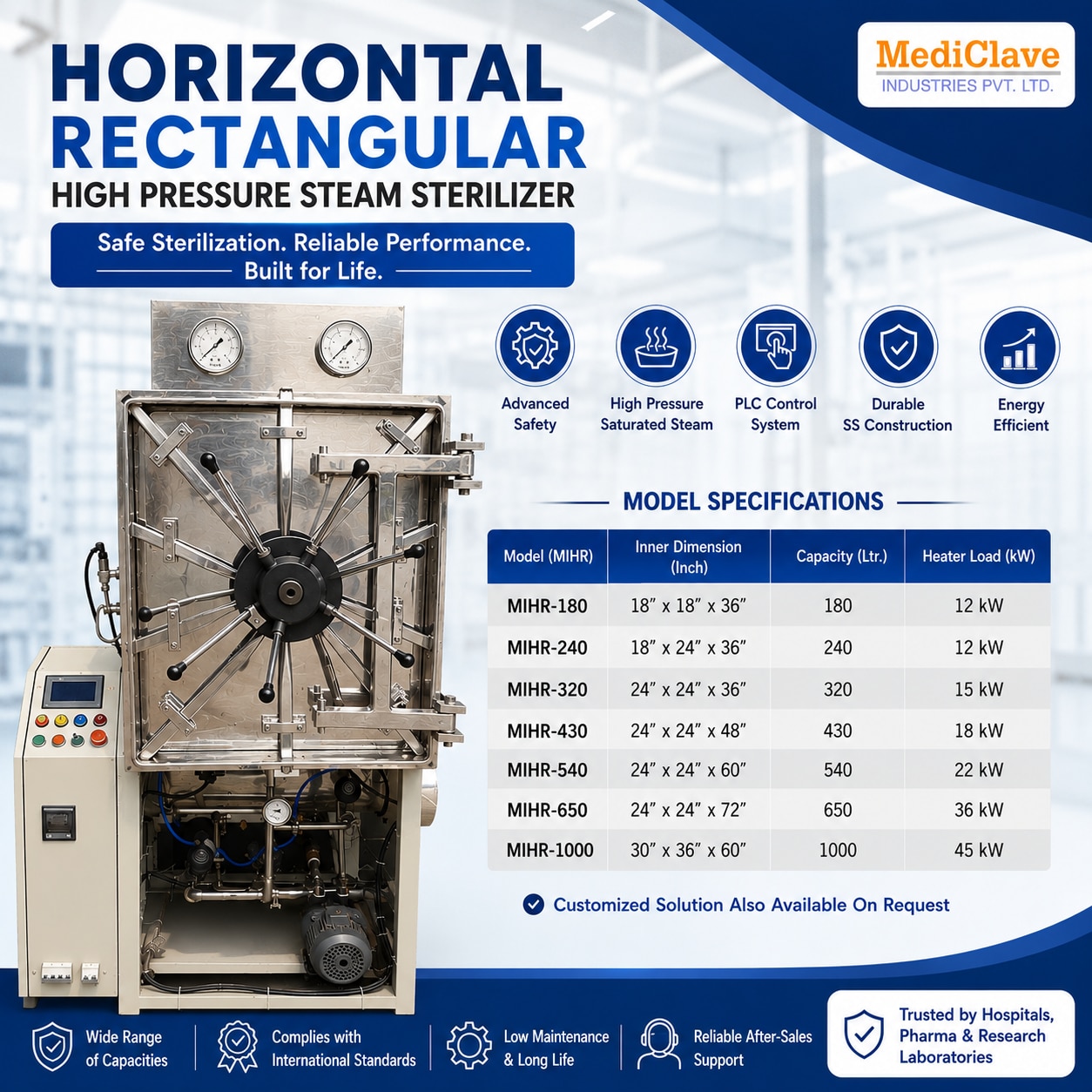
Horizontal Rectangular High Pressure Steam Sterilizer: The Complete Guide to Safe Sterilization, Efficient Performance, and Smart Maintenance
Sterilization plays a vital role in healthcare, pharmaceutical manufacturing, biotechnology laboratories, research facilities, and industrial production. Every instrument, surgical tool, medical device, and production component must be completely free from harmful microorganisms before use. Even a small contamination can lead to infection, product failure, financial loss, or regulatory non-compliance.
Among the various sterilization technologies available today, the Horizontal Rectangular High Pressure Steam Sterilizer has become one of the most trusted solutions because of its efficiency, reliability, and ability to process large volumes of materials consistently. Designed for demanding sterilization applications, this equipment combines high-pressure saturated steam with advanced control systems to deliver effective sterilization while maintaining product quality.
Whether you manage a hospital CSSD, pharmaceutical manufacturing facility, microbiology laboratory, biotechnology plant, or research institute, choosing the right steam sterilizer can significantly improve productivity, safety, and operational efficiency.
At Mediclave Industries, we manufacture advanced sterilization equipment that meets the growing needs of modern healthcare and pharmaceutical industries. Our Horizontal Rectangular High Pressure Steam Sterilizers are engineered with high-quality stainless steel construction, precision control systems, energy-efficient operation, and user-friendly automation to provide reliable performance for years.
If you're exploring sterilization equipment for your organization or looking for practical maintenance tips to maximize equipment life, this guide will help you understand everything you need to know.
What is a Horizontal Rectangular High Pressure Steam Sterilizer?
A Horizontal Rectangular High Pressure Steam Sterilizer is a large-capacity steam sterilization system designed to eliminate bacteria, viruses, fungi, spores, and other microorganisms using saturated steam under controlled pressure and temperature.
Unlike smaller laboratory autoclaves, rectangular sterilizers feature a spacious chamber that allows simultaneous sterilization of numerous instruments, trays, garments, containers, glassware, rubber items, and pharmaceutical equipment.
The rectangular chamber design provides better space utilization than cylindrical chambers, making it particularly suitable for hospitals, pharmaceutical production plants, research laboratories, biotechnology companies, and medical device manufacturers.
The sterilization cycle typically includes:
- Air removal
- Steam injection
- Heating
- Sterilization holding period
- Exhaust process
- Drying cycle
- Cooling
- Safe unloading
Each stage is automatically controlled to ensure every load receives complete sterilization while protecting delicate instruments.
Why High Pressure Steam Sterilization is Preferred
Steam sterilization has remained the gold standard for decades because it is highly effective, environmentally friendly, and economical.
Unlike chemical sterilization methods, steam leaves no toxic residue and provides rapid destruction of microorganisms.
Major advantages include:
- Reliable sterilization
- Short processing time
- Low operating cost
- Eco-friendly process
- Excellent penetration capability
- High sterilization assurance
- Minimal chemical usage
- Consistent repeatability
- Easy validation
- Regulatory acceptance
Because of these benefits, hospitals and pharmaceutical companies across the world continue to rely on high-pressure steam sterilizers for critical sterilization applications.
Applications Across Different Industries
One of the biggest advantages of a Horizontal Rectangular High Pressure Steam Sterilizer is its versatility. It supports a wide range of sterilization requirements across multiple industries.
Hospitals and Healthcare
Central Sterile Supply Departments (CSSD) depend on high-capacity sterilizers for processing surgical instruments, orthopedic tools, laparoscopic equipment, stainless steel trays, linen packs, dressing materials, and reusable medical devices.
For hospitals handling smaller sterilization loads or decentralized departments, a Horizontal Cylindrical Steam Sterilizer is also an excellent solution. Explore Mediclave's Horizontal Cylindrical Autoclave for medium-capacity sterilization requirements:
https://www.mediclaveindustries.in/horizontal-cylindrical-autoclave/
Similarly, clinics and laboratories requiring compact sterilization equipment often choose a Vertical Autoclave, which provides efficient sterilization while occupying minimal floor space:
https://www.mediclaveindustries.in/vertical-autoclave/
Pharmaceutical Industry
Pharmaceutical manufacturing facilities require validated sterilization of:
- Stainless steel containers
- Machine parts
- Process equipment
- Rubber components
- Garments
- Glassware
- Filters
- Production accessories
These sterilizers support compliance with GMP, WHO, and international pharmaceutical standards while ensuring contamination-free production.
Facilities manufacturing sterile injectable medicines often integrate the sterilizer with a Pure Steam Generator, which supplies pharmaceutical-grade steam for reliable sterilization performance:
https://www.mediclaveindustries.in/pure-steam-generator/
Biotechnology Laboratories
Research laboratories process biological samples, media preparation equipment, culture vessels, laboratory instruments, and experimental materials that require contamination-free environments.
The ability to maintain repeatable sterilization cycles helps laboratories achieve accurate experimental results while reducing contamination risks.
Medical Device Manufacturing
Manufacturers sterilize reusable instruments before packaging, storage, or shipment.
Consistent sterilization improves product quality while ensuring compliance with international healthcare regulations.
Food and Beverage Research
Food testing laboratories use steam sterilization for laboratory equipment, culture media, containers, and testing accessories to maintain hygienic research environments.
Major Components of a Horizontal Rectangular Steam Sterilizer
Understanding the internal structure of the sterilizer helps operators appreciate why proper maintenance is essential.
Stainless Steel Chamber
The chamber is manufactured using high-grade stainless steel, providing corrosion resistance, durability, and long service life.
Steam Jacket
The jacket surrounds the chamber and maintains uniform temperature distribution throughout the sterilization cycle.
Automatic Door System
Modern sterilizers are equipped with pneumatic or automatic sliding doors that improve safety while reducing manual effort.
PLC Control System
Advanced PLC and HMI systems allow operators to:
- Select sterilization programs
- Monitor cycle parameters
- Store process data
- Generate reports
- Improve process consistency
Safety Valves
Pressure safety valves prevent excessive chamber pressure, ensuring operator safety.
Temperature Sensors
Precision sensors continuously monitor chamber temperature throughout every sterilization cycle.
Pressure Monitoring System
Pressure transmitters maintain proper operating pressure and verify sterilization parameters.
Vacuum Pump
Vacuum systems remove trapped air before steam enters the chamber, ensuring complete steam penetration.
How the Sterilization Process Works
A successful sterilization cycle follows a carefully controlled sequence.
First, air inside the chamber is removed because trapped air can prevent steam from reaching every surface.
Next, saturated steam enters the chamber under pressure. The combination of heat and moisture rapidly destroys microorganisms.
Once the required temperature is achieved, the sterilizer maintains this condition for a predetermined holding time.
After sterilization is complete, steam is exhausted safely.
The chamber then enters the drying phase, where residual moisture is removed before unloading.
This complete sequence guarantees sterile, dry, and ready-to-use instruments.
Why Regular Maintenance Matters
Even the most advanced sterilizer requires preventive maintenance to ensure reliable operation.
Ignoring maintenance can result in:
- Longer sterilization cycles
- Increased energy consumption
- Steam leakage
- Poor drying performance
- Sensor inaccuracies
- Valve failures
- Equipment downtime
- Higher repair costs
Routine inspection helps identify small issues before they become expensive failures.
For pharmaceutical manufacturing environments where complete sterile processing is essential, integrating sterilization with advanced cleaning systems such as CIP & SIP Systems further improves process reliability and hygiene:
https://www.mediclaveindustries.in/cip-sip-system/
Daily Maintenance Checklist
A few minutes of routine inspection every day can significantly increase the life of your Horizontal Rectangular High Pressure Steam Sterilizer while ensuring every sterilization cycle performs as expected.
Before starting the machine:
Check the chamber for cleanliness.
Ensure the door gasket is free from cuts or cracks.
Verify that pressure and temperature gauges are functioning properly.
Confirm that the water supply is adequate.
Inspect steam connections for leakage.
Check that drain lines are unobstructed.
After completing the day's operations:
Clean the chamber using a soft cloth.
Remove any residue left by instruments or trays.
Leave the chamber door slightly open to prevent moisture accumulation.
Wipe the door gasket carefully.
Review cycle reports for any abnormal readings.
Record maintenance observations in the equipment logbook.
These simple practices reduce unexpected downtime and help maintain consistent sterilization quality.
Weekly Maintenance Checklist
Weekly maintenance focuses on components that experience regular wear during operation.
Recommended weekly activities include:
Inspect steam traps.
Check safety valve operation.
Verify vacuum pump performance.
Clean chamber drains.
Examine pipelines for leakage.
Tighten loose electrical connections if required.
Inspect door locking mechanisms.
Clean external panels and control cabinet.
Operators should also review previous sterilization records to identify unusual pressure or temperature variations that may indicate developing issues.
Monthly Maintenance Checklist
Monthly preventive maintenance ensures long-term reliability.
Important inspections include:
Calibrate pressure gauges if necessary.
Verify temperature sensor accuracy.
Inspect insulation around the chamber.
Check pneumatic systems.
Lubricate moving mechanical components where recommended.
Inspect electrical terminals.
Verify PLC alarm functions.
Test emergency stop functionality.
Examine steam quality.
Many organizations schedule monthly preventive maintenance during planned production shutdowns to avoid disrupting operations.
Annual Preventive Maintenance
Annual servicing should always be performed by qualified service engineers.
Typical annual maintenance includes:
Complete calibration of sensors.
Pressure vessel inspection.
Replacement of worn door gaskets.
Safety valve certification.
Vacuum pump servicing.
Steam pipeline inspection.
Control panel diagnostics.
PLC software verification.
Replacement of worn seals.
Performance validation.
Regular annual servicing not only improves equipment life but also helps maintain compliance with GMP, NABH, ISO, and pharmaceutical validation requirements.
Common Sterilizer Problems and Troubleshooting
Even well-maintained sterilizers may occasionally experience operational issues. Understanding common problems allows operators to respond quickly.
Problem: Chamber Not Reaching Temperature
Possible causes:
Low steam pressure
Steam leakage
Faulty temperature sensor
Air trapped inside the chamber
Solution:
Inspect the steam supply, verify the vacuum cycle, and ensure sensors are functioning correctly.
Problem: Wet Loads After Sterilization
Possible causes:
Poor drying cycle
Blocked drain
Improper loading
Steam quality issues
Solution:
Avoid overloading the chamber, inspect drainage systems, and verify drying cycle settings.
Problem: Door Not Closing Properly
Possible causes:
Damaged gasket
Obstruction
Pneumatic pressure issue
Mechanical wear
Solution:
Clean the sealing surface, replace worn gaskets, and inspect the door mechanism.
Problem: Pressure Fluctuation
Possible causes:
Steam supply instability
Faulty pressure transmitter
Control valve malfunction
Solution:
Inspect steam pipelines and verify pressure control components.
Problem: Vacuum Failure
Possible causes:
Vacuum pump malfunction
Air leakage
Blocked vacuum line
Solution:
Check the vacuum pump, seals, and associated piping.
Best Practices for Efficient Sterilization
Following proper operating procedures helps maximize sterilization efficiency while extending equipment life.
Some recommended practices include:
Never overload the chamber.
Arrange instruments to allow steam circulation.
Use validated sterilization cycles.
Monitor pressure and temperature throughout each cycle.
Replace damaged door gaskets promptly.
Use clean, high-quality steam.
Perform preventive maintenance on schedule.
Train operators regularly.
Maintain detailed cycle records.
Validate sterilization processes periodically.
Consistent adherence to these practices improves productivity while reducing maintenance costs.
How to Choose the Right Horizontal Rectangular High Pressure Steam Sterilizer
Selecting the right sterilizer depends on several operational factors. Before purchasing, evaluate:
Chamber Capacity
Choose a chamber size that matches your daily sterilization workload without causing unnecessary delays or excessive energy consumption.
Construction Material
High-quality stainless steel construction offers superior corrosion resistance, durability, and ease of cleaning.
Automation Level
Modern PLC-controlled systems simplify operation, improve process consistency, and provide valuable cycle data for validation.
Safety Features
Ensure the sterilizer includes pressure safety valves, automatic door interlocks, emergency stop functions, and multiple safety sensors.
Energy Efficiency
An energy-efficient sterilizer reduces steam and electricity consumption, lowering long-term operating costs.
Validation Support
For pharmaceutical and healthcare applications, the equipment should support validation protocols and regulatory documentation.
After-Sales Service
Reliable technical support, spare parts availability, and preventive maintenance services are essential for uninterrupted operation.
Why Choose Mediclave Industries?
Mediclave Industries has established itself as a trusted manufacturer of sterilization and pharmaceutical process equipment by focusing on quality, innovation, and customer satisfaction.
Our Horizontal Rectangular High Pressure Steam Sterilizers are designed to deliver:
Robust stainless steel construction
High-pressure saturated steam sterilization
Advanced PLC and HMI controls
Uniform heat distribution
Reliable vacuum systems
Energy-efficient operation
User-friendly interface
Customizable chamber capacities
Compliance with industry standards
Long operational life
In addition to Horizontal Rectangular High Pressure Steam Sterilizers, Mediclave Industries offers a comprehensive range of sterilization and pharmaceutical equipment to meet diverse industry needs, including:
Horizontal Cylindrical Autoclaves: https://www.mediclaveindustries.in/horizontal-cylindrical-autoclave/
Vertical Autoclaves: https://www.mediclaveindustries.in/vertical-autoclave/
ETO Sterilizers: https://www.mediclaveindustries.in/eto-sterilizer/
Pure Steam Generators: https://www.mediclaveindustries.in/pure-steam-generator/
CIP & SIP Systems: https://www.mediclaveindustries.in/cip-sip-system/
Multi Column Distillation Plants: https://www.mediclaveindustries.in/multi-column-distillation-plant/
With this broad portfolio, customers can source complete sterilization and pharmaceutical processing solutions from a single trusted manufacturer.
Frequently Asked Questions (FAQs)
1. What is the primary use of a Horizontal Rectangular High Pressure Steam Sterilizer?
It is used to sterilize surgical instruments, laboratory equipment, pharmaceutical components, garments, glassware, and other materials using saturated steam under pressure.
2. Which industries commonly use this equipment?
Hospitals, pharmaceutical companies, biotechnology laboratories, medical device manufacturers, research institutions, and healthcare facilities commonly use these sterilizers.
3. How often should preventive maintenance be performed?
Daily inspections should be carried out by operators, while weekly and monthly preventive maintenance should follow a planned schedule. Comprehensive annual servicing should be performed by qualified engineers.
4. Why is steam quality important?
Poor-quality steam can reduce sterilization efficiency, leave moisture on loads, and increase maintenance requirements. Clean, dry saturated steam is essential for consistent results.
5. Can the sterilizer be customized?
Yes. Chamber size, automation level, loading systems, control features, and accessories can often be customized to suit specific customer requirements.
Conclusion
A Horizontal Rectangular High Pressure Steam Sterilizer is more than just a sterilization machine—it is a critical investment in safety, productivity, and regulatory compliance. Whether used in hospitals, pharmaceutical manufacturing facilities, research laboratories, or biotechnology industries, this equipment ensures that instruments and materials are sterilized efficiently and consistently.
However, achieving reliable performance depends not only on selecting the right equipment but also on following proper operating procedures and implementing a disciplined preventive maintenance program. Regular inspections, timely servicing, and adherence to best practices help extend equipment life, reduce downtime, improve energy efficiency, and maintain the highest sterilization standards.
At Mediclave Industries, we are committed to delivering advanced sterilization solutions that combine robust engineering, intelligent automation, and dependable performance. Along with our Horizontal Rectangular High Pressure Steam Sterilizers, our complete range of autoclaves, ETO sterilizers, Pure Steam Generators, CIP & SIP Systems, and pharmaceutical process equipment enables customers to build reliable, efficient, and future-ready sterilization facilities.
If you are planning to upgrade your sterilization process or invest in a high-performance steam sterilizer, Mediclave Industries offers the expertise, technology, and support to help you achieve safe, efficient, and compliant operations for years to come.
