
Introduction
In pharmaceutical manufacturing, steam is one of the most critical utilities used for sterilization, cleaning, humidification, and process applications. However, ordinary plant steam contains impurities, corrosion particles, chemicals, and non-volatile contaminants that make it unsuitable for direct contact with pharmaceutical equipment and products.
To solve this problem, pharmaceutical facilities use Pure Steam Generators (PSGs). These systems produce pharmaceutical-grade pure steam from purified water or Water for Injection (WFI), ensuring the highest standards of cleanliness and sterility.
Understanding how pure steam generators work is essential for pharmaceutical engineers, production managers, validation teams, and plant designers. This guide explains the working principle, components, applications, and advantages of pure steam generators in modern pharmaceutical facilities.
What is a Pure Steam Generator?
A Pure Steam Generator (PSG) is a specialized system that converts purified water into pyrogen-free, contamination-free pharmaceutical-grade steam.
The generated pure steam is used for:
Sterilization of pharmaceutical equipment
SIP (Sterilize-in-Place) systems
Autoclaves
Bioreactors
Clean steam applications
Sterile process lines
Tank sterilization
Filter sterilization
Difference Between Pure Steam and Plant Steam
Feature | Plant Steam | Pure Steam |
|---|---|---|
Water Source | Boiler feed water | Purified water / WFI |
Purity | Industrial grade | Pharmaceutical grade |
Direct Product Contact | No | Yes |
Pyrogen-Free | No | Yes |
GMP Suitable | Limited | Yes |
Sterile Applications | Not recommended | Ideal |
Why Pure Steam is Used in Pharma
Pharmaceutical products must be manufactured under strict hygienic and regulatory conditions. Any contamination can compromise product safety.
Pure steam is used because it is:
Free from chemical additives
Free from boiler treatment chemicals
Free from corrosion products
Free from pyrogens
Suitable for direct equipment sterilization
Compliant with GMP requirements
Suitable for sterile manufacturing operations
Main Components of a Pure Steam Generator
A typical pharmaceutical pure steam generator includes:
Feed Water System
Supplies purified water or WFI to the generator.
Evaporator / Boiler Chamber
Converts water into steam.
Steam Separator
Removes water droplets from the steam.
Pure Steam Outlet
Delivers pharmaceutical-grade steam to the process.
Heating Source
Usually plant steam or electrical heating.
Control System
PLC/HMI for automatic operation.
Safety Devices
Pressure relief valves, level sensors, and temperature controls.
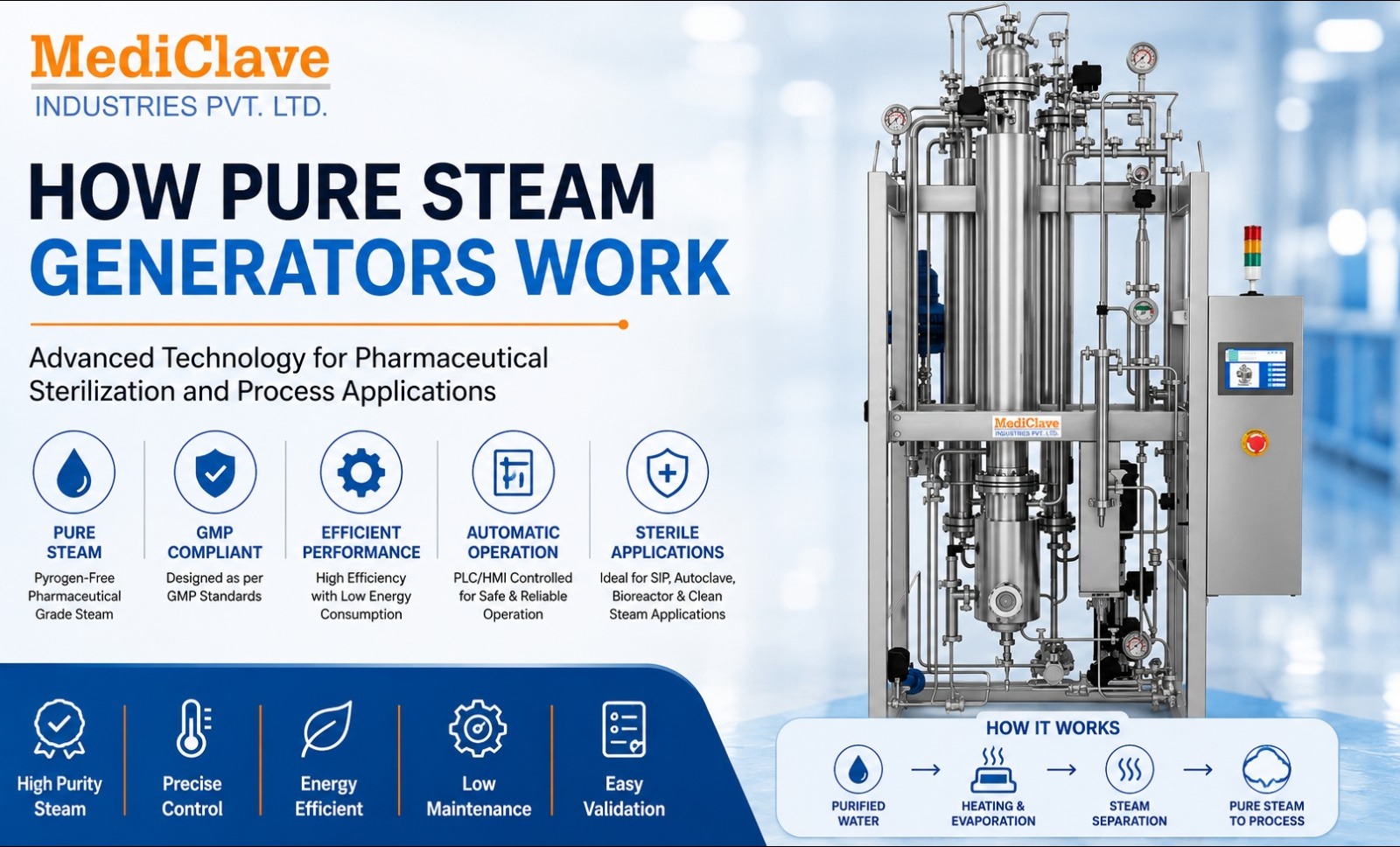
How Pure Steam Generators Work
The basic working principle involves evaporation and separation.
Step-by-Step Working Process
Purified Water Enters the Generator
Purified water or WFI enters the evaporator through a controlled feed system.
Heating Begins
The water is heated using plant steam or electric heaters.
Water Evaporates
As the temperature rises, purified water evaporates and forms steam.
Steam Separation
The steam passes through a separator that removes entrained water droplets.
Pure Steam Collection
Only dry, high-purity steam is collected.
Distribution
The pure steam is distributed to sterilization points, SIP systems, and process equipment.
Working Principle Diagram (Conceptual)
Purified Water
Evaporator
Steam Separator
Pure Steam
Sterile Equipment / SIP
Types of Pure Steam Generators
Type | Description |
|---|---|
Falling Film Type | Highly efficient and commonly used in pharma |
Rising Film Type | Suitable for specific process conditions |
Natural Circulation Type | Simple design with lower maintenance |
Electrical Pure Steam Generator | Uses electric heaters instead of plant steam |
Benefits of Pure Steam Generators
Pharmaceutical-grade steam production
Pyrogen-free steam
Excellent sterilization performance
GMP compliance
Reduced contamination risk
Automatic operation
Consistent steam quality
Energy-efficient design
Easy validation
Long service life
Pharmaceutical Applications
Pure steam generators are widely used in:
Autoclave sterilization
SIP systems
Bioreactor sterilization
Fermenter sterilization
Tank sterilization
Filter housing sterilization
Transfer line sterilization
Filling machine sterilization
Clean steam humidification
Sterile pharmaceutical production
GMP and Regulatory Compliance
Modern pure steam generators are designed to comply with:
WHO GMP
FDA Guidelines
EU GMP
PIC/S GMP
ASME Standards
cGMP Requirements
Key compliance features include:
SS316L product-contact surfaces
Sanitary piping
Drainability
Surface finish control
Validation documentation
IQ/OQ support
Traceability
How to Select the Right Pure Steam Generator
Consider the following:
Required steam capacity (kg/hr)
Water quality (PW or WFI)
Operating pressure
Steam demand pattern
Automation level
Material of construction
Energy efficiency
Validation requirements
Available utilities
Future expansion plans
Why Choose Mediclave Industries Pvt. Ltd.
Mediclave Industries Pvt. Ltd. manufactures advanced pharmaceutical pure steam generators engineered for reliable sterile operation.
Our systems offer:
High-purity steam generation
SS316L hygienic construction
PLC/HMI automation
Efficient steam separation
GMP-focused design
Energy-efficient performance
Custom capacities
Validation support
Reliable after-sales service
Long operational life
Frequently Asked Questions (FAQs)
1. What is the purpose of a pure steam generator?
It produces pharmaceutical-grade pure steam for sterilization and clean steam applications.
2. What water is used in a pure steam generator?
Purified Water (PW) or Water for Injection (WFI).
3. Is pure steam pyrogen-free?
Yes. Properly designed pure steam generators produce pyrogen-free steam.
4. Can plant steam be used directly for sterilization?
Generally no. Plant steam may contain contaminants unsuitable for direct pharmaceutical contact.
5. What is the difference between clean steam and pure steam?
Pure steam is pharmaceutical-grade steam produced from purified water, while clean steam is a broader term used for contamination-controlled steam applications
6. Which industries use pure steam generators?
Pharmaceutical, biotechnology, vaccine, and sterile manufacturing industries.
7. What materials are used for construction?
Typically SS316L for product-contact parts.
8. Is validation required?
Yes. Pharmaceutical installations generally require IQ, OQ, and performance verification.
9. How is steam quality maintained?
Through controlled evaporation, steam separation, and hygienic system design.
10. Why is a pure steam generator important in pharma?
It ensures sterile, contamination-free steam for critical pharmaceutical manufacturing operations.
Conclusion
Pure steam generators play a vital role in pharmaceutical and biotechnology facilities by providing high-purity, pyrogen-free steam for sterilization and clean steam applications. Their controlled evaporation process, efficient steam separation, and GMP-compliant design ensure that critical manufacturing equipment can be sterilized safely and effectively.
As regulatory requirements become more stringent, pharmaceutical manufacturers increasingly rely on advanced pure steam generation systems to maintain product quality, sterility assurance, and compliance with international standards. Investing in a reliable pure steam generator is therefore essential for modern sterile manufacturing operations.