

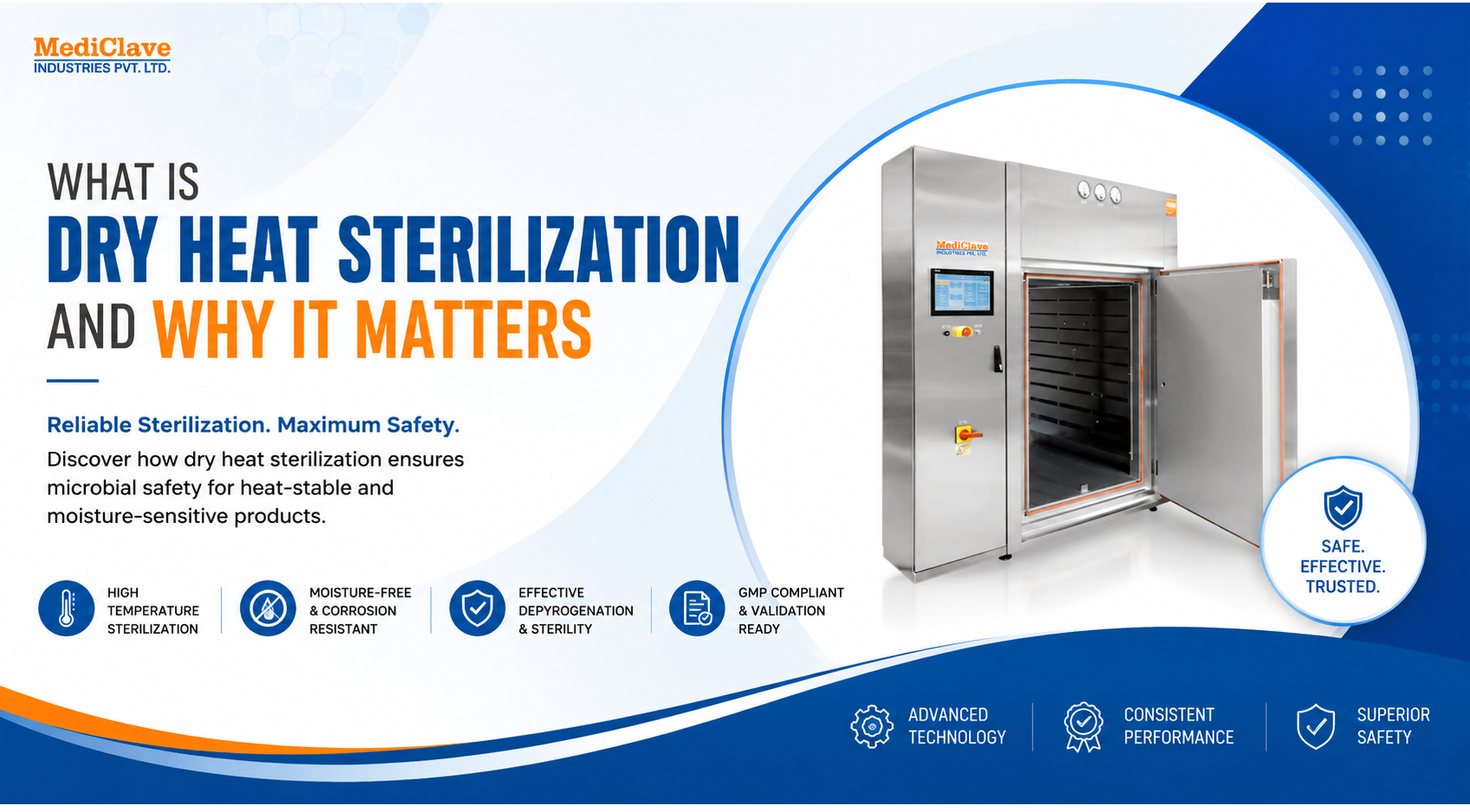
Sterilization is one of the most critical processes in pharmaceutical manufacturing. Every product that comes into contact with patients must be free from harmful microorganisms to ensure safety, effectiveness, and regulatory compliance. While steam sterilization is widely used, some materials cannot tolerate moisture, making dry heat sterilization an essential alternative.
Dry heat sterilization uses high temperatures without moisture to destroy microorganisms, bacterial spores, and contaminants. It is particularly valuable for sterilizing materials that may corrode, degrade, or become damaged when exposed to steam.
Understanding how this process works and where it is used helps manufacturers select the most appropriate sterilization method for their production requirements.
What Is Dry Heat Sterilization?
Dry heat sterilization is a sterilization process that uses hot, dry air circulated at controlled temperatures for a specified period to eliminate microorganisms.
Unlike steam sterilization, this method relies on oxidation and protein denaturation caused by prolonged exposure to high temperatures.
Typical operating temperatures include:
- 160°C
- 170°C
- 180°C
- 250°C (for depyrogenation applications)
The exact temperature and exposure time depend on the material being sterilized and the required validation standards.
How Dry Heat Sterilization Works
The process follows several carefully controlled stages.
Loading
Items are placed inside the sterilizer with sufficient spacing to allow proper air circulation.
Heating
The chamber gradually reaches the required sterilization temperature.
Temperature distribution must remain uniform throughout the chamber.
Holding Time
Once the target temperature is reached, the load remains exposed for the validated duration.
This holding period ensures complete destruction of microorganisms and bacterial spores.
Cooling
After sterilization, controlled cooling allows products to return safely to room temperature before unloading.
Why Dry Heat Sterilization Matters
Many pharmaceutical products cannot be sterilized using steam because moisture may damage them.
Dry heat sterilization offers several important benefits.
Ideal for Moisture-Sensitive Materials
Suitable for sterilizing:
- Glass containers
- Metal instruments
- Powders
- Oils
- Petroleum-based products
These materials often perform better under dry heat conditions.
Effective Depyrogenation
One major advantage is its ability to remove pyrogens (bacterial endotoxins) when operated at higher temperatures.
Depyrogenation is particularly important for:
- Injectable medicines
- Glass vials
- Ampoules
- Syringes
Corrosion-Free Sterilization
Since no moisture is involved, dry heat reduces corrosion on metal instruments and equipment components.
This extends equipment life while maintaining product integrity.
Reliable Sterility
Validated dry heat sterilizers provide consistent and repeatable sterilization cycles that meet GMP requirements.
Automation further improves process reliability through accurate temperature monitoring and cycle documentation.
Common Applications
Dry heat sterilization is widely used across pharmaceutical and healthcare industries.
Typical applications include:
- Glass bottles
- Glass vials
- Ampoules
- Metal tools
- Stainless steel components
- Powders
- Oils
- Petroleum jelly
- Laboratory glassware
- Heat-resistant materials
These applications make dry heat sterilizers indispensable in pharmaceutical production facilities.
Advantages of Dry Heat Sterilization
Some of the key advantages include:
- Moisture-free process
- Excellent for heat-stable materials
- Effective depyrogenation
- Reduced corrosion risk
- Simple operating principle
- Uniform heating
- High reliability
- GMP compliance
- Long equipment life
- Consistent validation performance
Dry Heat vs. Steam Sterilization
Although both methods achieve sterilization, they serve different purposes.
Dry heat is preferred when:
- Products are moisture sensitive
- Depyrogenation is required
- Corrosion must be avoided
- Oils and powders require sterilization
Steam sterilization is generally preferred for:
- Surgical instruments
- Textile products
- Culture media
- Most aqueous pharmaceutical products
Selecting the appropriate method depends entirely on product characteristics and regulatory requirements.
Features of Modern Dry Heat Sterilizers
Today's pharmaceutical dry heat sterilizers incorporate advanced technologies for improved process control.
Common features include:
- PLC automation
- HMI touchscreen controls
- Uniform airflow distribution
- HEPA filtration
- Temperature mapping capability
- Automatic data logging
- Batch reporting
- Validation support
- Alarm systems
- GMP-compliant chamber design
These features improve process efficiency while supporting regulatory inspections.
Selecting the Right Dry Heat Sterilizer
When choosing equipment, manufacturers should evaluate:
Chamber Size
Select a chamber capacity that matches production requirements.
Temperature Uniformity
Uniform heat distribution is essential for successful validation.
Automation
Automated control systems improve consistency and reduce operator error.
Validation Support
The equipment should support IQ, OQ, and PQ validation requirements.
Energy Efficiency
Modern systems reduce operating costs through optimized heating technology.
Industry Standards and Compliance
Dry heat sterilizers used in pharmaceutical facilities should comply with recognized industry guidelines, including GMP and applicable validation requirements. Proper documentation, calibration, temperature mapping, and routine performance qualification help ensure every sterilization cycle delivers consistent and reliable results.
Manufacturers should also establish preventive maintenance schedules and regular monitoring procedures to maintain long-term equipment performance and regulatory compliance.
Conclusion
Dry heat sterilization remains an essential process for pharmaceutical manufacturing, especially when products cannot tolerate moisture or require depyrogenation. Its ability to provide reliable sterilization, protect sensitive materials, and support GMP-compliant production makes it a vital part of modern pharmaceutical facilities.
By selecting the right dry heat sterilizer and following validated operating procedures, manufacturers can enhance product safety, improve process efficiency, and meet the stringent quality expectations of today's pharmaceutical industry.
To discover more pharmaceutical processing and sterilization solutions, visit Pharmaceutical Sterilization Equipment



