
Steam Air Mixture Sterilizer & Terminal Steam Sterilizer: Complete Guide for Pharmaceutical Sterilization
Sterilization is one of the most critical processes in pharmaceutical manufacturing, biotechnology facilities, and healthcare industries. Products such as IV fluids, injectable solutions, ophthalmic products, BFS containers, plastic bottles, and heat-sensitive packaged products require highly controlled sterilization methods that ensure sterility without damaging the product or packaging.
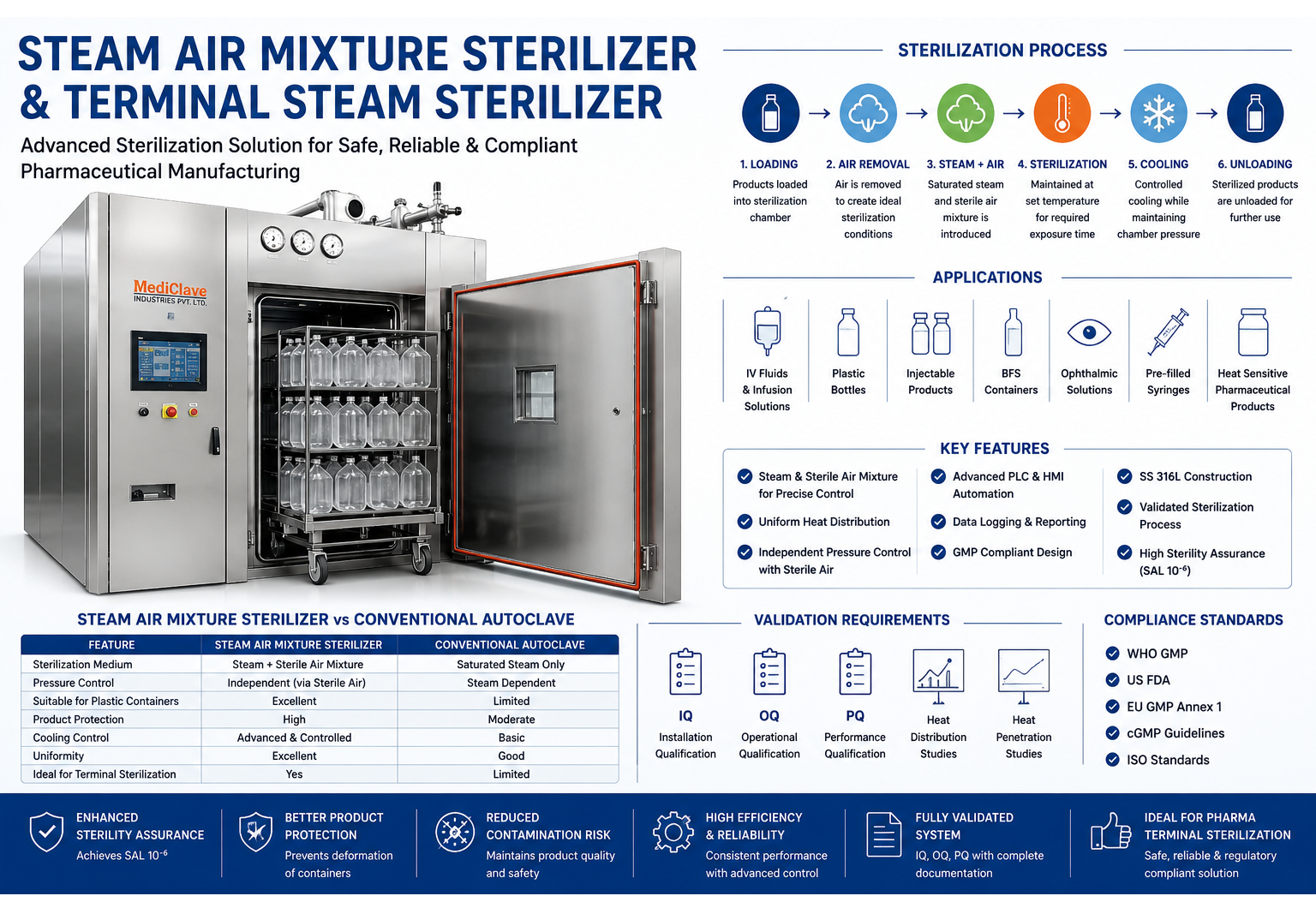
A Steam Air Mixture Sterilizer (SAM Sterilizer) and Terminal Steam Sterilizer (TSS) are advanced sterilization systems specifically designed for sterilizing sealed pharmaceutical products using a combination of saturated steam and sterile compressed air.
These systems ensure uniform heat distribution, controlled pressure management, and reliable sterilization of products that cannot withstand traditional steam sterilization methods.
In this comprehensive guide, we will explore the working principles, applications, validation requirements, GMP standards, and advantages of Steam Air Mixture Sterilizers and Terminal Steam Sterilizers.
What is a Steam Air Mixture Sterilizer?
A Steam Air Mixture Sterilizer is a pharmaceutical sterilization system that uses a combination of saturated steam and sterile filtered air to achieve precise temperature and pressure control during sterilization.
Unlike conventional autoclaves, which rely only on saturated steam, Steam Air Mixture Sterilizers maintain chamber pressure independently using sterile compressed air.
This makes them ideal for sterilizing:
- IV Fluids
- Plastic Bottles
- BFS Containers
- Injectable Products
- Glass Bottles
- Ophthalmic Solutions
- Pre-filled Syringes
- Heat-Sensitive Pharmaceutical Products
What is a Terminal Steam Sterilizer?
A Terminal Steam Sterilizer is a sterilization system used to sterilize pharmaceutical products after they have been completely filled, sealed, and packaged.
Terminal sterilization provides the highest level of sterility assurance because the final packaged product undergoes sterilization.
The process eliminates microorganisms present in:
- Product contents
- Containers
- Closures
- Packaging systems
Terminal sterilization is considered one of the safest sterilization methods in pharmaceutical manufacturing.