

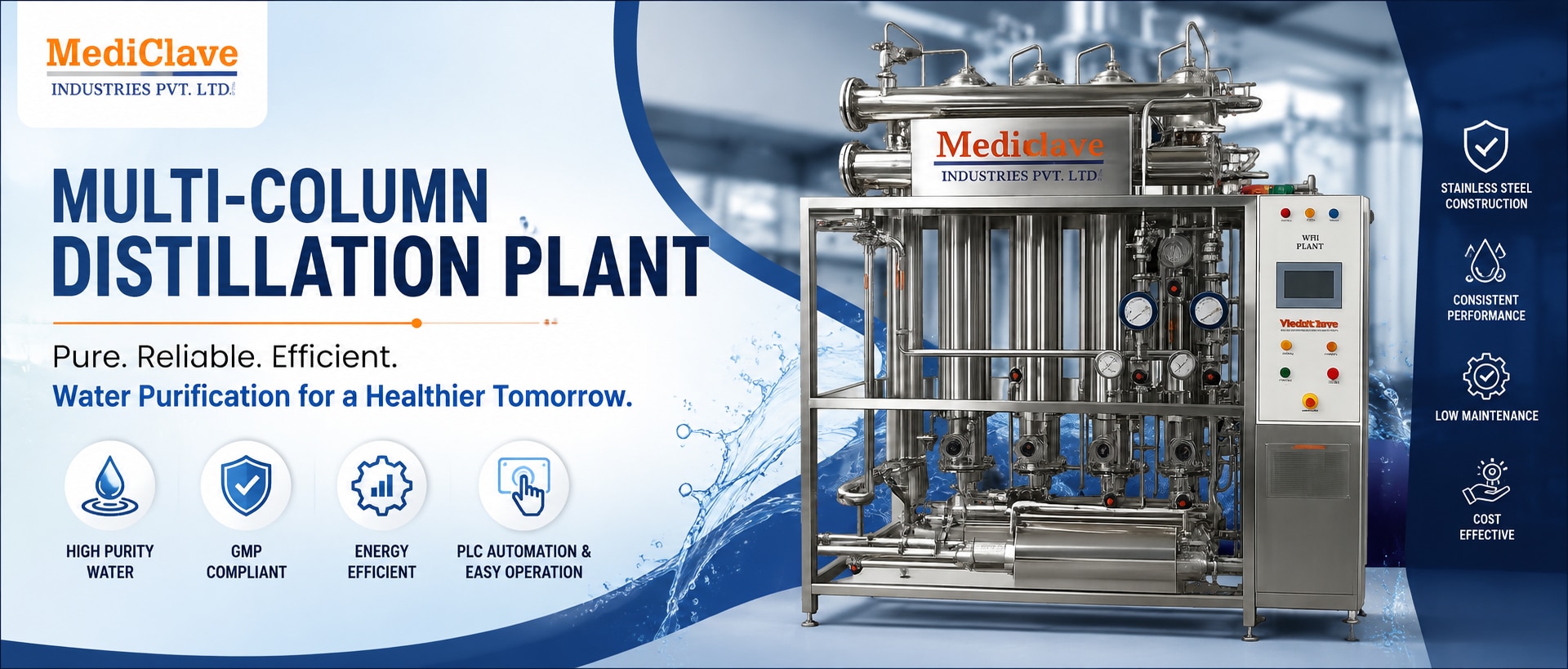
The Complete Guide to Multi-Column Distillation Plants for Pharmaceutical Water Purification
Water is one of the most important raw materials used in the pharmaceutical industry. From manufacturing medicines and vaccines to cleaning equipment and preparing injectable products, every stage depends on water that meets the highest quality standards. Even the smallest impurity can affect product quality, patient safety, and regulatory compliance. This is why pharmaceutical companies invest in advanced water purification systems that consistently deliver pure, contamination-free water.
Among the most trusted technologies for pharmaceutical water generation is the Multi-Column Distillation Plant. Designed to produce high-quality Purified Water and Water for Injection (WFI), these systems are widely used in pharmaceutical manufacturing facilities, biotechnology companies, vaccine production plants, research laboratories, and healthcare institutions.
If you are planning to establish a new pharmaceutical manufacturing unit or upgrade your existing water purification system, understanding how a Multi-Column Distillation Plant works can help you make the right investment.
In this complete guide, we will explain everything you need to know about Multi-Column Distillation Plants, including their working principle, benefits, applications, components, selection tips, maintenance, and why Mediclave Industries is a trusted manufacturer for pharmaceutical water systems.
What is a Multi-Column Distillation Plant?
A Multi-Column Distillation Plant is a specialized pharmaceutical water purification system that uses multiple stages of evaporation and condensation to produce highly purified distilled water. The system removes dissolved salts, bacteria, pyrogens, endotoxins, organic impurities, and other contaminants through a carefully controlled distillation process.
Unlike conventional single-stage distillation systems, a Multi-Column Distillation Plant utilizes several interconnected columns where energy is efficiently reused. This design improves productivity while reducing steam and utility consumption.
The purified water produced by these systems complies with international pharmaceutical standards and is suitable for critical manufacturing applications where product purity cannot be compromised.
Why High-Purity Water Matters in Pharmaceutical Manufacturing
Every pharmaceutical product is manufactured under strict quality standards. Water is not simply an ingredient—it is part of the manufacturing process itself.
High-quality pharmaceutical water is used for:
Injectable medicine production
Vaccine manufacturing
Intravenous fluid production
Equipment cleaning
CIP and SIP operations
Laboratory testing
Biotechnology processes
API manufacturing
Sterile product preparation
Using contaminated or poorly purified water can lead to product rejection, microbial contamination, regulatory observations, and production losses. Therefore, pharmaceutical companies rely on validated water generation systems to ensure consistent quality.
For complete pharmaceutical water generation solutions, Mediclave Industries also offers a comprehensive Pure Steam Generator that works alongside pharmaceutical water systems in sterile manufacturing environments:
https://www.mediclaveindustries.in/pure-steam-generator/
How Does a Multi-Column Distillation Plant Work?
The operating principle is based on repeated evaporation and condensation.
Raw purified water enters the first column where clean steam heats the water until it evaporates. During evaporation, dissolved minerals, microorganisms, endotoxins, and non-volatile contaminants remain behind.
The generated pure steam then travels to the next column, where it transfers its heat to produce additional purified steam. This process continues through multiple columns, allowing energy to be reused efficiently.
Finally, the purified steam is condensed into highly purified distilled water, which is collected under hygienic conditions and transferred to storage or directly into the distribution system.
This multiple-stage process provides:
Higher energy efficiency
Better water purity
Reduced operating costs
Continuous production
Consistent product quality
Major Components of a Multi-Column Distillation Plant
Every pharmaceutical-grade distillation plant consists of carefully engineered components that work together to ensure reliable operation.
These generally include:
Multiple evaporation columns
Heat exchangers
Steam separator
Condenser
Feed water preheater
Distillate cooler
Control panel
Instrumentation system
Stainless steel piping
Safety valves
Automatic monitoring sensors
Modern systems are typically manufactured using SS316L stainless steel with sanitary construction to maintain pharmaceutical hygiene standards.
Key Features of Modern Multi-Column Distillation Plants
Today's pharmaceutical manufacturers expect more than just purified water generation. Modern systems provide automation, efficiency, and validation-friendly operation.
Important features include:
Automatic PLC-based control
Touchscreen HMI interface
Continuous operation
Low steam consumption
Energy-efficient design
High production capacity
Sanitary construction
GMP-compliant design
Easy maintenance
Automatic monitoring
Validation support
CIP compatibility
SIP compatibility
Compact installation
Long operational life
Advantages of Multi-Column Distillation Plants
Exceptional Water Quality
The distillation process effectively removes:
Pyrogens
Endotoxins
Microorganisms
Dissolved solids
Organic contaminants
Heavy metals
Bacteria
This ensures pharmaceutical-grade distilled water suitable for critical manufacturing.
Excellent Energy Efficiency
Multiple columns recover heat throughout the process, significantly reducing steam consumption compared to traditional distillation methods.
Reliable Continuous Production
These plants are designed for uninterrupted operation, making them ideal for pharmaceutical companies operating around the clock.
Low Maintenance
Modern systems feature robust engineering and hygienic construction, minimizing maintenance requirements while ensuring dependable performance.
Regulatory Compliance
Properly designed Multi-Column Distillation Plants comply with:
GMP Guidelines
WHO Standards
US FDA Requirements
European Pharmacopoeia
Indian Pharmacopoeia
Industries Using Multi-Column Distillation Plants
These systems are widely installed across various industries, including:
Pharmaceutical manufacturing
Biotechnology companies
Vaccine production
Injectable manufacturing plants
API manufacturers
Research laboratories
Healthcare facilities
Cosmetic manufacturing
Nutraceutical industries
Chemical laboratories
Applications of Distilled Water
The purified water generated is commonly used for:
Water for Injection (WFI)
Injectable formulations
Sterile manufacturing
Cleanroom applications
Laboratory analysis
Equipment washing
Sterilization systems
Media preparation
Buffer preparation
Process water
Integration with Other Pharmaceutical Systems
A Multi-Column Distillation Plant is only one part of a complete pharmaceutical utility system. It performs best when integrated with supporting equipment.
For example, purified water generated by the plant is typically stored and circulated using a WFI Storage & Distribution System, ensuring that pharmaceutical-grade water remains within the required temperature and quality specifications throughout the manufacturing process:
https://www.mediclaveindustries.in/wfi-storage-distribution-system/
Similarly, production equipment requires effective cleaning. Mediclave Industries manufactures advanced CIP & SIP Systems that automate cleaning and sterilization processes while reducing manual intervention:
https://www.mediclaveindustries.in/cip-sip-system/
These integrated solutions improve production efficiency while maintaining strict pharmaceutical hygiene standards.
Importance of Water Validation
Validation is essential in pharmaceutical manufacturing.
A properly validated Multi-Column Distillation Plant demonstrates that the equipment consistently produces water meeting predefined quality specifications.
Validation generally includes:
Installation Qualification (IQ)
Operational Qualification (OQ)
Performance Qualification (PQ)
Water quality testing
Microbiological monitoring
Conductivity testing
TOC analysis
Documentation
Regular validation helps maintain compliance with pharmaceutical regulations.
Factors to Consider Before Buying a Multi-Column Distillation Plant
Selecting the right system requires careful evaluation.
Production Capacity
Choose a system capable of meeting current demand while allowing room for future expansion.
Water Quality Requirements
Determine whether the plant will produce Water for Injection or other pharmaceutical-grade water.
Automation
Modern PLC-controlled systems reduce operator dependency and improve consistency.
Material of Construction
SS316L stainless steel with sanitary finishes provides superior corrosion resistance and hygienic performance.
Utility Consumption
Look for energy-efficient systems that reduce steam, water, and electricity usage.
Validation Support
Manufacturers should provide complete validation documentation to simplify regulatory approval.
After-Sales Service
Reliable technical support ensures uninterrupted operation throughout the equipment's lifecycle.
Common Challenges and Their Solutions
Reduced Water Output
Possible causes include scaling, insufficient steam pressure, or improper feed water quality.
Regular preventive maintenance helps avoid these issues.
Poor Water Quality
This may result from damaged seals, improper operation, or inadequate feed water treatment.
Routine monitoring ensures consistent compliance.
High Utility Consumption
Modern energy-efficient designs significantly reduce operating costs compared to older systems.
Equipment Downtime
Preventive maintenance schedules minimize unexpected shutdowns and increase equipment reliability.
Maintenance Best Practices
Proper maintenance extends equipment life and ensures consistent water quality.
Recommended practices include:
Routine inspection
Cleaning heat exchangers
Checking instrumentation
Monitoring steam pressure
Verifying temperature sensors
Inspecting valves
Testing water quality
Replacing worn seals
Calibration of instruments
Preventive maintenance planning
Maintaining accurate service records also simplifies regulatory inspections.
How Multi-Column Distillation Plants Improve Pharmaceutical Productivity
Reliable pharmaceutical water systems contribute directly to manufacturing efficiency.
Benefits include:
Reduced production delays
Consistent water availability
Improved product quality
Lower maintenance costs
Reduced contamination risks
Increased equipment reliability
Better regulatory compliance
Higher operational efficiency
A dependable water generation system becomes a long-term investment that supports continuous pharmaceutical production.
Why Mediclave Industries?
Selecting the right manufacturer is as important as selecting the right equipment.
Mediclave Industries is recognized for designing and manufacturing pharmaceutical process equipment that combines advanced engineering, quality materials, and reliable performance.
The company offers complete pharmaceutical utility solutions, including water generation, sterilization, cleaning systems, and manufacturing equipment, helping customers establish integrated production facilities.
Beyond Multi-Column Distillation Plants, Mediclave Industries also manufactures advanced pharmaceutical sterilization equipment such as the Saturated Steam Sterilizer, ideal for sterilizing pharmaceutical components and production materials:
https://www.mediclaveindustries.in/saturated-steam-sterilizer/
For temperature-sensitive products requiring controlled sterilization, the Super Heated Water Spray Sterilizer provides reliable and uniform sterilization performance:
https://www.mediclaveindustries.in/super-heated-water-spray-sterilizer/
For pharmaceutical liquid manufacturing operations, companies can also integrate the Injectable Liquid Manufacturing Vessel with Magnetic Stirrer, enabling efficient production of sterile injectable formulations:
https://www.mediclaveindustries.in/injectable-liquid-manufacturing-vessel-with-magnetic-stirrer/
With modern manufacturing capabilities, experienced engineering expertise, customized solutions, and dependable after-sales support, Mediclave Industries delivers equipment designed to meet the evolving needs of pharmaceutical manufacturers worldwide.
Future Trends in Pharmaceutical Water Systems
The pharmaceutical industry continues to adopt smarter and more sustainable manufacturing technologies.
Emerging trends include:
Smart automation
Industry 4.0 integration
Remote monitoring
Predictive maintenance
Digital validation records
Energy-saving technologies
Reduced utility consumption
Advanced PLC controls
Real-time process monitoring
Sustainable manufacturing practices
These innovations help manufacturers improve productivity while lowering operational costs and maintaining regulatory compliance.
Conclusion
A Multi-Column Distillation Plant is one of the most critical investments for pharmaceutical manufacturers committed to producing high-quality medicines safely and efficiently. By generating consistently pure distilled water through an energy-efficient multi-stage distillation process, these systems support compliance with stringent pharmaceutical standards while enhancing operational reliability.
Whether your facility manufactures injectable drugs, vaccines, APIs, biotechnology products, or sterile formulations, choosing a high-performance Multi-Column Distillation Plant ensures dependable water quality, reduced utility consumption, and long-term production efficiency.
When combined with complementary systems such as Pure Steam Generators, WFI Storage & Distribution Systems, CIP & SIP Systems, and advanced sterilization equipment, manufacturers can build a fully integrated pharmaceutical utility infrastructure capable of meeting today's demanding production requirements.
Mediclave Industries is committed to delivering innovative pharmaceutical process equipment engineered for performance, reliability, and compliance. With extensive expertise in pharmaceutical water systems and sterile processing solutions, the company helps customers achieve efficient, safe, and future-ready manufacturing operations.
If you are planning a new pharmaceutical facility or upgrading your existing water purification infrastructure, investing in a high-quality Multi-Column Distillation Plant from Mediclave Industries is a smart decision that supports product quality, regulatory compliance, and sustainable business growth.
