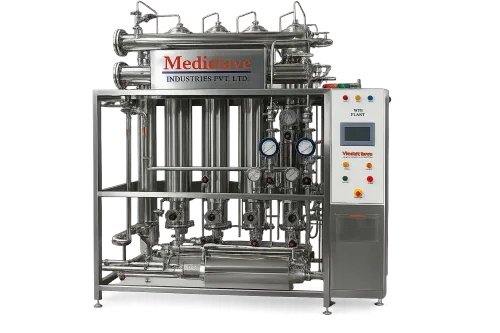
>> What Is a Multi Column Distillation Plant? A Multi Column Distillation Plant is a pharmaceutical water purification system consisting of multiple distillation columns arranged to work together efficiently. The system uses heat and steam to separate water from dissolved and suspended impurities. During the process, water is converted into vapour and then condensed to obtain purified distilled water. The use of multiple columns improves the efficiency of the distillation process. Depending on the design, the system can use energy from one column to support the operation of another column, helping reduce overall steam consumption. This makes the system suitable for pharmaceutical manufacturing facilities where large quantities of high-quality water are required continuously. >> How Does a Multi Column Distillation Plant Work? The working principle of a Multi Column Distillation Plant is based on evaporation and condensation. Initially, pre-treated feed water enters the first distillation column. Heat is supplied to convert the water into steam. Most non-volatile impurities remain behind while purified water vapour moves forward. The vapour generated from one column can be used as a heating medium for the next column. This process continues through multiple columns. The final vapour is condensed and collected as distilled water. Depending on the plant design and required pharmaceutical standards, the system can incorporate additional arrangements for monitoring, separation and collection. The overall process can be summarized as: Feed Water → Preheating → Evaporation → Multiple-Stage Distillation → Condensation → Distilled Pharmaceutical Water >> Why Is Multi Column Distillation Used in the Pharmaceutical Industry? Pharmaceutical manufacturing requires water with controlled chemical and microbiological quality. Water used in manufacturing must be produced and handled through properly designed systems. A Multi Column Distillation Plant provides several important advantages: 1. High-Quality Distilled Water The distillation process helps remove many dissolved impurities, microorganisms and other unwanted substances from feed water. 2. Suitable for Pharmaceutical Applications The system can be designed for pharmaceutical water requirements and integrated with other water treatment and distribution systems. 3. Energy-Efficient Operation Multiple columns can allow heat energy to be reused between stages. This can reduce steam consumption compared with less efficient single-stage arrangements. 4. Continuous Production Multi-column systems are suitable for facilities requiring a continuous supply of purified or distilled water. 5. Hygienic Construction Pharmaceutical distillation plants are generally designed using suitable stainless-steel materials and hygienic construction practices to minimize contamination risks. >> Applications of Multi Column Distillation Plants Multi Column Distillation Plants are widely used in industries where high-quality distilled water is essential. Typical applications include: • Pharmaceutical manufacturing plants • Injectable manufacturing facilities • Biotechnology industries • Bulk drug manufacturing • API manufacturing facilities • Sterile manufacturing units • Hospitals and specialized healthcare facilities • Research and laboratory facilities The distilled water generated by the plant can be used as part of pharmaceutical water systems, subject to the applicable process and quality requirements. >> Key Features to Consider When Selecting a Multi Column Distillation Plant Choosing the right distillation plant is important because pharmaceutical water requirements can vary from one facility to another. Before purchasing a system, manufacturers should consider: Production Capacity: The plant should provide sufficient water output according to current and future requirements. Material of Construction: Product-contact parts should use appropriate hygienic materials, commonly pharmaceutical-grade stainless steel such as SS 316L where required by the design. Steam Consumption: Energy efficiency is an important consideration for reducing operating costs. Automation: Modern systems can include automatic controls, monitoring instruments and safety features for easier operation. Hygienic Design: The system should minimize dead legs, contamination risks and areas where water can stagnate. Maintenance: Easy access to components can simplify inspection, cleaning and maintenance. Documentation: Pharmaceutical manufacturers should consider the required documentation, testing and qualification support when selecting equipment.

Ahmedabad
08042755106
+917041232204
 Chat with us
 Chat with us