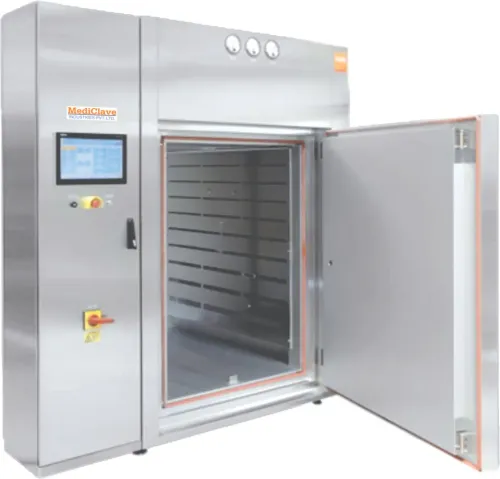
A Dry Heat Sterilizer is an important piece of equipment used in pharmaceutical, biotechnology, laboratory, and sterile manufacturing facilities for sterilizing materials that require dry, high-temperature treatment. Unlike steam sterilization, dry heat sterilization uses hot air to destroy microorganisms and is especially suitable for glassware, metal containers, ampoules, vials, and other humidity-sensitive materials. Modern dry heat sterilizers are designed to provide controlled temperature distribution, reliable sterilization cycles, and efficient operation in demanding sterile production environments. >> What Is a Dry Heat Sterilizer? A dry heat sterilizer is a temperature-controlled chamber that sterilizes products using circulating hot air. The equipment can operate at high temperatures and is designed to maintain uniform heating throughout the chamber. The Dry Heat Sterilizer shown in the specification is available in different chamber capacities, with models ranging from approximately 50 litres to 4000 litres. The equipment can be supplied with sliding or hinged doors, depending on the application and installation requirements. One of the key advantages of dry heat sterilization is that it does not introduce moisture into the load. This makes it highly suitable for materials that may be damaged by steam or humidity. >> How Does Dry Heat Sterilization Work? The sterilization process is based on controlled circulation of heated air inside the chamber. The load is placed inside the chamber, the door is securely closed, and the selected sterilization cycle is started. Air is heated to the required temperature and circulated throughout the chamber using a forced-convection system. This helps achieve consistent heat transfer to the products. The equipment described in the specification can perform cycles at temperatures of up to approximately 280°C, depending on the selected process and application. Uniform air circulation and calculated air distribution help maintain consistent temperature conditions throughout the chamber. This is particularly important for pharmaceutical manufacturing, where repeatable and validated sterilization processes are essential. >> Major Applications of Dry Heat Sterilizers Dry heat sterilization is commonly used for a wide range of humidity-sensitive materials. Major applications include: • Glass ampoules and vials • Glass containers • Metal containers and components • Laboratory glassware • Pharmaceutical production accessories • Humidity-sensitive materials • Components requiring dry sterilization • Materials requiring high-temperature treatment Dry heat systems can also be used for depyrogenation applications when the validated process requires high-temperature treatment for the reduction or removal of pyrogenic contamination. >> Key Features of the Dry Heat Sterilizer A well-designed dry heat sterilizer combines temperature control, air circulation, filtration, and chamber construction to support reliable processing. 1. High-Temperature Operation The sterilizer is designed for high-temperature applications and can operate up to approximately 280°C. This makes it suitable for processes where conventional steam sterilization is not appropriate. 2. Stainless Steel Chamber The chamber is constructed from SS 316L stainless steel, providing a smooth, durable, and easy-to-clean internal surface. The fully welded chamber design helps minimize areas where contamination or leakage can occur. 3. High-Temperature HEPA Filtration High-temperature HEPA filters are installed at the inlet and exhaust sections. These filters help control airborne particles during heating and cooling stages and support clean processing conditions. 4. Forced Air Circulation The system operates using the forced-convection principle. Rapid circulation of heated air helps improve heat transfer and temperature uniformity throughout the chamber. 5. Temperature Uniformity Properly designed air distribution plates help achieve uniform temperature distribution. Temperature mapping and validation can be performed to establish the required process conditions for the specific load. 6. Sliding or Hinged Door Options Depending on installation and operational requirements, the equipment can be configured with a sliding door or hinged door arrangement. >>Why Choose a Dry Heat Sterilizer? The biggest advantage of dry heat sterilization is its suitability for materials that should not be exposed to moisture. It can provide controlled high-temperature treatment while supporting clean and repeatable processing. For pharmaceutical and sterile manufacturing facilities, equipment design is especially important because sterilization processes must be properly controlled, monitored, and validated. A dry heat sterilizer with efficient air circulation, high-temperature HEPA filtration, stainless steel construction, and reliable temperature control can therefore become an important part of a modern sterile production area.

Ahmedabad
08042755106
+917041232204
 Chat with us
 Chat with us